Breaking the fast #SOL23 30/31

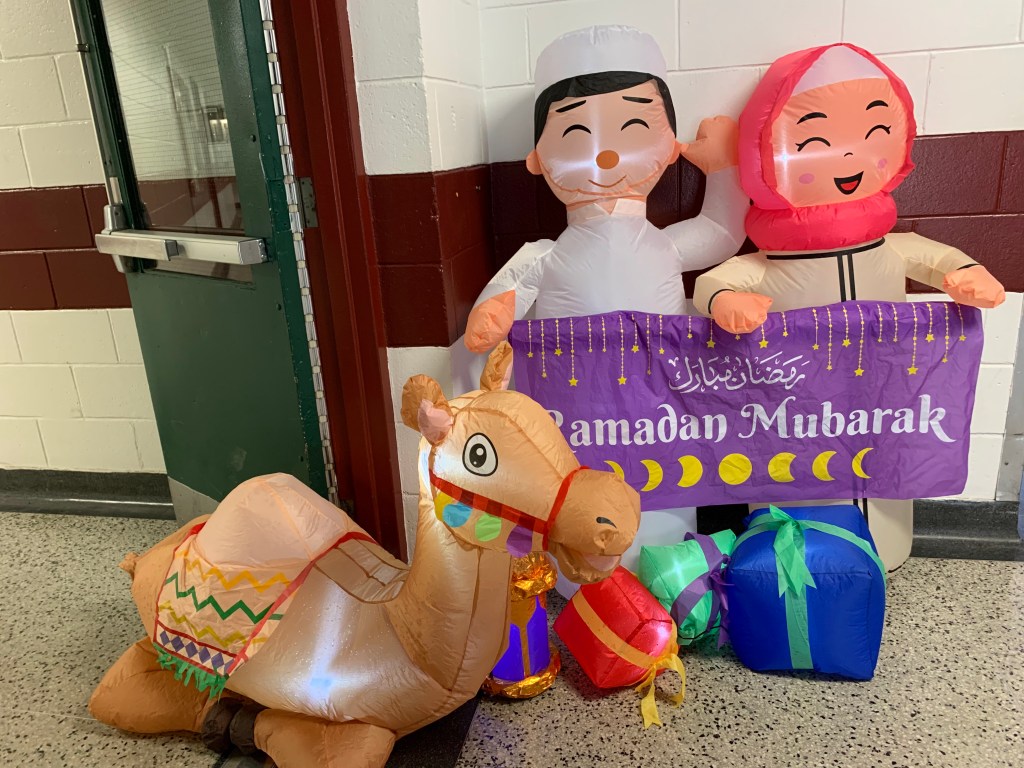
I just got home from school. It’s 9:31pm. Why so late? Tonight, for the first time, our school celebrated Iftar together. 

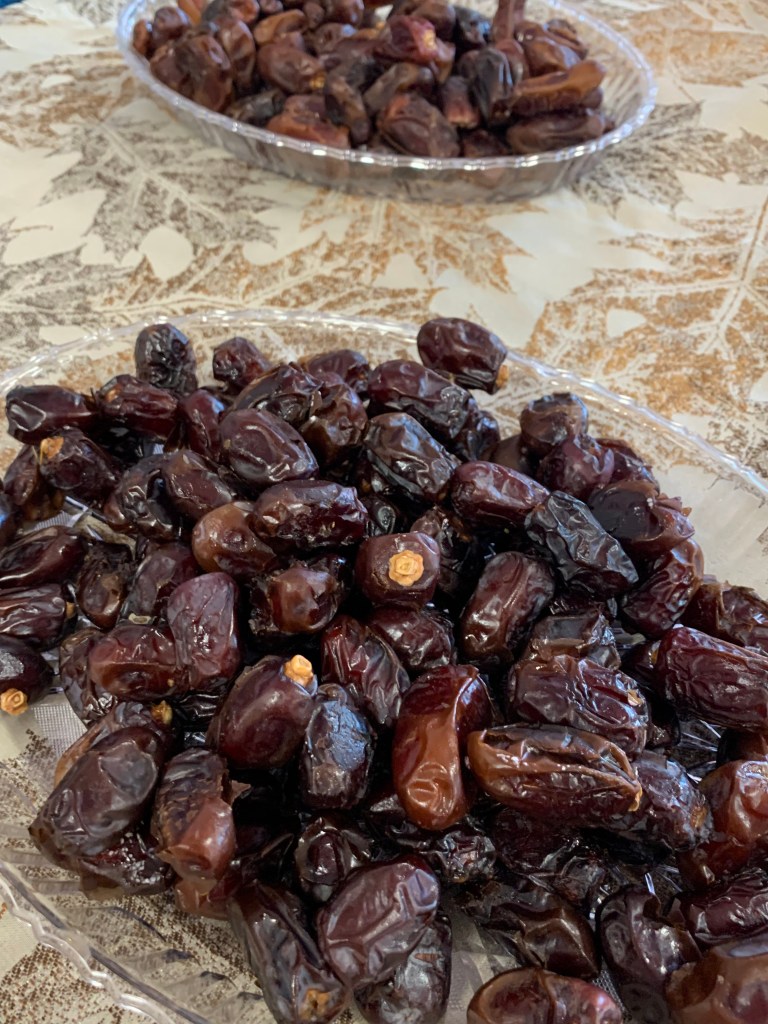
For those of you who don’t know, as I did not until recently, Iftar is the fast-breaking meal that Muslims eat immediately after sundown during Ramadan. People break their fast with dates and water – after neither eating nor drinking (even water) from sunup to sundown – then they pray, then eat their meal.

This year, students asked if we could organize a communal Iftar because Muslims often break their fast in community. I was raised Christian –  in the middle of the Bible Belt in the southern part of the US, no less – so I knew very little about Muslim traditions, but the students at the school where I currently teach are generous with their knowledge. We talked through what Iftar would look like, checked with the Principal, and off we went.

One student really drove things, and another teacher did the work of clearing the path for her. Soon they had chosen a date, organized catering, and started selling tickets. To make sure that all families – even very large families or newcomers who might not yet have a strong financial footing – felt welcome, the school found funds to cover some of the cost of the meal. 

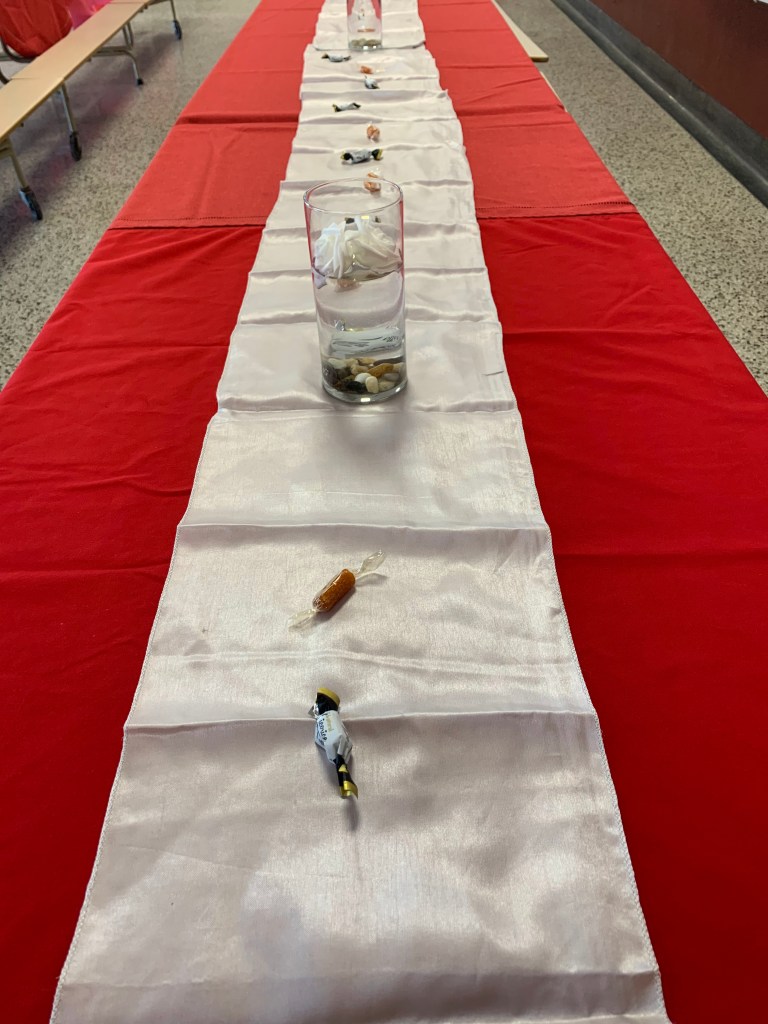
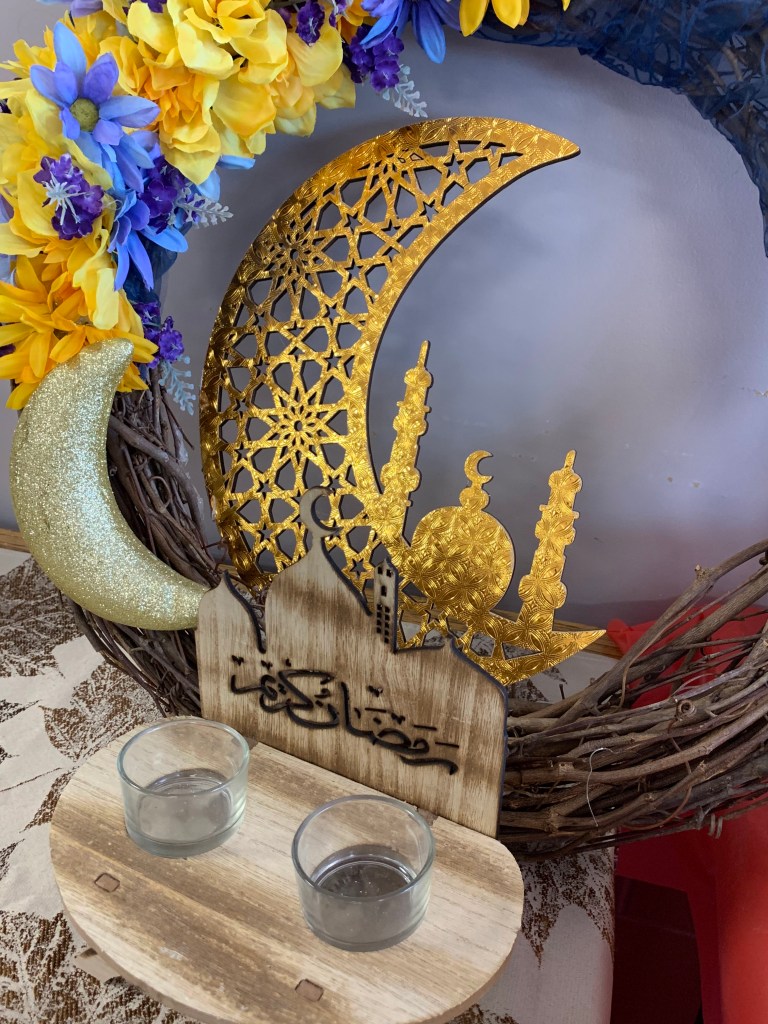
This evening, the cafeteria buzzed as teenagers covered the tables with red tablecloths and white runners. One student’s mother helped out. They strewed traditional candies along the runners and filled “vases” from the science department (“They’re not beakers, Miss, really!”) with water and white flowers. They decorated the hallway and laid out the dates. Soon, a father showed up, and students started shuttling in the meals – rice and skewers and salad. The imam arrived, along with his wife and young children. Before we knew it, the cafeteria contained a community – from babies to grandparents, Muslim and non-Muslim, students and teachers and their families – well over 100 people in all.

Those who were fasting broke their fast and prayed; those of us who were not fasting or praying finished setting out the food. Everyone came together to eat and the room filled with talk and laughter. 

As we cleaned up afterward, I could feel the joy: our first annual Iftar – and another way to celebrate the community our students create. 

It was supposed to be funny #SOL23 28/31

“It was supposed to be funny.”

That’s what I told my grade 12 students on Monday when I shared one of my recent blog posts – the one with the squirrel pictures. I pointed out the title and the photographs. “I started with funny, but I ended with sappy.” This was my writer’s dilemma: “So what I’m looking for are ideas for how to revise this to make it funnier – or even just a little funny.”

Cue uncomfortable shifting in their seats. Critique the teacher’s work? Not likely.

Undaunted, I continued. “OK, R has volunteered to be the leader,” R nodded, “so he’s going to tell us our first step.” 

“Um, ok, um…” he shuffled the papers in front of him, trying to figure out the next step. “Oh! You need to read it out loud.”

I did. I had planned two class periods (minus our daily reading and writing time) for the students to share their work and offer suggestions. I was following the Feedback Protocol developed by Peggy Silva and shared with me by Xan Woods and, not surprisingly, when I told students that they would read their work out loud to their peers panic had ensued. Telling them that someone else could read the piece out loud for them was not the balm they had anticipated. So I’d pulled out my next trick and asked them help me with my writing. 

You can imagine the wary looks I got. I explained about the Slice of Life challenge and how I had been writing every day for almost a month. EVERY DAY? They were half impressed, half worried about my state of mind. Those latter concerns were heightened because now I was offering – no, asking – to have them help me. As I read aloud, I found a mistake in my *published* piece. “Oops, I need to fix that,” I said – and I didn’t die or anything. I just fixed it.

“Ok, R. What’s next?” I asked.

“We have to read it again, then offer you ‘warm’ feedback.”

Because I know this is hard, every time we use the Feedback Protocol, I give students a script (also developed by Xan & easily modified to fit our needs) in addition to the general how-to. Now, we continued through the script. The students had plenty of nice things to say about my piece, and they were able to be pretty specific with their compliments. Then came time for cool feedback. 

“Oh, I feel bad about saying this.”
“Miss, are you sure you want to hear this?”
“I just feel kind of mean.”

I reassured the students that I had asked for this feedback, that I wanted to do better. “Look,” I said, “I really wanted this to be funny. I know you can help. You are 100% funnier than I am.”

As they spoke, I took notes in front of them. The more I wrote down their comments, the more confidence they gained. After a few minutes, time for cool feedback was over. I thanked them and reflected on what I had heard and what changes I thought I would make.

Just like that. Like it was no big deal.

Then it was their turn. Tentatively, they moved into their groups. On the first day, only one student from each group was able to receive feedback. As the class left, the mood was less tense, maybe curious.

Today, after reading time, the groups re-formed quickly. Essays appeared out of notebooks and folders. No one had lost their papers. Around the room, students huddled together around papers, their pencils scratching down notes or writing in margins. Laughter, questions, talking… was this the same group that couldn’t quite remember everyone’s names just a week ago? Were these the same students who looked stunned yesterday when I told them they would read their work out loud? 

Yes, yes these are the same students, I promise. As class came to an end, I asked how they felt about the protocol. “So good,” said someone. “Really useful,” said another.

“Excellent,” I said, then added, “Revisions are due Friday.” Good natured groans sounded around the room. As they kids left for their next class, I overheard someone say, “that was really good, wasn’t it? Like, really good.”

Ah yes, pedagogy for the win.

What happens in Arizona… #SOL23 23/31

Today is parent-teacher conferences. As I got dressed, I put on a particular necklace – not a necklace, really, more an amulet, maybe – and I immediately felt a little stronger. Let me tell you a story that I don’t quite believe…

About six years ago, we were visiting my in-laws in Tucson, and my mother-in-law scheduled our whole family for an energy work session with someone she knew. I didn’t really believe in energy work, but I did (and do) really believe in my mother-in-law, and I pretty much always believe in spending time lying down and letting people try to make me feel better, so I said yes.

I’d never tried anything like this before, but I figured it wouldn’t hurt anything. The kids went first, and I was frankly astonished when the therapist (? energy worker? I have no idea) hesitated and then focused on a place on my child’s body that did, indeed, require healing, but that he could not possibly have known about. There was more, but afterwards, when he explained what he had felt and done during the session, he commented about that part of his work. I was intrigued. Nevertheless, when it was my turn for energy work, I wasn’t expecting much. I lay down, assuming I would feel nothing, anticipating thirty minutes of quiet.

Now, the thing is, that I’m not in Arizona anymore and this happened a while ago and I’m still largely a reading/science type of person, so when I talk about this it all feels like a bunch of hooey. If I were reading this, I would probably not believe it, and if you don’t believe this, I’m ok with that, but let me tell you, whatever that man did, I could feel it – and he never even touched me. It was intense. At the end, he told me that he had pulled a sword out of my gut (which, again, is ridiculous) and I shocked myself by looking directly at him and saying, “Give that back. I need it.” Well.

He did not give it back – because even an energy-work-person will not put a metaphorical energy sword back into your belly because that sounds like a terrible idea, even if it had previously been metaphysically there – and I felt oddly bereft for the next day or two. Finally, my mother-in-law (who, as I said, I fully believe in) found me and offered me a necklace-type thing: a green and white spheroid stone set in an odd elaborate metal bezel and fixed to a brown cord. She told me that she had bought it years ago; it had been sold to her as an amulet of protection and she felt that it had called her. Now, she said, she thought it was mine.

I wore it for days and, placebo or not, I felt better. Eventually, I put it away and only pulled it out every now and then. Even today, when I put it on, I feel powerfully protected – and I know for sure that whether that protection comes from the universe, or the stone or the depth of my mother-in-law’s love for me, it doesn’t matter. One way or another, the energy is there.

The Hard Way #SOL23 22/31

The students in grade 9 were seriously squirrely. I moved around the classroom, reading aloud from a children’s version of Jack and the Beanstalk, trying to teach plot development and elements of a narrative through a familiar structure (fairy tale) in a (potentially unfamiliar) story, but the minute I moved away from a set of desks, chatter began behind me. Phones came out. Once, out of the corner of my eye, I saw a wad of paper fly at someone’s head. Nothing mean, mind you, but the students were obviously bored.

Harumph. This was a good lesson. I knew it. A) I’d done it before and B) I knew these kids well enough to know that they needed practice before they would be able to analyse a story on their own. On the other hand, I had to admit that it wasn’t working. At all.

We slogged through the plot analysis. I did the character voices. I highlighted vocabulary that would help them effectively discuss texts. I had them create their own diagrams. Nothing. The low-level “behaviour” continued and an oppressive sense of fatigue permeated the room. At the end of class, I asked what was up? They hesitated; I prodded – was this too easy?

YES, they said. Yes. Too easy, too boring, too baby-ish.

Harumph again. At home that evening, I stared at my lesson plans. Clearly they needed to change. But how? Well, I thought, if they think they can do something harder (internally I rolled my eyes), I’ll give them something harder. I wish I could tell you that I was doing this because I thought it was right, but the truth is I kind of wanted them to realize that they needed guidance.

I chose two short stories and found excellent versions online, pdfs that offered support for students who needed it (vocabulary, questions, pauses for reflection) and extensions for others. I deleted the lesson I had planned for the next day, the careful scaffolding of ideas and thinking, and moved straight to the big ideas in the unit. I didn’t bother with the extra vocabulary glossing I would have usually done. “Too easy,” I grumbled. “Well, this will be hard enough to fix that.”

The next day I explained the assignment briefly, handed out the stories and stood back, ready to watch the students struggle a little. They didn’t – at least not really. They formed small groups, found audio versions to support their reading, read out loud to each other or read silently. They used the vocabulary and questions provided as support. One student read quickly to the end of his story, then called me over, irate: “Seriously? Is this the end? Why would they leave us on a cliffhanger?”

I protested, “It’s not a cliffhanger. You know exactly what happened.”

Wolves,” he spat, turned back to the story, and started writing. I almost laughed out loud.

As I watched them working, I knew the joke was on me. The day before had been all about me, even though I would have told you it was about them. I had done this; I had done that; they had done very little. Today, given a desirable challenge (how many other students rushed to get to the ending that had so infuriated their peer?), they were (mostly) hard at work, leaning on each other and moving at the pace they chose. They laughed and gasped and, sure, they didn’t actually finish the assignment, but they were engaged. So now I knew: this class needed more challenge and less scaffold and I needed to revise the rest of the lesson plans for the week. I guess sometimes I still have to learn things the hard way.

Say my name #SOL23 21/31

“Ok, it’s 9:25. Who wants to do the Land Acknowledgement?”

Around the classroom, grade 12 students shift in their seats. No one meets my eye. A few more kids slip in and find spots while I wait. Eventually, someone raises their hand. They choose to read the printed acknowledgement out loud rather than offer their own. We review the meaning of “stewardship” and then it’s time for a quick book talk – Their Eyes Were Watching God – but before we shift into independent reading, A says, “Wait! We have to do names.”

Students begin to chuckle. “Right!” I smack my forehead dramatically, “Names. Surely we can do better than yesterday?” Yesterday was a disaster – it took three tries before anyone could name everyone and apparently no one – including me – was pronouncing one student’s name correctly. (And this after I had practiced!) Eventually she gave up on us, even though we really were trying. Today goes a little better. We get through everyone twice before we move to reading.

Y’all. It is mid-March. And yes, we are a semestered school, and yes the beginning of this term was riddled with weather days, but we’ve still been together as a class for six weeks. I try to say students’ names all the time (mostly because I think it’s polite and friendly, but also because it’s a research-supported way to give people a sense of belonging and increase engagement), but lately (ok, yes, post-pandemic) it seems like quite a few students don’t bother to learn the names of their peers unless they were already friends before the class started. I’m not ok with that.

I have checked in with the teenager in my home; he admits to only knowing some of the names of his classmates. In fact, he is perplexed by my question. “They don’t usually make us work with other people,” he says. When I ask, “But how do you meet people?” because he is in grade 9 and therefore at a new school and therefore has made new friends, he says, “I already have a group of friends I’m happy with” then gives me a look and goes back to his phone. I push and ask how he met his new friends this year, but he only grunts at me. Minutes later he looks up and says, “that’s actually a good question,” but he doesn’t have an answer.

Unfortunately for my students, I’ve come back from March Break with a fire in my belly: I’m determined to help them connect – and if they can’t or won’t or don’t want to connect, I’m determined to at least give them practice in the skills they will need to do this later on. Yesterday, I told them about this article that argues that we should not allow cellphones in school *and* that we need to “rewire classrooms for connectedness.” So I’ve asked students to keep their phones away and I’m insisting we learn each other’s names. I get the sense that some of them think that this is cute but ultimately useless, but so far no one has said no. 

Today, once it seems like many people know most names, I tell the students about the next step in my scheme: I want them to learn something about the other people in the class. In the front row, the same student who had reminded me that we needed to practice names, shakes his head as he opens his book. “Good luck, Miss,” he sighs. I’m pretty sure I’m going to need it.

Starting again #SOL23 20/31

I got to school early enough to print and photocopy a few documents before heading down to the classroom. There, I rearranged the desks while I cleaned abandoned paper and almost-lost books out of the shallow spaces under the table tops. I erased the bits of colour that lingered at the edges of the chalkboard, marks I had missed as we left a week ago, then replaced them with today’s date and quote, carefully leaving out the punctuation so that the students would have a puzzle waiting when they arrived.

T was first. He often is. Then E, who came in then left then came back again. Then N, who sat, self-composed, and waited for class to start. And S slid into place next to T. As I asked them about their March Break, I moved around the room, gathering up the books leaning on the ledge of the front chalkboard – casually labelled “New Books”-  and taking them back to the bookshelves to settle into their long-term home. I replaced them with books I had scavenged during March Break and rewrote “New Books” above them, in a different colour of chalk, hoping that someone might be intrigued.

By now, the classroom was about half full. Sunlight filtered in through the half-pulled shades; the lights were still off. Some students were already reading; others had their heads down; still others chatted softly. A few more students arrived. The classroom breathed quiet anticipation. Then the hands of the clock moved, and Break was over. We were ready to start again.

What if? #SOL23 14/31

The first time I remember saying that I wanted to be a teacher was when we were living in California and had friends over for dinner. We were in the dining room because there were too many of us for the kitchen table, and I think a few of us kids were seated in a row on one side. One after another, we responded to some adult who had asked us what we wanted to be when we grew up. The boy from next door said he was going to be a pilot, like his dad. My youngest sister, who must have been four, declared her intent to be a garbageman. I said I was going to be a teacher. Both of us were met with scoffing laughter, in my case because, “you’re too smart to be a teacher.” 

For years, I assumed that everyone wanted to be a teacher, kind of like lots of little kids want to be construction workers or, like my sister, garbagemen, and then they got over it at some point. I just couldn’t seem to get over it. I nurtured my secret desire while telling well-meaning adults that I planned to be a lawyer or, later, a diplomat. Meanwhile, teaching leaked through my every crack: I taught swim lessons and coached swim teams; I volunteered as a tutor; I nannied. Even though I attended a college that had no education major, I took a course that involved an internship, and convinced the prof to let me work in a third grade classroom; then I took a language acquisition course, then a children’s literature course. None of these were in my major. 

When I finally accepted an overseas teaching position, I packed a stack of graduate school applications, already printed. I started filling them in after my first day in the classroom; I’d sent them all by the end of my second week.

Teaching is who I am; I am as likely to tell a stranger that I am a teacher as that I am a mother. In fact, I can’t imagine someone knowing me and not knowing that I teach, but lately I’ve been wondering… what if I weren’t a teacher? What might I be?

The serious options:

  • A lawyer – I deeply admire my friends who work for justice and equity through the law.
  • An editor – I have been blessed (?) with a brain that sees spelling and grammatical errors quickly and easily, and I’m pretty good at straightening out complicated sentences.
  • A librarian – I had no idea about all the cool things librarians could do. My librarian friends curate art, help with tech, do research for Parliamentarians, and much, much, more. 
  • A nonprofit worker of some sort – which is what I did between college and teaching. I worked for the Red Cross and for a small nonprofit that worked with some UN agencies. It was kind of cool.
  • A psychologist – which, in some ways, isn’t that different from being a teacher.

The wilder options:

  • An actress – obviously (she pirouettes and takes a bow)
  • A former swim champion turned coach – ideally a champion with some medals or something
  • An organizer (one of those people you call to come help you get your house sorted out) – because I am *much* better at organizing other people than myself.
  • A midwife or a doula – in fact, ever since having my first child with a doula alongside me, I’ve imagined doing this, maybe after I retire. What a thrill to help someone bring life into the world!
  • And, in the realm of the completely impossible, a dancer or acrobat – I have precisely zero ability to do this, but every time I attend the ballet or watch Cirque de Soleil, I dream of being able to move my body like that. So impressive.

I’m sure there’s more I’ll remember after I publish this; it’s kind of fun to think about who else I could be. What about you? If you weren’t you, what would you do?

Compliments #SOL23 11/31

Years ago, my colleague, Aaron Bachmann, walked into our office one day and told us that he had learned that people don’t get enough compliments and that, when they did, something like 90% of them focused on appearance. He was determined to change that. 

Aaron set about giving us all compliments – real ones. It was hilarious and cheesy, but it also felt good. And he kept it up. He gave compliments all the time, to the point where even now, years later, whenever I think of him I smile. Sure, I remember him fondly (we haven’t worked together in almost two decades, more’s the pity), but it’s more than that: when I think about Aaron, I feel better about myself.

There’s tons of research about the power of  compliments (here, for example) and, naturally, about how to do it “right” (here), but you already know the truth: voicing your sincere appreciation of someone else does all sorts of wonderful things.

Now, I have *no* research on this next part, but I think most teachers don’t get a lot of compliments – or at least not the kind we can fully believe. I mean, I love when a student gives me a compliment, but most of the time a part of me is also a tiny bit wary because students have a clear interest (grades) in telling me that they like what we’re doing. (This is why students who stay in touch and say nice things later on are really meaningful to me, even though I’m pretty terrible at writing back in a timely manner.) But the truth of our job is that  we spend most of our days alone in a room with students. We spend our days trying to meet the needs of many humans, and we are often all too aware of the ways in which we don’t live up to our high standards. Parents are rightly concerned about their child’s development and happiness, so they don’t often give compliments either: when things are going well, they leave us alone; when things aren’t going well, we hear about it. As for administrators, well, that is highly dependent on the administrator, but my experience is that most high school principals are not big on compliments.

This week, our Literacy Coach, Xan Woods, came to our school. When she wasn’t assessing students or compiling data or supporting other people, she had time to watch me teach. This is one of her go-to supports: whenever she can, she observes, then provides feedback. Xan knows that these past few weeks have been extraordinarily difficult for me, and she knows how I’ve struggled with my own concerns about my competency in the Reading class I’m teaching. I was excited to have her sit in because I knew she would have good feedback and new strategies to help me improve.

But here’s what actually happened: at the end of the day, she complimented me. She noticed that the students in the class are starting to respond to the instruction. She told me about the various ways she saw them support one another. She pointed out that they were willing to write on the board (a huge step forward), and that every student read aloud – not just in choral and echo reading, but at least one sentence on their own (a miracle) – for the first time. She was genuinely excited for me and said, “You’re amazing! You’re really doing it!” then talked about strategies that were working. Later, she posted a short video clip of me, teaching, on Twitter and outlined things that were going well. I almost blushed. She does this for many of the teachers she observes, so that we can learn from each other as we teach in our separate classrooms. It’s incredible.

I can’t even begin to express how much this meant. She didn’t say I was perfect. She didn’t say that there were no improvements we could make. She simply noticed where I was doing a good job, and for a while, the difficulties that have been dogging me felt less heavy. When I taught the next day, I was a bit more relaxed, a bit more confident in my choices. Xan made a difference.

This writing challenge, too, lifts me up. Yesterday, a high school friend, Katie, told me she loves the time of year when I publish every day. I glowed. Maybe Stacey and Melanie and the others at Two Writing Teachers knew this would happen. Maybe they knew teachers needed this space. Every March so many teachers use their precious time to write something and publish it every day. We make ourselves vulnerable in ways I don’t think we always share: Who will read (and maybe judge) our public writing? What if, as a teacher, I publish something that is not very well-written?(Um, I do this every March. 31 days in a row is a lot of published writing; some of it is necessarily not great.) Whose story can I share? What may I reveal about myself? Others? The school? It’s a lot. Yet every day, people reply to our posts and say wonderful things. We write to each other, sharing connections, observations, thoughts and, always, compliments. For one month, we lift each other high and say what Xan said to me: “You’re amazing! You’re really doing it!”

Aaron knew it all those years ago: compliments change everything. So, to Aaron and Xan, to the people behind Two Writing Teachers, and to everyone who is writing and everyone who is commenting, thank you. Your words change the world for the better.

Literature made me do it #SOL23 9/31

Look. I’ve slept through my alarm, so my husband has to wake me up, and this morning’s shower is non-negotiable, so in I go even though I am already running late. As I wash my hair I mentally review my closet and select the navy and white sundress even though it is March and still cold because I know I can layer the light gray cardigan over top and no one will be any the wiser. 

I am out of the shower, face cream on, hair combed, mascara on and down the stairs for breakfast in under five minutes. Andre has made me a smoothie – he really is the best – but I have to wait for the water to heat for tea. Breathe. Crossword. The water boils and I pour it over the tea, gulp a little more smoothie, run up the stairs to wake the boys then back down the stairs to stop the tea steeping then back up the stairs to finish getting ready.

Black leggings are obviously a no – the dress is navy. I dig for gray leggings. Nope. The only available tights are also black. I search again for the gray leggings while my brain again mentally scans my closet. Ah, there are the leggings! I dry my hair then brush my teeth, wishing – not for the first time – that I were ambidextrous, a skill I imagine using mostly to do things like dry my hair and brush my teeth at the same time. Superpowers, I think, would be wasted on me.

Ok. Ready. Just socks.

Socks.

What the heck kind of socks am I going to wear with gray leggings and a navy dress? Gray. I need gray. There are no gray socks in the drawer. I have white – that’s a no – brown, black. I stare at the socks. In the caverns of my mind I hear my stepsister, Jamie, saying, “I’d go with the _______ pair. ______ goes with everything.” I have no idea whether she said “brown” or “black.” ARGH.

Um… Ok, focus on shoes instead. Which shoes will I wear? I slip on a brown pair, then catch a glimpse of myself in the mirror- nope. I grab a navy pair – but with which socks? Precious seconds slip by. Andre walks into the bedroom and stares at me, barefoot, with multiple pairs of socks on the bed and several pair of shoes on the floor. He looks perplexed. “What are you doing?” I explain my conundrum and he suggests solving it with brown boots. Perfect! I zip them up. Not perfect. They look…wrong.

My carpool buddy will be here any minute. I have not had any tea. I need to be ready about three minutes ago. I still haven’t made my lunch. I stare at the sock drawer as if gray socks might magically appear. I remember that I threw out my last pair a few weeks ago – holes. My carpool buddy arrives downstairs. Suddenly, the solution is obvious: Shakespeare socks. I’m an English teacher! Sure, they don’t match, but they say “To be or not to be” so I can claim literature and no one will be the wiser. Precisely no shoes (probably in the world) go with a navy dress, dark gray leggings and blue-ish Hamlet socks with white skulls and green crowns, so I throw on some navy slides, rush down the stairs, toss a bit of tea down my throat, grab my lunch and run out the door.

No one commented all day long, but I’m pretty sure it was one of the more unusual outfits I have worn in a while. Whatever. March Break starts in under 24 hours. And tomorrow I’m wearing jeans.

Reading Instruction Rabbit Hole #SOL23 8/31

Consider listening to this song as you start reading this post. With apologies to Joni Mitchell…

🎜Help me, I think I’m falling
Down the reading instruction rabbit hole again
When I get that crazy feelin’, I know I’m in trouble again…🎜

I may or may not have quite a few (ahem, a very large number of) tabs open on (more than one window on) my computer. They may or may not be largely (ok, almost entirely) about teaching reading to adolescents. I may or may not be trying to teach myself how to teach reading by consuming as much information as possible in the (already full) hours after work and before (ok, often well after) bedtime while the course is already in session. It may or may not be true that this is part of the reason that I’m writing this at 8:30pm rather than, well, any earlier hour.

I know the title of this blog is “Persistence and Pedagogy” but I’m usually at least a little more balanced. These days, I feel like I’m all persistence in search of pedagogy. So far, all the podcasts and books and articles have taught me one thing for sure: teaching reading is something that someone should take an actual class in, ideally before they are given a class which requires them to teach reading. But here I am.

On February 5, I turned to Twitter. I tweeted: 
Have successfully lobbied for a hs #reading class for rdrs who need extra support.  Now not sure where to start. 10 kids every day. Have done screeners for phonics & vocab. Everyone’s needs are different. Ideas/best practices for this class? Help? 

I got lots of good ideas. Y’all – there are LOTS of good ideas. So. Many. Ideas. The good news is that there are a lot of other teachers out there (I see you Anne-Marie!) doing all sorts of good work with this, and plenty of them are willing to share. My Knit Night crew has lots of ideas to offer, too. There is a lot to read about reading, let me tell you.

Today, I realized that our class may have found our rhythm: we open with a bit of phonics, practice with prefixes and suffixes, create words and brainstorm word families, echo read, choral read, read aloud independently, then take a break. Whew. Next comes vocabulary, then some work with sentence structure, maybe a word game & then the bell rings and, exhausted, we leave. Mostly, the cell phones stay away. Mostly, the students will at least whisper-read the words out loud.

I’m keeping documentation of student learning, and I really really hope this course has some positive outcomes for these students because reading well feels so desperately important. If you’re a reading teacher & you have ideas, feel free to send them my way.

🎜Help me, I think I’m fallin’ in the science of reading abyss 
It’s got me hopin’ for the future and worryin’ about the past
‘Cause I’ve seen some hot, hot theories come down to smoke and ash…🎜