 Elisabeth Ellington over at The Dirigible Plum introduced me to “It’s Monday, What Are You Reading” or #IMWAYR. The idea is that people share the children’s and young adult books that they are reading right now and include a short review or reaction. I followed it for a while but eventually had to stop for my own mental health. Seriously, these people read SO MUCH that I started to feel a little badly about myself; I could not keep up at all – which is crazy because I read more than anyone else I know in my day-to-day life. If I read more than Elisabeth’s post every week, my “to read” list and my hold list at the library get a *little* out of control. (Ok, truth: even if I read only Elisabeth every week my hold list gets a little out of control. Also, it may be true that I max out my monthly acquisitions recommendations to my public library every month. I was a little embarrassed by this until a librarian friend told me how much she loved it. Whew.) And finally, I teach high school and, many of the books sounded amazing but were not ideas I could pass on. (That said, I’ve kept my dyslexic 8-year-old knee deep in graphic novels because of the recommendations, and I’m convinced that this is the support he needs as he moves into more word-based chapter books.)
All of that to say, I love the idea of #IMWAYR, though I rarely participate. Last year I even incorporated it into a grade 9 class I inherited part way through the semester. Every Monday we started class by talking about what we were reading. This discussion became almost mini book-talks and morphed into some writing. Eventually one student participated in a CBC (Canadian equivalent of NPR) book contest, defending I’ll Give You the Sun as a book that all students should read. (That, by the way, was all about her. I’ll acknowledge providing the initial platform, but she found the contest, prepared, entered and did the whole thing by herself.) Clearly, #IMWAYR has some legs!
And today I cannot resist: I just have to tell someone about the book we just finished reading out loud in our house and some of the other amazing books in my life right now. Guess what, dear reader? You win! You’re the one!
First, The Great Brain Does It Again by John D. Fitzgerald
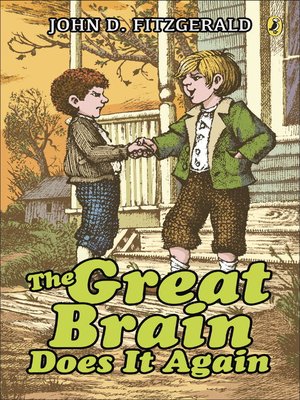
If you don’t know The Great Brain, you are in for a good time. I like to think of him as kin to Tom Sawyer with a money-loving heart and an observant little brother. This book is number 7 in the series (originally the last book, but one more was published posthumously from the author’s notes). You can read the books in any order and each chapter stands more or less alone.
The stories are narrated by JD, the Great Brain’s little brother, and they all take place in a small town in Utah at the end of the 19th century. JD’s older brother, Tom D (or TD), is constantly plotting ways to get rich, mostly by swindling kids out of their money and then convincing them that what he did was acceptable. What I love the most is that while we are laughing at yet another swindle (JD will acknowledge that he has literally never won a bet with Tom even as he shakes his hand on one more sure thing), the books don’t shy away from complex issues like poverty, religion (the family is Catholic in a majority-Mormon area – but no insults here, just acknowledgements), Indigenous peoples (respected!), and even depression (in an earlier book) . This particular book includes lots of belly laughs along with a chapter that brought tears to both my eyes and my 10-year-old’s. We talked about family expectations, chores, who has responsibility for their actions, why Indigenous people were placed on reservations… You get the picture.
We’ve been reading the books out of order (because I couldn’t find them all), so we’ve got two or three left, and we can’t wait to get to the rest of them. Also, we are clearly going to love Tom Sawyer when we get there.
I also just finished Son of a Trickster by Eden Robinson
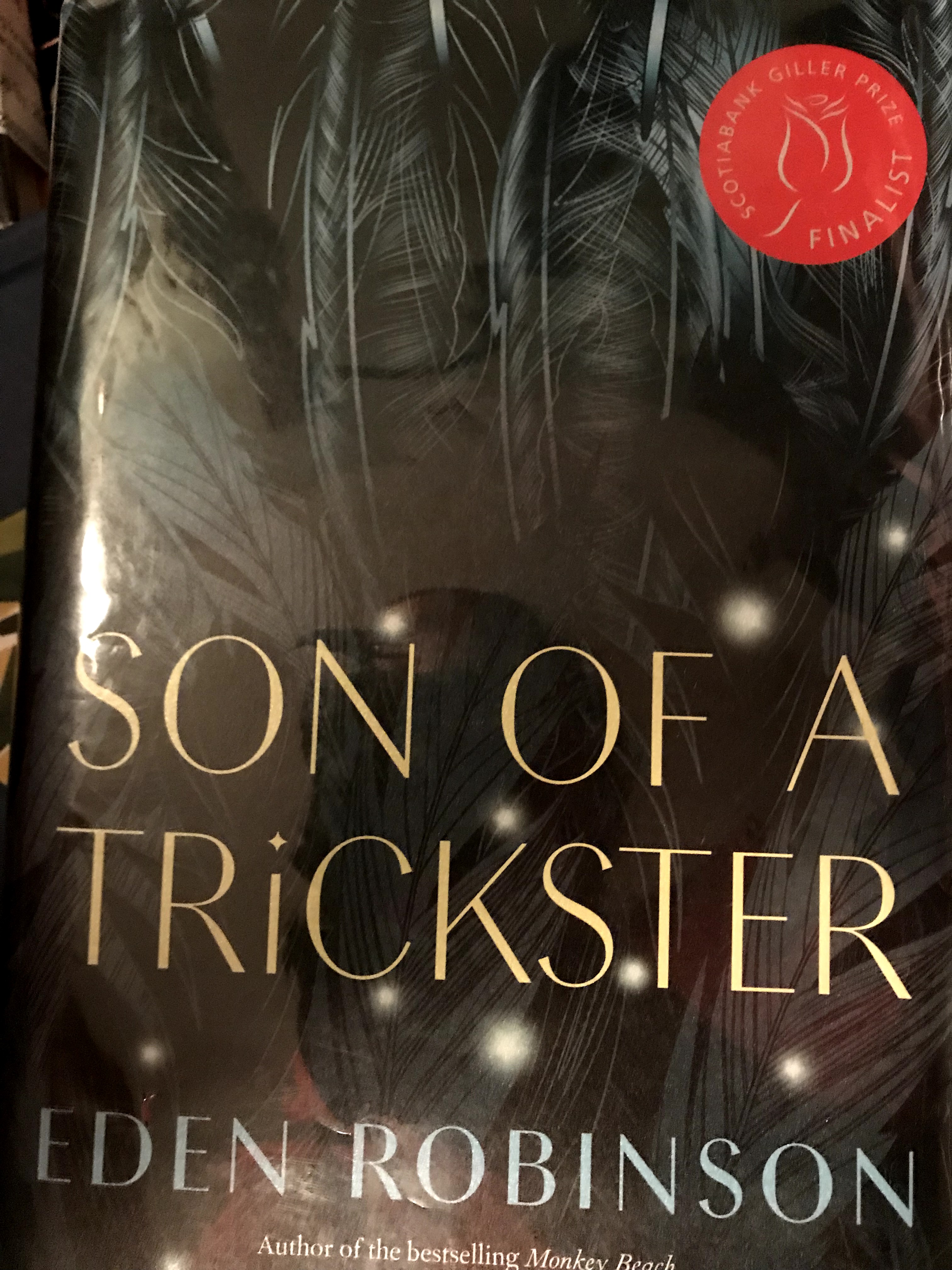
There is much to love about this coming of age novel. First, the language is gorgeous. But my favourite thing is the narration by Jared, the protagonist. He is gentle and thoughtful and narrates his life without self-pity. His voice is so strong that it took me a while to see him as others must: a druggie, alkie, Indigenous kid who is going nowhere. He does not see himself that way – who does? – and his actions make complete sense when we are inside his head. In fact, what I love about this book is that as I read, I believed that Jared’s responses were the only real response available to the world around him. This is first person narration at its best.
I have two reservations about this book, and neither is enough to prevent me from highly recommending it. First, the trickster stuff really picks up right at the end. This is the first book of a trilogy, but I would have like more trickster earlier from a plot perspective. Second, I’d have to think about various reactions if I were to teach this book. Though the violence, drugs and alcohol are all filtered through Jared’s narration, there’s not really any repudiation of these things. So, in terms of *teaching* the novel, I’d want to be thoughtful. In terms of reading it, I’d say “have at it!”
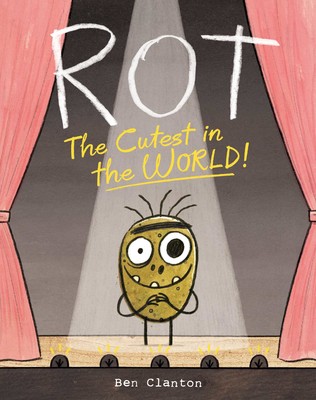
And finally, a mini plug for Ben Clanton’s books Rot, The Cutest in the World and It Came in the Mail.
 and
and 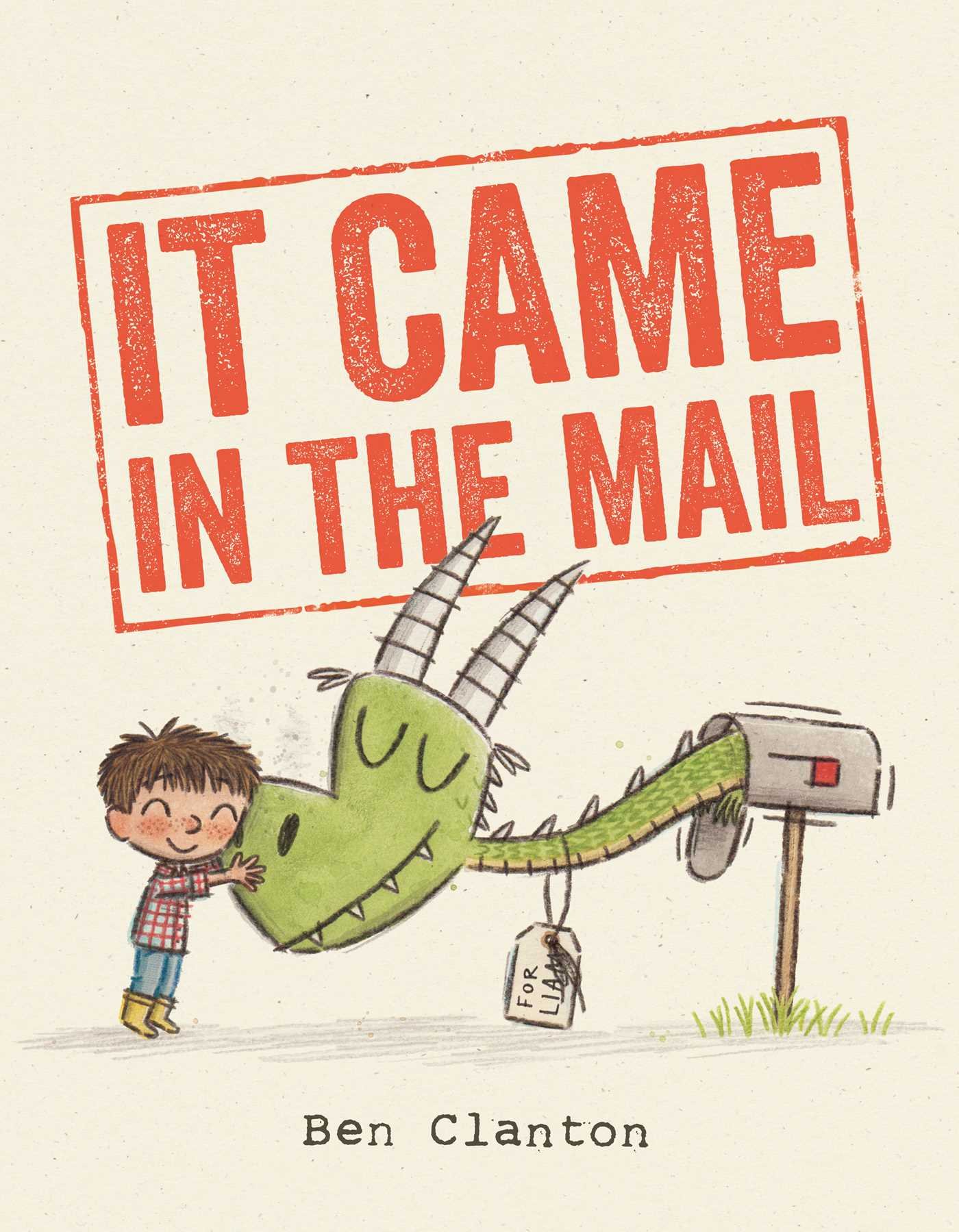
We found these because my kids wanted more Narwhal books. We’ve finished the Narwhal books (to date) but we found Ben Clanton. Both of my boys – ages 8 & 10 – giggled their way through these and the older declared that It Came In the Mail was “a really good book” even though he’s supposedly done with picture books.
Currently reading:
Read aloud: Fish in a Tree by Lynda Mullaly Hunt
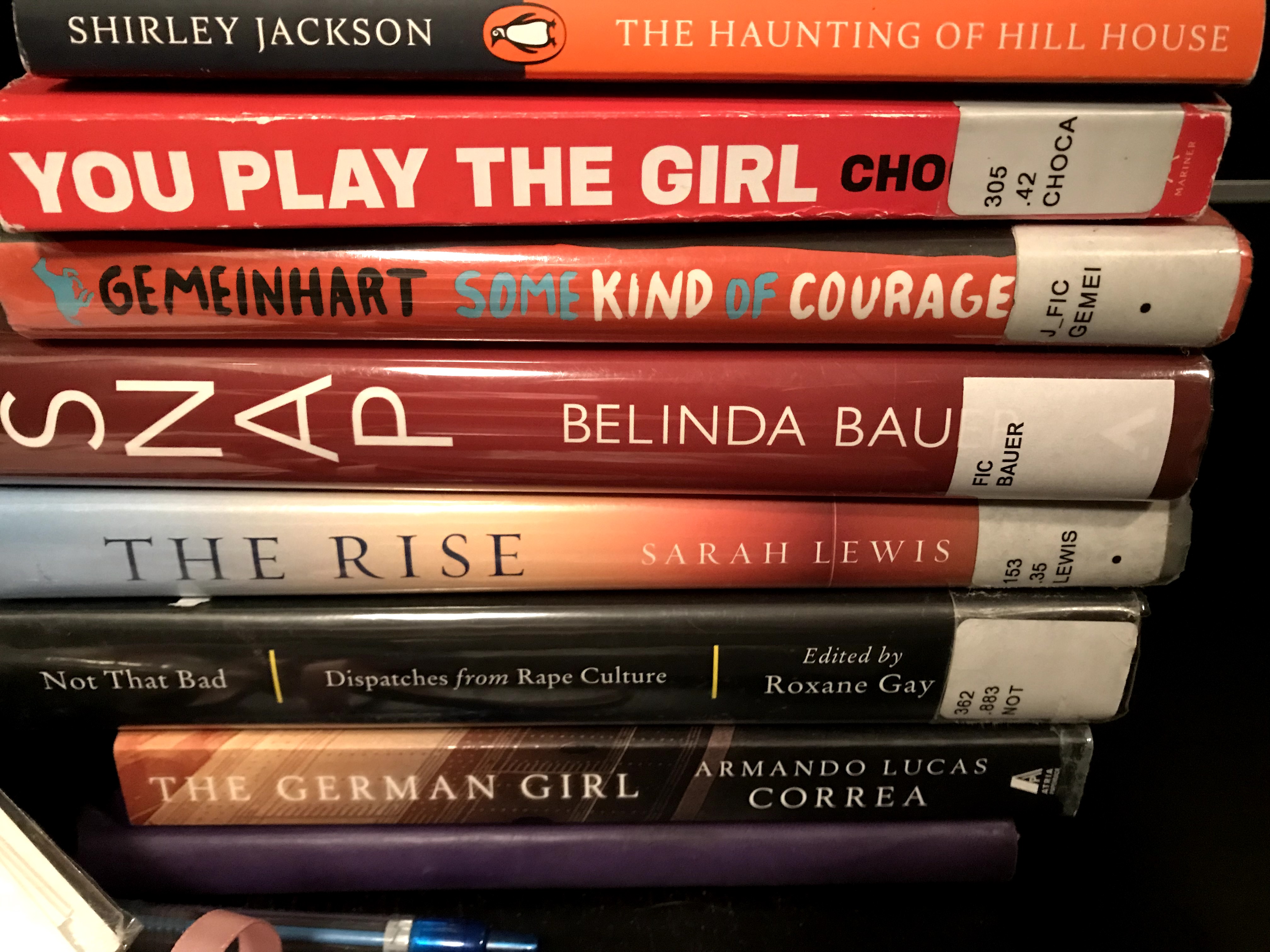
YA: Some Kind of Courage by Dan Gemeinhart
PD: Book Love by Penny Kittle
Just for me: Searching for Stars on an Island in Maine by Alan Lightman




 many ways: it’s beautiful and has amazing illustrations, it has a nice heft to it and is a bit oversized without being as unwieldy as a coffee table book, and it comprises letters from all sorts of amazing writers. I am nibbling away at it steadily. Near that is Searching for Stars on an Island in Maine. I was about halfway through this lyrical, thoughtful contemplation of the intersection between science and religion, our desire for permanence and our experience of change, when I had to return it to the library because someone else had it on hold (sigh). Now I have it back, but I feel like I need a bit of a slower pace in order to really appreciate Lightman’s prose. I have it until the 15th and March break starts tomorrow afternoon, so I should be good.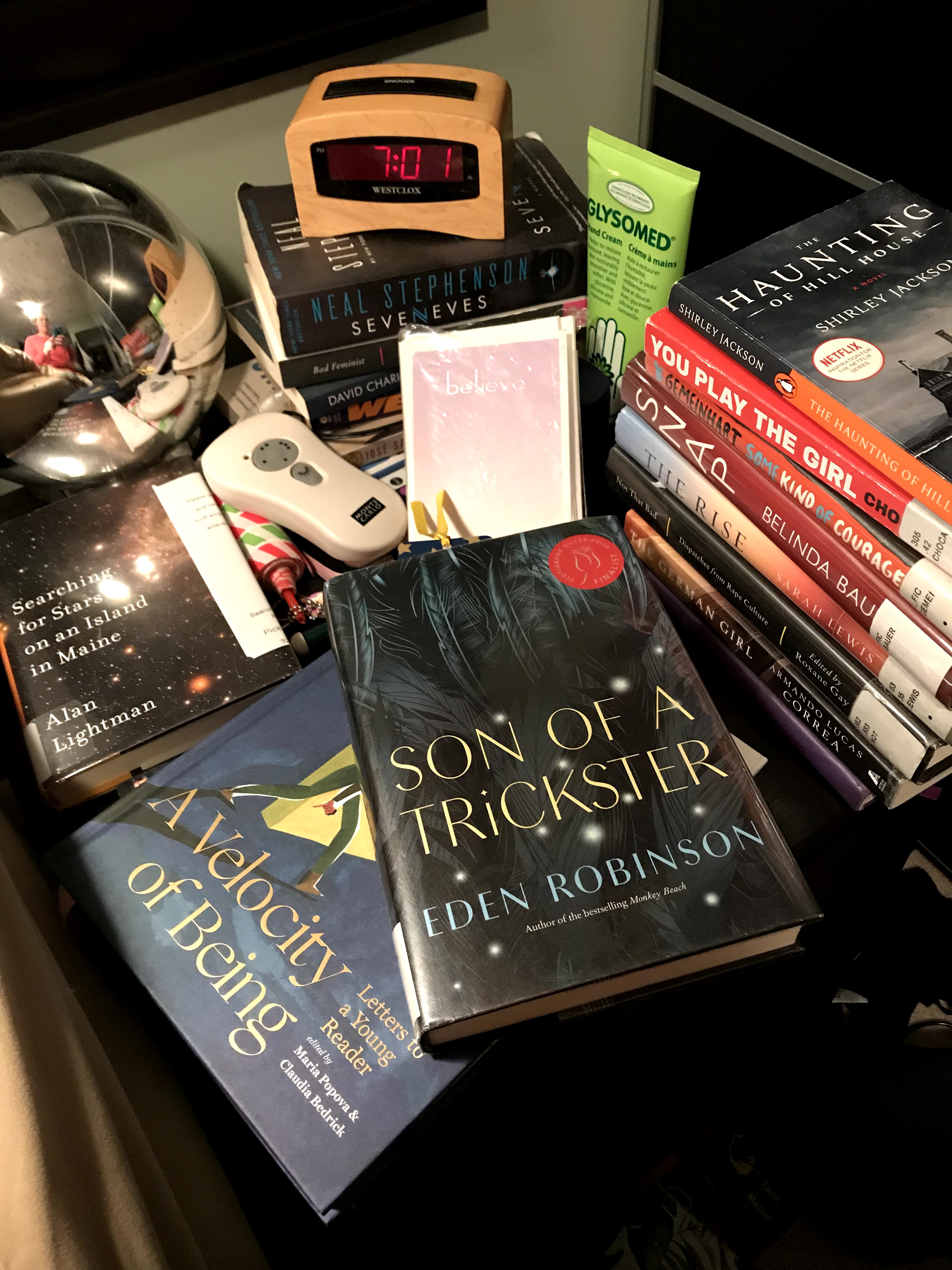


 Persistence and Pedagogy