Welcome home: Slice of Life 11/31 #SOL20

img_2448
Dave, the builder, surprises me at the second floor bedroom window. He’s installing siding.

I thought this post would write itself. I thought, easy peasy. We’ll get home and I’ll write about how great it is to be home.

We officially moved home yesterday evening. HOORAY! We had just enough time to get everyone into their own beds and get to sleep. It was glorious. I took today off as a “moving day” (which is a really lovely thing for my employer to offer). The day went mostly like this:

Um… have you seen the measuring cups?
Shoot! The mugs are still at the apartment! Maybe you can use a glass for your coffee? I’ll use the travel mug for tea.
How on earth did you shower with no soap in there? No, nevermind, don’t tell me.
I can’t find my long-sleeved shirts. Do you have any idea which box they might be in?
Oh my gosh! Boys! You have to get out of here! It takes 10 minutes longer to walk to school from here! You’re going to be late!
Wait – where’s the hairbrush?

Not long after the kids were off, the builders arrived. Bang! Bang! Bang! Tssssst…. tsssst….zzzzz… BANG! They were finishing up the siding. And they still had to cut the dryer vent… and we can’t put anything against the walls or in the closets yet because the painter has to do touch-ups on Friday. The final drawer pulls for the master bathroom aren’t in, so we can only open two of the drawers. There is a giant orange work trolley thing in the corner of our kitchen.

All day long, I was looking for a moment to write about that showed gratitude or humour or just, you know, my-new-house-is-great-and-also-I’m-appropriately-humble. I couldn’t find anything because, honestly, I the only thing I was feeling was overwhelmed. Every time I tried to sit down to write, I thought of something else I needed to do. I spent a lot of time opening the computer, scrolling aimlessly through social media, realizing I had forgotten something important, closing the computer to go do the suddenly important thing, realizing I hadn’t written anything, and starting the process over again.

The kids came home and scotch-taped saran-wrap to the freshly painted walls. I cannot explain this. A neighbour came over with his dog and the dog pooped on the new carpet. He was mortified (but it was perfectly easy to clean). I lost the phone handset in a pile of bedclothes and put blankets over the windows since we don’t yet have curtains or blinds. Finally, I had to take a walk to clear my head. There is an awful lot going on.

Today was a glorious mess, and guess what? We are home.

3d17d-screen2bshot2b2014-12-152bat2b7-37-262bpm


All they want is to change the world: Slice of Life 10/31 #SOL20

My Grade 12 class is writing personal narrative essays for the first time in their lives. Because the form is new to them, I’ve been flooding them with mentor texts from real life sources, mostly The New York Times “Lives” column and The Globe and Mail “First Person” column. We study structure, imitate style, consider topics and then work on our own essays. Yesterday, we were looking at an essay called “In this age of #MeToo, my daughter needs to know there are good men out there” so that we could study the way the author used multiple short anecdotes to make her point.

My students, ever willing, examined the structure and noticed the chronology, the transitions, the implied thesis, but eventually the discussion turned to the content of the essay itself.

“I really noticed the silencing of women’s voices in this essay.”
“Even her daughter doesn’t have a voice.”
“I appreciate that she trying to point out that there are many good people in the world, but she’s not addressing the bigger picture.”
“Do you see where she credits her partner with being the primary caregiver but then she’s the one with the playpen in her office? I wonder about their definition of primary caregiver.”
“In the end, all of her examples imply that, as a woman, she is a problem and the men are kind for helping her with this problem. They don’t change the way things work, they just make space for the problems she encounters.”

Snapping – our form of quiet clapping – broke out spontaneously around the room at that last comment.

I wish I had recorded the discussion. These young people were understanding of the author’s perspective; they knew what she was trying to do and they sympathized with her. They didn’t disagree that many men are helpful and supportive – and let’s be clear that this discussion included male, female, and a rainbow of LGBTQ+ students – but they were absolutely unwilling to concede that “good” is good enough. They don’t want men to help them lift things, and they don’t want men to change their work schedules to walk them home so they feel safe. They want a world where it actually is safe for them to walk home and where equipment they use to do their jobs is designed so that they can move it without asking a man to help.

I stood in awe of them. My generation owes them more than reminders that many people are kind and that sexism is inevitable. We owe it to them to change the world – and if we don’t, they intend to do it themselves.


3d17d-screen2bshot2b2014-12-152bat2b7-37-262bpm

Stupid is as stupid does: Slice of Life 9/31 #SOL20

“This is going to sound, well…” she hesitates, turns her head away from me, “I mean, I know it’s silly, but Idon’twanttolookstupid.” Her head comes back around, chin a little up, glistening eyes meeting mine.

I suspect that she’s only meeting with me because her mom – a friend of mine outside of school – made her. I know she wants help, but I also know she doesn’t want to ask for help. No, it’s more than that: she doesn’t want to have to ask for help. But here we are.

*******

Another student stands in front of her class to give a quick presentation. She is well-prepared but visibly nervous. The first thirty-seconds go well, but once she misses a word her colour rises and suddenly she cannot go on. I encourage her gently and she tries again, but she can’t do it. Tears spring to her eyes.

Later, after the others have left the room she apologizes and says, “I just felt so stupid.”

********

“Is he using his computer accommodations?” his mother asks on the phone. I’ve called home because he’s having a lot of trouble writing in class. He just can’t seem to get pen to paper, just can’t seem to get the words from his brain to the end of his fingers.
“No,” I admit, shaking my head, though I know she can’t see me. “He absolutely refuses. He says he doesn’t want to seem stupid.”

********

Look stupid! I want to yell. I want to scream it down the hallways. Look stupid! Just do it! Go out on the limb, take a guess, ask the question! Try the hard way, make a fool of yourself, share your first drafts. Let it all hang out, be yourself, be human. Stop

In class I catch myself saying, “Well, that was stupid” when I make yet another mistake. I look up at a group of soon-to-be graduates, realize what I’ve done and correct myself, “Guess stupid is as good a starting point as any. Might as well keep going.”

3d17d-screen2bshot2b2014-12-152bat2b7-37-262bpm

Almost in: Slice of Life 8/31 #SOL20

Today was going to be my day of not writing. I had pre-forgiven myself & reminded myself that I started this month’s challenge knowing that I might not write every day because our renovations are finishing up and we’re moving home. Yesterday, the movers came & took nearly everything out of the apartment we’ve been renting for nine months and moved it all over to our house. They didn’t take everything because of the *tiny* hiccup where our house has not yet been declared “fit for occupancy.” (See here for the whole story.) Which means that we packed and then unpacked all day yesterday, then went back to our almost barren apartment and slept on air mattresses (with two very freaked out cats).

Today promised to be another long & exhausting day with only the air mattresses to look forward to tonight. I woke up ready but already tired. No point in writing, I figured. No one wants to hear about unpacking. And then this happened:


Our friends showed up. Tara and Isabella organized almost our entire kitchen. Ed built one of the kids’ beds while Andre toiled away at the master bedroom. Peter and Anita showed up with beer and more kids. Carmen and her girls popped in to say hello and one stayed to help (her sister had a class, or I’m sure she would have stayed, too). Lara & Reagan came with banana bread and stayed to set up Thomas’s room.

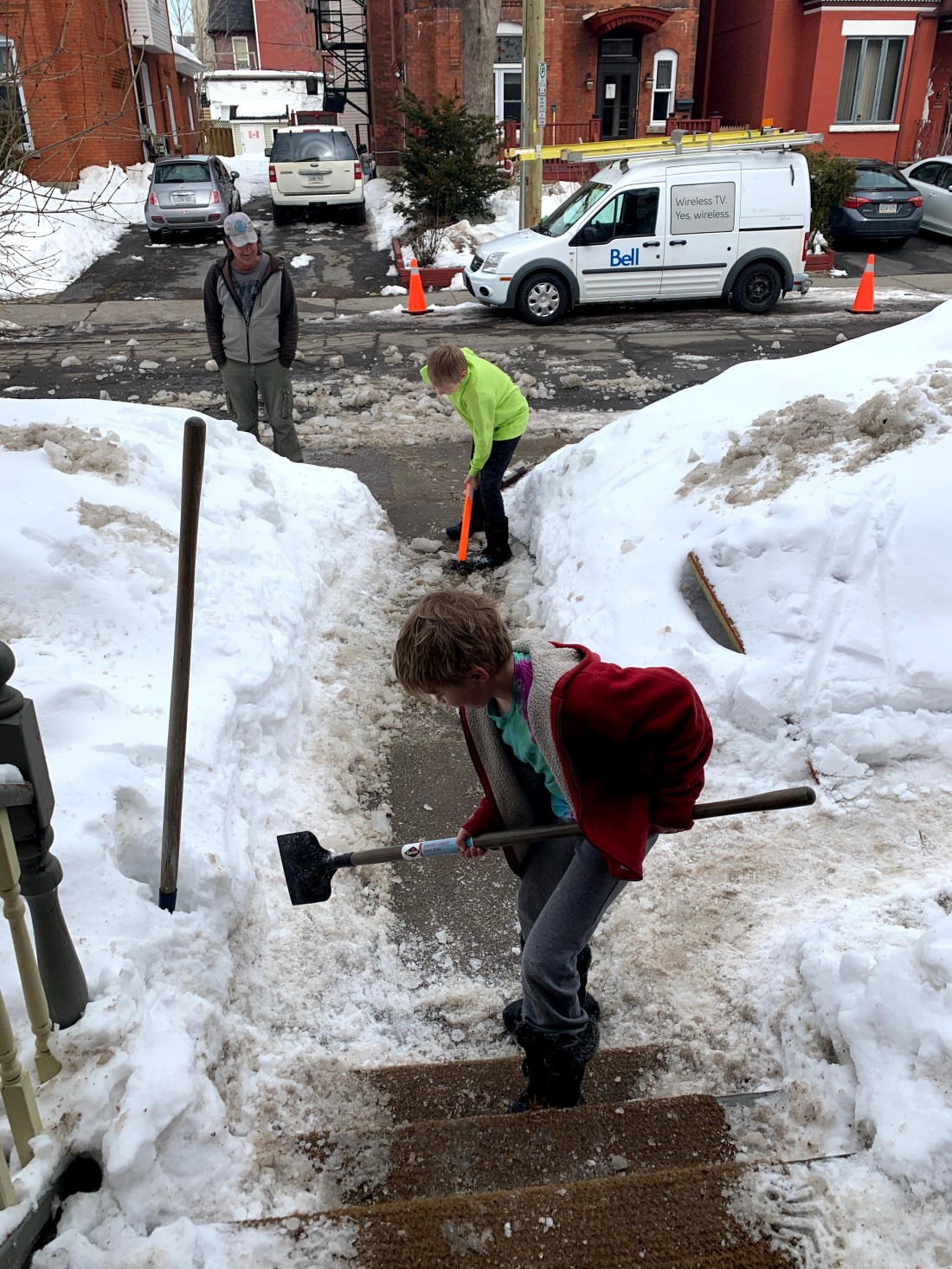
Even the 9-year-olds got involved. We challenged them (ok, bribed them) to clear the 4-ish inches of ice from the front walkway. Look at this: img_2404

Not only did they use an ice chopper and a sledgehammer, but our next door neighbour, Mike, came over and gave them lots of tips while he cheered them on (but didn’t do it for them). They got that entire walkway cleared from a winter’s worth of ice.

And now here I am in a house that is newly full of friendship and laughter. The inspector may not think this house is ready for occupancy, but I know that it is.

And how could I not write about this day?

(PS – I will be even happier when we get to sleep here – maybe tomorrow.)

3d17d-screen2bshot2b2014-12-152bat2b7-37-262bpm

When English goes to Math: Slice of Life 7/31 #SOL20

“Amanda! Just the person I wanted to see! I have a story you’re going to love.” Mr. W pops into the English office on his prep. We are both pedagogy nerds, and we love the Applied classes we regularly teach. Mr. W teaches math and I teach English, so we often have many of the same students. We like to swap stories and have even managed to create a couple of lessons that overlapped, much to the shock/horror/delight of our students. I’m grinning before he even starts talking.

“So, you have O, right?”

I nod. I have O and four other students for the second semester in a row.

“So, this week has been nothing but trying to get him to pay attention.” Oh, yes, how well I know this. “It’s been his ipod, phone whatever. All week long.”

I am still nodding when Mr. W delivers the twist. “But yesterday, I look up, and what is he doing? He’s reading. I couldn’t believe it. There he is with Harry Potter under his desk. I couldn’t get him to stop. He read for most of the class.”

I wince. “Sorry?” Then I pause, “Actually, sorry not sorry…”

Mr. W gets it. He grins and his eyes twinkle. “But wait! Then, at the end of class, he comes up to me and says, ‘Sorry I wasn’t paying attention, sir, but I’m reading Harry Potter and it’s the first book I’ve ever read without pictures and it’s really good.’ And what could I say? So I agreed. Whatever you’re doing, it’s working.”

I am speechless.

Mr W pauses, letting me take this all in, then says, “But to get you back, next week I’m sending him to English with math worksheets…”

I have to laugh, “You can’t fool me. I know you don’t do worksheets.”

He chuckles, “Drat! You know me too well!” Then he leaves the office, and I sit, quietly stunned.

How lucky I am. How lucky to have a colleague who also loves these students, who knows the value of reading, who takes the time to tell me this story, even though he could have seen this as a disruption

How lucky I am that I get to teach so many of these students for a second semester. Having them all year is a real treat for me. I love how we can move past the routines of the classroom and start to reach for deeper learning. They trust me more: they’re more willing to try a new form of writing, knowing that I’m there to support not judge; they’re more willing to let themselves try a new book. I am so lucky to watch this unfold.

I know that reading is really tough for some of my students; the words on the page just don’t quite come together in their minds for various reasons. Daily independent reading is a hard sell. It takes us weeks (months, for some of them) to fall into the rhythm of regular reading. I have to be extremely consistent and firm. I have to really believe that they need to start where they are and that, for some of my students – grade 10 students – that means spending a semester reading Diary of a Wimpy Kid, Amulet and Bone. These are all good books, and I’ve read the research about reading & graphic novels & developing readers, but I will admit to moments where I wonder if they will*ever* move forward.

And here we are. O is reading Harry Potter in math class. His mother told me that she went out and bought him the whole series. And J has finished his first chapter book and started The Ranger’s Apprentice series; his mom bought him the series, too. And V is on book 5 of Percy Jackson. M has a favourite author (Jason Reynolds!!).

And me? I’m just going to spend this Saturday morning basking in the feeling that I work in a school where we – students and teachers alike – celebrate our work and our success. What could be better than that?

3d17d-screen2bshot2b2014-12-152bat2b7-37-262bpm

Pipe dreams: Slice of Life 6/31 #SOL20

The movers are booked for tomorrow. My husband has been packing for days. The cats are freaked out, the children’s room is somehow magically both packed and a complete mess, and the kitchen is bare. After living in a small apartment during almost nine months of renovations, we are ready to go home.

(Originally, these renovations were supposed to take four months, but then it turned out our kitchen was actually the old stable, and it wasn’t exactly firmly attached to the house and the foundation was, well, somewhat less than stable. The project grew.)

The builders have been putting the finishing touches on the house. For me, finishing touches are things like putting up the light fixtures and putting down the carpet. For them, apparently, finishing touches include things like moving the plumbing in the basement so that the bathrooms drain more effectively – or something like that. And yesterday, as they dug into the basement floor, they discovered – completely by accident – that our 110+ year old house still had pipes made of clay.

Notice the use of the past tense. The pipes disintegrated.

3da5221c-8409-4693-8eed-40953e5e025f
You can see the clay on the end of this pipe; the hole that was left behind is in the background.

Did I mention that we are supposed to move in tomorrow? Unfortunately, when the inspector came yesterday – right after the whole, “oops, my shovel went right through that pipe” debacle – he declared the house “unfit for occupancy.”

Luckily, our (truly amazing) builder has already fixed the pipe problem. Unluckily, booking a housing inspector requires *at least* 24-hours notice. So… the movers come tomorrow but we can’t actually stay in our house until Monday. Or maybe Tuesday. Also, Andre – who is wildly prepared – had already packed all of the food, most of the kitchen and all but two sets of clothes for him and the boys. I’m the only slacker and, thus, the only one with clothes.

Now, I will admit to feeling a little sick about all of this, but my 12 year old’s over-the-top pre-teen reaction helped me put things in perspective. Upon hearing about the pipes, he heaved a giant sigh and threw himself onto the couch: “I just knew something like this was going to happen. I am literally going to die if we have to stay in this apartment.”

I mean, he might die, but we’ve lasted nine months. It seems like we can make another three days. Right?

3d17d-screen2bshot2b2014-12-152bat2b7-37-262bpm


Good Enough: Slice of Life 5/31 #SOL20

I am a perfectionist. Once, I wore that epithet as a badge of honour: not only would I get things done, I got them done well. Wait: I got them done *perfectly.* In high school, once I figured out the grades-game, I got straight As. I still smart from a B+ in a grad school course; I still think – literally decades later – that the prof was, well, wrong.

I’ve striven for perfection in pretty much every area of my life (yes, I just looked up the past participle of “strive”) and, while I’ve been able to let go of some things – our house can be, frankly, messy; and my amazing, complicated & complex second child is a regular reminder that there really is no such thing as the perfect parent – academics are still a real bugaboo for me.

And I’m taking this course… the FIFTH since August because I am finally getting the credentials I need to be fully settled in the Ontario teaching system; it’s a lot of hoop-jumping. In case you are wondering – which you really shouldn’t be – I got As in the first four. And not just As; I got a 98 in one of them. Not that I care, mind you… just kidding: I definitely care.

Readers, I got a 100 on the first assignment of this current course. And I have a job and a family. And we are moving on Saturday – that’s in TWO days. And I turned in assignment #2 early because we’re moving on the day it’s due. The assignment involves making a video of myself explaining a text. I sat at my computer, a blue sheet draped behind me, and talked about the text. My eyes are always looking a little down; I fumble to show the book to the camera; my face fills the screen. I know what I’m talking about, but the video itself is not great.

Now we are required to share our videos – I did not know this would happen – and the young teachers in the course have videos that look amazing: visuals and transitions and screenshots. Not one them holds the text up to the camera and accidentally moves it the wrong way. They look so good that it makes my stomach hurt a little.

So I decided to re-film mine. I still have two days until it’s due, and I could definitely learn how to do those video-things. I mean, I know how to use the internet to learn things and also maybe a colleague would help? at lunch? on Friday?

No.

For once in my life I am going to acknowledge that my work is good enough. I will learn nothing more from filming that video again. Until the due date is past, I will repeat this mantra: “this is good enough.”

I just need you to hold me to that.

3d17d-screen2bshot2b2014-12-152bat2b7-37-262bpm

#BlackJoy: Slice of Life 4/31 #SOL20

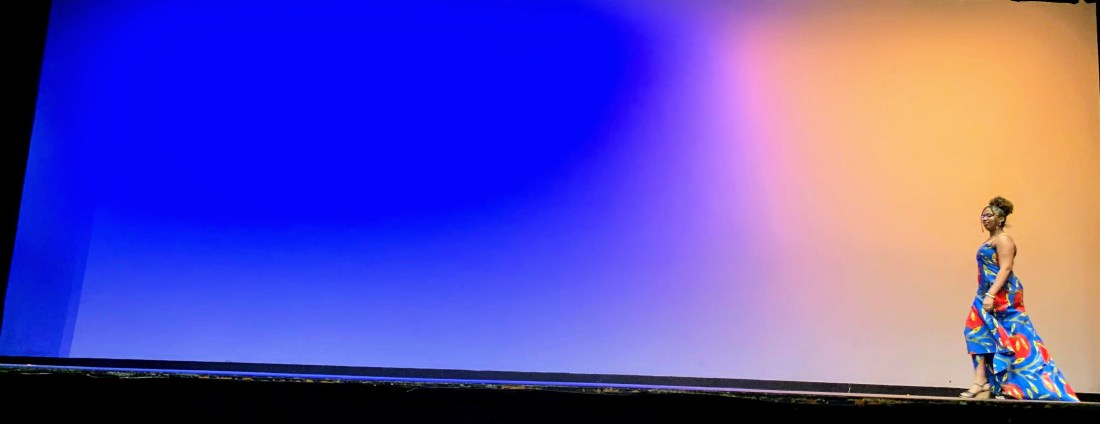
AleciaShe walked onto the stage wearing a blue dress and attitude. She owned every bit of who she is – bold, bright, and black. Who could take their eyes off of her, suddenly beautiful? She paused, posed, and moved on.

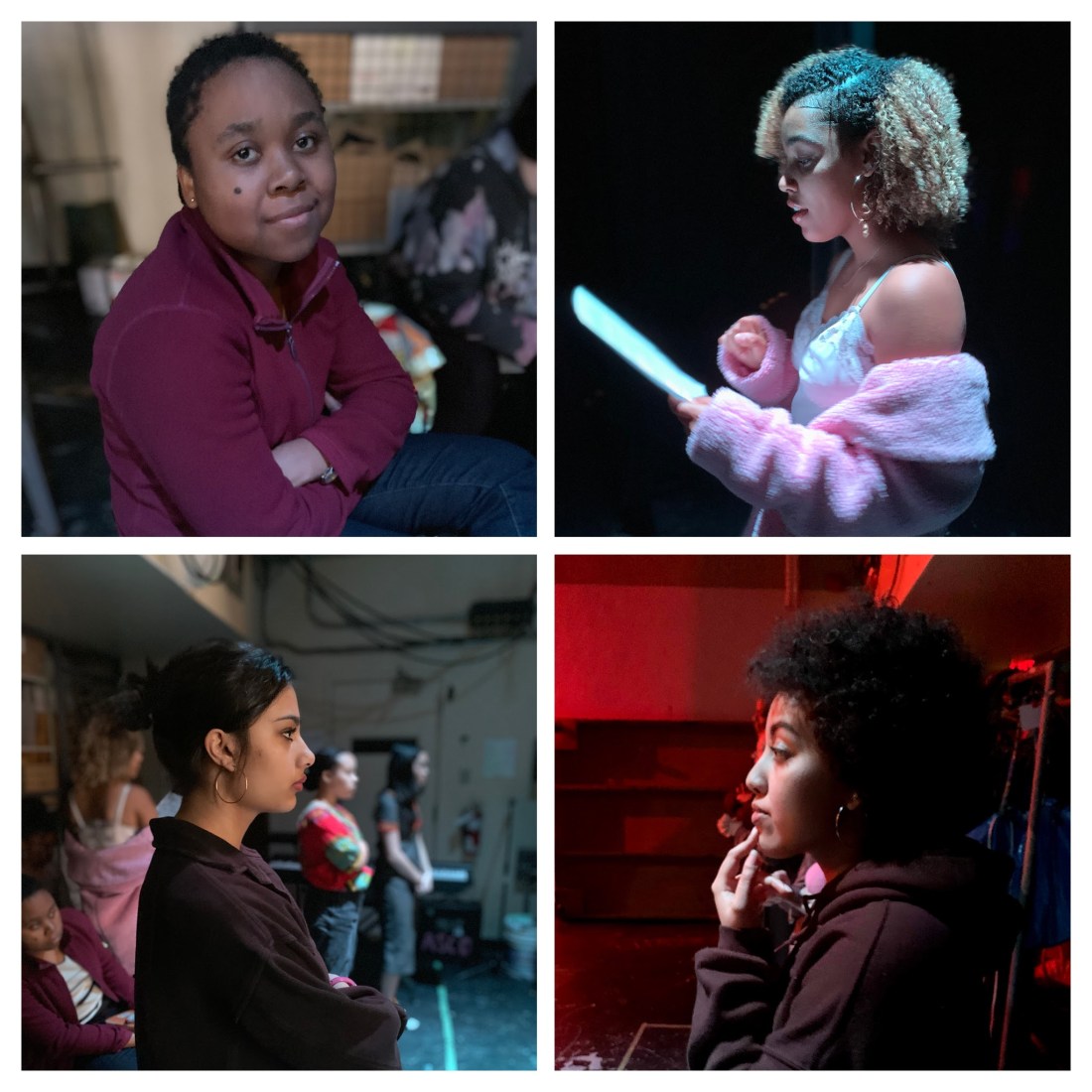
Black student after black student followed, the bright colours of their outfits matched their smiles as they claimed their share of the spotlight. On this day, black students were the hosts, the performers, the designers, the readers, the models. At this assembly, everyone in the school saw them.img_0563

My heart nearly burst with happiness. They did this themselves. They applied for and won $1000 grant. They made many of the clothes from fabric they chose. They booked speakers and artists and prepared their own artistic performances. When a strike day forced us to move the date of the assembly and all – all! – of the guests couldn’t make it, the students planned the whole thing again in less than a week.

Working with these students has shown me their determination and their awareness of what they face because of their skin colour, has made me a better ally, has changed me in ways I never expected. The world had better get ready for these kids. They are coming and they are not interested in anyone trying to hold them back.

img_2313-collage3d17d-screen2bshot2b2014-12-152bat2b7-37-262bpm

Bouncing Back – writing in front of them, take 2: Slice of Life 3/31 #SOL20

Last Tuesday, I posted about trying to write in front of my class and failing. On Wednesday, our class used a New York Times mentor text to think about how we can use details to show rather than tell. The text is from an essay called “The Iguana in the Bathtub” by Anne Doten. Here’s how it opens:

When the temperature dipped below 40, iguanas started falling from the trees. Small, sleek green iguanas; big iguanas as long as four feet from snout to tail, scales cresting gloriously from their heads; orange-and-green iguanas, their muscled, goose-pimpled arms resolving into sharp claws. Iguanas were everywhere: in the bushy areas surrounding canals, on sidewalks, in backyards, lying helpless among the fallen, rotting fruit of mango and orange trees.

I encouraged the students to try their hand at opening a scene in this way – exuberant, over the top description. We played around with this for a while, and then everyone got back to work on their own scenes. I didn’t write in front of them on Wednesday, but that evening, as I prepared for the next day’s class, I dove back into my own failed attempt and used the model I’d given the students. Imitating Doten’s opening freed something in me, and the words came more easily. Suddenly, I was able to write the story I’d failed at the day before. On Thursday, I showed my students my progress, and they were suitably impressed – whether with my story or my persistence, I am not sure.

We’ve also looked at dialogue in class, and I don’t have any in here yet, so I’m going to ask for suggestions today. My students are of good ideas. Until then, here’s my revised piece:

When Mrs. Barkman announced the mythology test, all of our eyes widened. We had heard about this test from the upperclassmen: impossible, beyond the feats of human memory, designed exclusively to weed out those of us who didn’t really belong in Honors English, created merely to squash all of our dreams. To hear my best friend’s older brother tell it, every year students ran weeping from the classroom, tearing their hair, blood seeping from their eyes, fingers permanently disfigured from the cramping caused by all the writing. We were scared.

After class, my friends and I huddled in the hallway and murmured worriedly. What would happen if we failed? None of us had ever failed. It was unthinkable.

Somehow, someone appointed me to talk to Mrs. Barkman about the test. I say “somehow” but, looking back, I’m not shocked it was me. I have long been too willing to stand up to authority, especially in the role of defender. I was, simultaneously, intensely studious and intensely willing to speak up. I didn’t yet know if I was a rule-follower or a rebel. I didn’t yet know that I could be both. I was 13. One day I wore blue eyeshadow, “midnight” mascara, and blush applied so heavily that I looked permanently sunburned. The next day I came to school fresh-faced wearing turquoise pants and a Disney t-shirt.

In my mind, I approach Mrs. Barkman as a 13-year-old with pigtails. I tell her that we are not ready for the test tomorrow and that we need more time. In my mind, she looms over me, nose like a hatchet, eyes like a hawk. In my mind, her sharp voice cuts through my tremulous one as she denies me – us – any leeway.

But I might have been wearing mascara so thick that it flaked onto my cheekbones and a shirt designed to show my nearly nonexistent cleavage. It’s possible that I was shrill and demanding. There’s a chance I was more cocky than courageous.

Both scenarios are equally possible. Either way, she refused to move the test.

I worried so much about the test and my encounter with my terrifying teacher that I made myself sick. My mother kept me home from school the next day. Mrs. Barkman gave my peers a ridiculously easy matching test and, when I returned, I took the hard test – alone. 

I aced it, but it was months before Mrs. Barkman stopped thinking I had skipped on purpose. I aced it, but I still didn’t know if I was a nerd or a rebel or a social justice warrior. I think I might have just been 13.


3d17d-screen2bshot2b2014-12-152bat2b7-37-262bpm

I Can Hear You Now: Slice of Life 2/31 #SOL20

I am sitting absolutely straight in a hard-backed chair in the middle of a dimly lit sound-proofed room. Wires stick out of both sides of my head. To my right the thick hazy glass of the small window only vaguely allows me to see out.

I strain my ears. Is that a sound? There! At the far outside edges of my senses, I detect something. I press the button on the black metal contraption I hold in my hands. After all, before she left, she told me that it might seem almost imaginary, but if I heard anything I should press.

I’m having my hearing tested. The audiologist went through a whole series of questions before we began. The long and the short of it was, “Why are you here?” I’m too young, really, and don’t work in an especially loud environment. I don’t regularly attend loud concerts and no one in my family is complaining that I don’t respond when they speak.

Still, here I sit, furrowing my brow and tensing my body in concentration. Do I hear that? Is that a noise? I press the button.

Last semester, I finally gave up. I couldn’t hear about half of my students when they spoke. “Speak up!” I’d say. “Can you repeat that?” Most of them just trailed off and whatever thought they’d had was gone. I know that my classes are full of kids who have mastered the art of hiding from their teachers, but this was too much. I really wanted to hear what they were saying.

The room I was teaching in is, frankly, terrible for sound. It’s right by the water fountain, the boys bathroom and a t-intersection with another hallway. It’s just a few doors down from the music room. And, worst of all, someone designed the building so that the air vent blows directly into the front of the room, right where a teacher might stand. Honestly, it was a miracle I could hear anyone at all.

When I mentioned my frustrating inability to hear my students to my doctor at a checkup, she said,”I’ll refer you.”  And here I am. Oh! My thoughts have drifted. Did I just miss a really low tone? I press the button again.

Finally, the test ends. Back in the regular office, I face the audiologist with trepidation. She grins, “Your students need to speak up. Your hearing is nearly bionic in some areas and fine in all areas.”

Whew.

Alright, kiddos, I’ve got science on my side: I can hear you now. It’s time to raise your voices and tell the world – or at least me – what you know.


3d17d-screen2bshot2b2014-12-152bat2b7-37-262bpm