Dear Next Year’s Teacher

A couple of years ago, I learned that many elementary school teachers create these amazing documents about their students, which they then share with next year’s teachers. I was flabbergasted – what a lot of work! – and deeply impressed. A thoughtful document that shares students’ likes & dislikes, strengths and areas for growth, and even family situation could help create a soft landing space for the student as they transition from year to year. (And yes, it could backfire; and yes, students change; and yes, we all have biases; and yes, the new teacher will need to get to know the students in the new year – but let’s assume positive intentions all around.)

In high school, we don’t do anything like this. We pretend that an overall grade and some learning skills are enough information (they aren’t), leaving me to wonder, occasionally, what I would write to next year’s teacher if I had a chance. Obviously, I can’t ethically write a public post about individual students, but here’s what I wish next year’s university profs knew.

Dear Next Year’s Professor,

We tried. We really did. We read, and we wrote, and we even studied Hamlet. Ok, we *sort of* studied Hamlet. Ok, we got through Hamlet and watched several movie versions, which has to count for something. In general, the students were engaged. Most of them came most days. Everyone at least tried to read a book – if you include manga, which I do. Everyone turned in at least one written assignment and everyone participated in a formal debate, even if they were extremely unhappy about having to argue in favour of something they disagreed with. Even if they cried. Even if they spoke nearly inaudibly or in their third or fourth language. One way or another, they stood in front of their peers and spoke.

In good news, most people learned to revise their work using feedback, and most people were able to share their strongly held beliefs about the world without completely alienating their classmates, even in daily conversations. I’ll admit that the last one was hard. Heck, both of them were hard.

Still, you should probably know that sometimes people whispered through silent reading. And no matter what I did, their cellphones still ended up in their hands, almost by magic. Lots of times people were late. And since January, a lot of people have resorted to using AI when they’re feeling pressured – even if I try to dial back the pressure. Also, to be clear, turning work in on time seems to have disappeared, along with thank you notes and calling cards and other niceties of a bygone era. And, honestly, on a few days near the end, a fair number of students skipped even though they really needed the time in class. After all, they were still in high school.

I know they will arrive in your classroom looking like adults. Some of them will think they are adults and, since the law and our society believe that to be true, I guess they are. Nevertheless, I think you should probably know that they really aren’t fully grown. For example, every now and then, someone’s father still walks them to class, just to be sure they make it. Even at the end of the year, I had to get in touch with several parents in order to convince a few students to hand in one final assignment. And more than one student cried near the end of the year, usually from the sheer emotional overwhelm. They will swear that they know how to finish their work on time, but lots of them don’t, and they think I’ve pushed them hard, but they’re really only just starting to wrap their heads around essays and critical thinking. Also, between you and me, many of them haven’t mastered complicated grammar. Appositives flummox some of them, and comma splices abound.

Still, they want to learn; I’ve seen their excitement when they’re deep into an argument they believe, scrolling through the text, looking for evidence to prove that Gertrude is the hero or that grief is the defining feature of the play. I’ve heard them talking about calculus problems and sharing information about Chemistry. One of them has started a business; another is determined to be a designer. They have lived through things I can only imagine. Be gentle with them. They’ve only just dipped their toes in academic thought, even though they think they can already swim. And if there are days when you are tempted to despair or when you hear yourself say, “what are they teaching them in high school these days?” please remember that we tried. All of us. We really did.

Sincerely,

Their Grade 12 English teacher

Summer looms

The countdown to the end of the year is on. In my office, it’s quite literally on the white board, which displays the dwindling number of teaching days that remain. Today we hit 10. Every morning for the past few weeks, I have walked into the office and panicked just a little bit. It’s not enough time, I think. We have so much more to do. I feel like I’ve only just gotten to know some of these students. I only now understand what will work best. We’ve really only just started. How can we possibly learn enough in just ten more days?

We can’t, of course, and though my tendency is to try to cram in more and more lessons, I know that I need to do the opposite. Slow down, I tell myself. Savour the moments. A few days ago, fellow educator Michelle Haseltine posted, “This school year is quickly coming to an end for so many of us. This post serves as a quick reminder that emotions run high for everyone…high highs and low lows… Saying it out loud to remind myself that feeling all of my feelings is ok. It’s ok to feel more than one thing at a time.” I wrote it down (obviously) because I knew I needed to remember her wisdom.

I tried to use those thoughts this morning, when I realized that today’s goal was going to be “Try not to lose my temper.” What do you mean, you’ve deleted all of the work you did over the past five days because you “changed your mind” about your topic? Yes, that is a comma splice. Yes, I’m sure it is. Yes, we are still going to read for 15 minutes at the start of class. No, you cannot leave class early. You will never randomly be allowed to leave class early. The bell rings; the next class enters; the questions start again. No, you cannot use AI for your essays. Yes, Quillbot counts as AI because it is, in fact, AI – it has “bot” in its name, for pity’s sake. Yes, I have already told you when your summative project is. Yes, it is next week. No, you cannot use AI for it. Yes, I really do think you can do it. Yes, you will have to read every day until the end of the year. No, you cannot leave class early…

At lunchtime, I want to fall into a heap, but there’s a meeting – the final one of the year for this club – and then a parent conference. And another class, another round of ridiculousness brought on, I know, by summer’s imminent arrival. Yes, I really do think you can do this. Yes, you will have to read every day until the end of the year. No, you cannot leave class early…

And yet, as end-of-year excitement swirls through the school, causing chaos, I catch other moments, too: the young woman who sighs deeply when I announce the final essay, then whispers under her breath, “But I really am a better writer now”; the student who is writing her longest piece ever about the day her father learned they would immigrate to Canada; the young man who has started so many classes angry, and who I now know how to cajole into a better mood; the student who tells me they are almost surely going to finish their 15th book before the semester ends. We have grown this year, all of us. We really have. I can feel more than one thing at a time, I remind myself. In fact, I think I have to. Summer looms.

Uneasy

The only reason we were even in that part of the school was because I was leaving early for an appointment and wanted to pop into the mailroom on my way out. The screeches and thuds emanating from the boys’ washroom on the second floor were impossible to miss; the noise careened around the hallway, echoing loudly. My colleague and I rushed forward, then paused at the entrance. Laughter, for sure, but also chaos and, possibly, destruction.

“What’s going on in there?” I raised my voice to be sure they could hear me, but I stayed well back from the door. Simultaneously, I sent my colleague to call the main office and tell them what was going on. Suddenly, a wet face with damp hair peered around the corner. His eyes got big, and he ducked back into the bathroom. Seconds later, he appeared again.

“Sorry, Miss.”
“And… you all need to be done,” I replied. “Time to get out.” I said the second part loudly so that whoever was in the bathroom could hear me.

A different young man appeared, apologizing, “Sorry, sorry. We were washing up for prayer.” He moved down the hallway towards the prayer room.

(Though I am not Muslim, I will explain here my understanding that Muslims must make wudu before they pray. This is a purification ritual. The boys were in the bathroom for this purpose.)

A moment later, his damp friend peeked out of the bathroom again. Laughter came from inside. Now I was frustrated. “Time to get out,” I repeated, loudly. More laughter. “Get out,” I said again.

One by one, boys came out of the washroom. I know them by sight because they pray daily and, occasionally, I supervise the Prayer Room. “Go on,” I instructed. I was firm, but not unfriendly. Washrooms are not for wrestling.

One young man muttered under his breath, “You need to show some respect.” I took a deep breath before replying, “I am showing respect; I am also asking you to leave.” He disagreed with my self-assessment and repeated several times that I was not respectful. I allowed him his opinion because I cannot choose how others see me. By this time, my colleague had returned, and the students moved off in the direction of the Prayer Room. I let out a big breath.

I turned to my colleague. “Was I disrespectful? I wasn’t disrespectful.” I wasn’t sure if I was asking or telling. My mind was already moving back through the encounter. Nope, nothing disrespectful. Polite and firm. And my colleague was there for most of the interaction. Good.

As we went towards the office, we met up with a male teacher who had been sent to see what was happening. I explained. Then I explained to the secretary so that they could pull camera footage of the hallway to see who had been causing such a ruckus. Then I explained again to the VP. Finally, my colleague and I headed out; I still had time to make my appointment.

I left school feeling vaguely uneasy. The young man definitely thought I was being disrespectful. Would he complain? Would he insist? If he did, would I have any recourse? I wasn’t sure.


Later, as I walked home from my appointment, I paused and leaned down to take a picture of some flowers. I had been aware of a man walking slowly behind me, but I hadn’t entirely registered his presence. That is, I hadn’t registered his presence until I straightened up from my photo just as he tried to pass me on the sidewalk. I jumped, surprised.

A tall, slender Black man held up his hands. “Sorry! Sorry! I thought I could get by before you finished.” He backed away a step, hands still in plain sight.

“It’s my own fault,” I smiled, trying to reassure him, “I’m forever slowing down for flowers.” I smiled again.

“Didn’t mean to startle you,” he replied.

“No, really, my fault.”

We were stuck there, awkward, for a moment. One of us had to move first, but we were going the same direction. I decided to cross the street – even that choice seemed fraught – letting him continue his meandering walk without my obtrusion. As he left, I recognized how threatened he must have felt by me, some white lady whom he had unintentionally startled. He had no idea what I might do, who I might call, what I might say. I have never before been so painfully aware of myself as a potential menace.

Then, just ahead of me, he, too, crossed the street and walked up the sidewalk towards what I assumed was his home. He turned and saw me behind him. I wanted badly to be friendly, but I don’t get to decide how others see me. Still, I had the choice to reach out.

“I think we’re neighbours,” I said. “I live just there.” I pointed down the street.

We exchanged names, chatted briefly about how long we’ve been in the neighbourhood, shared vague pleasantries. I shook his hand, and I left, hoping that he didn’t still feel uneasy.

The Sound of Silence

Today we studied Act 2, scene 2 of Hamlet. I like to refer to this scene as “spying and lying”: the messengers return from Norway, Polonius tells the king that Hamlet is acting crazy because he is “mad” for the love of Ophelia, who has been avoiding him at her father’s order. Rosencrantz & Guildenstern show up and lie to Hamlet, and Hamlet is kind of a jerk to everyone. Then the “players” arrive and there’s a long speech with lots of allusions to Greek myths that none of my students know, and THEN Hamlet has a soliloquy. Whew. It’s a busy scene, and long.

In part because it is jam-packed with groundwork for the rest of the play, this scene is hard and, even after all these years, I haven’t yet figured out an exciting way to teach it. Mostly, we read the lines, and I point out the double entendres and puns. Dry. Even when I show them all the dirty jokes, this is never our most exciting day.

Today was even harder for the students because I recently banned cellphones. Some time last week, I completely broke. After years of futile efforts to “encourage” students to put their phones away, hours of explanations about why phones are not helpful, dozens of shared articles, a few experiments (see how many messages we receive and the like), three strikes policies, phone containers and more – all of which followed years of trying to “incorporate” phones into lessons, I finally couldn’t take it any more. I banned them. I’ve put a sign on the door that says “No Phone Zone,” and I am politely but firmly insisting that any phone that comes out during class time come “visit” my phone on my desk. The other option is for the phone – and the student – to leave the classroom. No warnings. So far, everyone has handed over their phone.

The phone ban made a big difference today because Act 2, scene 2 is so hard. The words matter and the double meanings matter and to get it you have to concentrate. Phones are an easy way out when our brains want a break. I still said no – for all 75 minutes. I know – I’m an ogre.

Then, 7 minutes before the end of class, there was an Amber Alert. All through the school, phones sounded, interrupting class; in our room, not a single phone sounded. Not one! Look, some kids were nearly asleep and one or two were studying for Chemistry and at least one was sneakily reading another book, but ALL THE PHONES WERE OFF. I found out about the alert from notifications after class.

Even better, with all the phones away, we managed to (almost) finish in one class period. Tomorrow, the nunnery scene. I am – quietly – ecstatic.

23 minutes later

The class ends at 2:05 and, let me tell you, the students are out the door before the bell even finishes ringing. It’s a big school, and if you don’t skedaddle, you could easily be late for your next class – especially if you need to stop and chat with a friend on the way. 

I use the time after they leave to tidy the classroom: putting away the last of the material we used, checking that everything is ready for tomorrow, erasing the white board, closing the windows, gathering my own things. I turn off the lights as I walk out, heading towards my office just as the next class period begins. 

As I close the door, I spy my colleague, Christina, standing in the hallway. Fantastic! She works in the Special Education program, and I want to talk to her about a few students in my classes. Midterm marks are due tomorrow, so I’ve been particularly focused on the larger picture of how students are learning in class, and I’ve seen some gaps for some of the students we share. Taking advantage of those few minutes after late students have made it to class and before students start asking to go to the bathroom, we chat about what is and isn’t working and how we might be able to work together. “He needs tasks broken into really small steps to get started,” I observe. “Yes,” she agrees, “why don’t I work with him on that assignment when he’s here next?” Just as our conversation veers away from students and towards more general topics, a young woman comes to the door, asking for help. I excuse myself so that Christina can focus, and I continue to make my way toward my office. It’s been about ten minutes since class ended.

Today, I turn into the hallway with the bathrooms. Rookie move, but it’s physically the most direct route to my destination. Sure enough, a group of boys is exiting the bathroom – together. They are boisterous and don’t appear to have been using the bathroom for its intended purpose…although what do I know? Maybe all teenage boys now use the bathroom in packs. I pause, several meters away from the group, hoping my quiet presence and raised eyebrows will encourage them to move towards their classrooms. This does not work; instead they pause in the hallway, talking loudly. I move closer and, intentionally pleasant, say, “Time to head to class.” One or two of the students recognize me, smile, and nod their heads, saying, “Yes, Miss” or “Gotcha, Miss.” Everyone starts to disperse. Everyone, that is, except one student, who moves to duck back into the bathroom. Hmm… that’s unusual. Wasn’t he *just* in there? I recognize the young man; I know that he does best when he is in a classroom and in the presence of adults. I invite him to make a different choice. He declines. More young men arrive and try to head into the bathroom with him. I suggest that this is unwise. 

More often than we might want to admit, adolescents perceive behaviour that adults consider “polite but firm” to be, well, not polite. I know that I need to be especially careful that these students don’t feel that I’m targeting them. I’ve asked them several times to make a better decision, but they’re not responding. Time for me to get help. I let them know what I’m doing and turn around to head to the Main Office. Before I get far, a young woman stops me, asking to be let into an empty classroom where she forgot something. Though I haven’t taught her, I know her and I know that she often wants her needs to be met immediately; I’m also certain that allowing her into an empty classroom with no supervision and the young men down the hallway watching is a bad idea. I pause. “I have to run to the Office, but wait right here. I’ll be back in no time and will definitely let you in.” She eyes me warily, then nods.

There’s no running in the hallways, and this isn’t an emergency, so I move into a quick walk and make it to the Office without further interruption. There, the amazing Office Administrator, Laurie, is out of her seat and on her way to help almost before I finish explaining. “It’s X?” she queries over her shoulder, “I’m on it. You go tell the VP.” She leaves with a walkie-talkie and I move deeper into the rabbits’ warren that is home to our administrators. I briefly explain the situation, then head back to keep my promise to the young person who wanted to enter the room. By the time I get back to that door, another teacher has let her in. 

I confirm that Laurie and a VP are with the students I originally spoke to (shaking my head that they didn’t bother to leave when I literally told them I was going to get an VP) and start back towards my office. I turn into the next hallway and see a colleague. We exchange hellos, but do the thing where you say hi but keep moving so that you can’t stop to talk. Another turn. Up the stairs, and I turn into my office. As I settle into my chair to start my work, I check my watch. 2:28 My class ended 23 minutes ago. I open my laptop and pull up my planning doc. This is why it’s hard to get much work done at school. 

Holidays

“Miss, can you explain Easter in Canada?”

I start to nod, then I realize that have no idea what this student is *really* asking. Perhaps, I think, she is not Christian? I check. Nope, she’s Christian, so that’s not it.

I’m thinking about how to answer the question when, “Oh,” says another, “and I thought Ramadan was over? Didn’t you have that dinner on Thursday? Why are people still fasting?”

Y’all. Class has not even started. Correction: English class has not even started.

I begin eloquently, “Um…”

Ramadan seems easiest. I explain that Ramadan is a period of fasting that lasts… how many days? Dang it. My brain can’t find the number. I hesitate and look to the student teacher. He quickly supplies the number of days left. 

“But you had the dinner,” says one astute student.

Yes, I explain, but Muslims break their fast each night after sundown. Now some students are confused. If people are eating, how are they fasting? I explain that people cannot safely fast for 30 entire days, that they fast between sun up and sun down. Some students look askance, but most seem satisfied, and none of the Muslim students disagrees.

This settled – ish – we move on. Next, I share that this week is also Passover. I say something about Abrahamic religions which, upon reflection, is perhaps not my wisest move. I try to explain what Abrahamic religions are, but simplify to “Judaism, Christianity and Islam” and move on. 

Back to Passover. Israelites. Egypt. Blood on the doors. “Wait – what? They put blood on their doors?” Yes, to save their oldest sons. And now I’m trying to remember the whole story, but it’s been a while, and, again, the student teacher (thank goodness!) adds some details – lamb’s blood, Angel of Death – and most students nod along, though a few are clearly still wondering about the blood, and a few are not paying attention at all.

Whew. On to Easter. This one should be the easiest because I grew up in this tradition, but I stumble as I explain that Jesus is the Son of God because I’m trying to explain, not preach, so in my mind I’m wondering should I say that he is the Son of God or just that we believe he is? And somehow I say that Jesus is a prophet. I’m immediately corrected by a student who says Christians do NOT believe Jesus is a prophet, but by now the back of my brain is at work, and I’m wondering if we can think of the Messiah as a prophet – but then what is he prophesying? So probably not ok to say he’s a prophet – and I really need to keep explaining Easter to this class full of students with really good questions which I thought I could answer, so I go with “Messiah.” Of course, most people in the class don’t know that word so I revert to Son of God, and explain Good Friday in about one sentence because, again, this is English class and finally we get to Easter. And on Easter, the third day, He rose again.

“Like, he came back to life?” And, at last, this is a question I can answer without hesitation, “Yes, in the Christian tradition, Jesus died and then he came back to life on the third day.” No one objects. There’s a brief pause, and I feel relieved that I got something right in this impromptu rundown of this week’s holidays.

Just then, the student who originally asked about Easter, the question that started this all, says, “But I still don’t understand. Why are there so many bunnies?”

Because of you #SOL23 31/31

When I woke up this morning, my left eye was swollen shut. A stye, I think, though no amount of hot compresses have brought it to a point, so who knows, really. At least it’s settled down enough that I can see. I had already taken today off sick; I wasn’t quite sick yesterday, but I was far from my best, and I knew my run-down body needed a break. Turns out, I have slept much of the day because I am, in fact, sick.

When I haven’t been napping, I’ve mostly been deep in a giant bean bag accompanied by a book, the puzzle section of The New York Times, and cats. We haven’t done much, and I’m ok with that.

While I’ve rested, I’ve wondered what I should write for the final day of this Slice of Life Challenge. I’ve wondered this every year that I’ve participated. After a month, I’m used to the practice of noticing and holding on to moments, of seeing how what is happening today brings up memories of what happened years ago. I love the way that writing daily makes me pay attention to the world around me (special thank you to Stacey for dreaming this up years ago to help get through March and to the Two Writing Teachers team for supporting this). I’ll miss this, even though doing it every day is hard.

I teach narrative writing at some point every semester, and I often tell my students that the universal lives in the specific. We connect best with friends and strangers when we share our very specific feelings or experiences – everyone has lived moments of joy or fatigue, grief or giddiness. This challenge is about sharing those moments, creating a community through that connection, through those stories.

I started this month with some trepidation: school systems are in a state of flux right now, and teaching is harder than I’ve ever known it to be. We need to have some hard conversations about things that don’t really fit into the “Slice of Life” model. I wasn’t sure I could write honestly for a month without talking about those hard things, but I did it. Mostly.

When I look back over my posts, I can see some of my concerns lurking behind and beneath my words, but that’s ok, I think, because reading and writing for a month with teachers from around the world means that I can also see the ways in which we hold each other up and, more importantly, how we share the dreams we have for schools and the world we’re striving to create. I can see how many teachers (and coaches and retired teachers and people in the world of education) are dedicated to our children and how, even though many of us are really, really tired, we don’t just cling to hope, we create it.

And so I leave March better than I entered it, better able to find the kernels of joy, better able to rest when I need to and fight for what is precious, better able to teach and, truly, to be taught. If you’re reading this, that’s probably because of you.

See you on Tuesdays.

Breaking the fast #SOL23 30/31

I just got home from school. It’s 9:31pm. Why so late? Tonight, for the first time, our school celebrated Iftar together. 

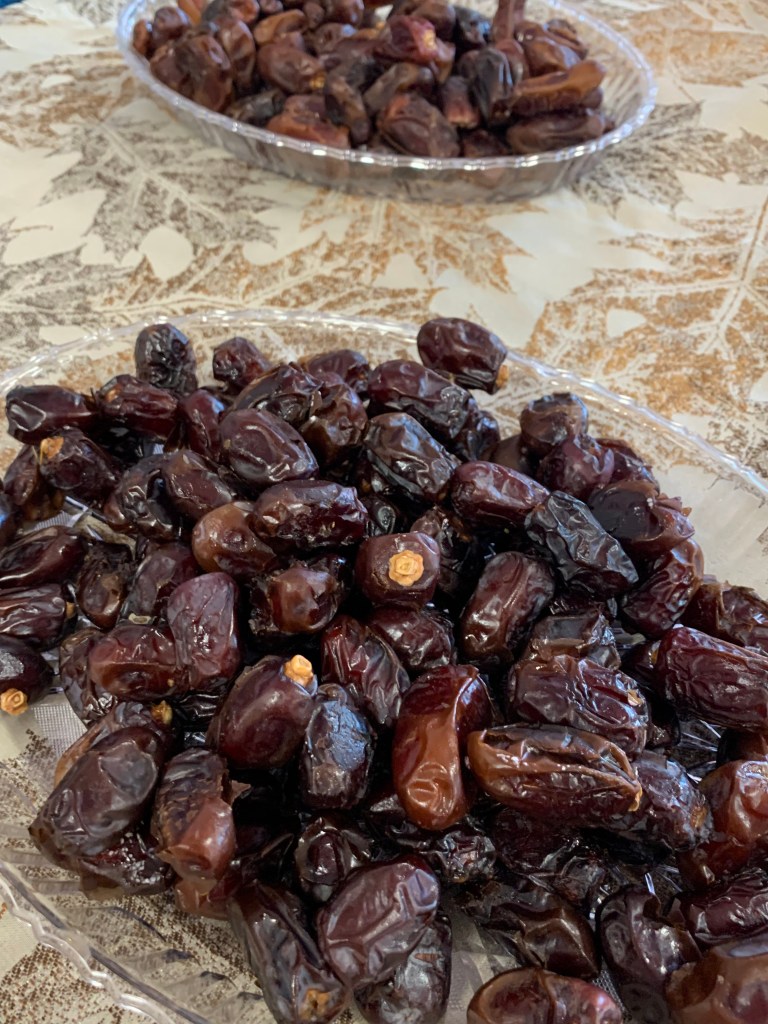
For those of you who don’t know, as I did not until recently, Iftar is the fast-breaking meal that Muslims eat immediately after sundown during Ramadan. People break their fast with dates and water – after neither eating nor drinking (even water) from sunup to sundown – then they pray, then eat their meal.

This year, students asked if we could organize a communal Iftar because Muslims often break their fast in community. I was raised Christian –  in the middle of the Bible Belt in the southern part of the US, no less – so I knew very little about Muslim traditions, but the students at the school where I currently teach are generous with their knowledge. We talked through what Iftar would look like, checked with the Principal, and off we went.

One student really drove things, and another teacher did the work of clearing the path for her. Soon they had chosen a date, organized catering, and started selling tickets. To make sure that all families – even very large families or newcomers who might not yet have a strong financial footing – felt welcome, the school found funds to cover some of the cost of the meal. 

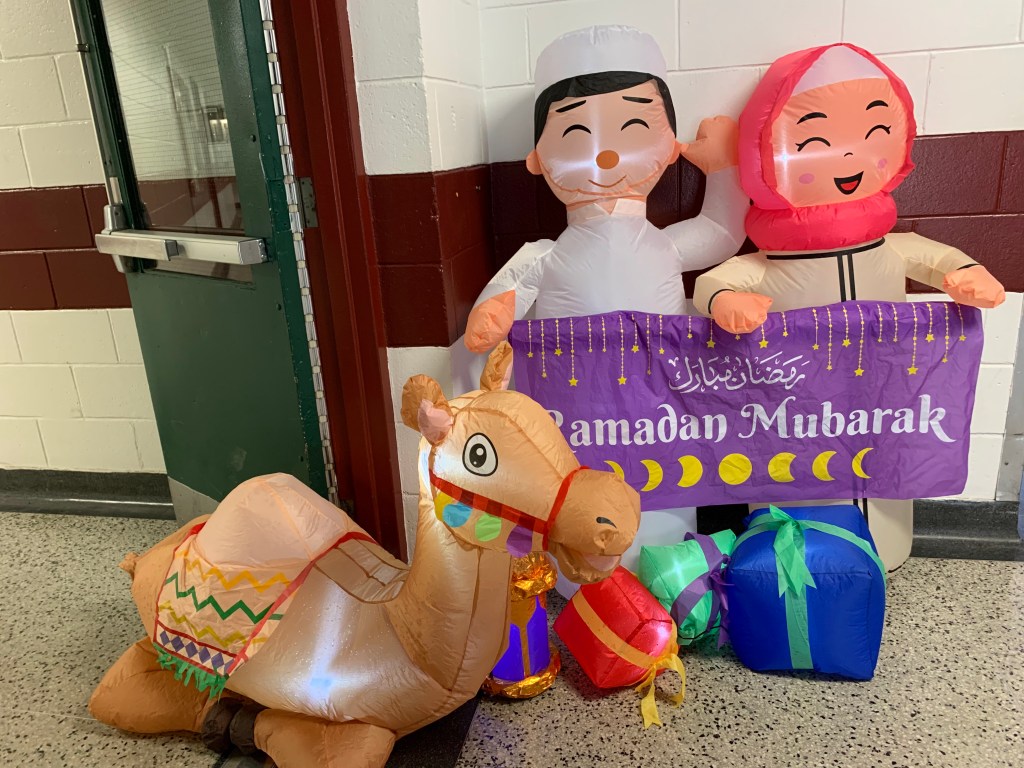
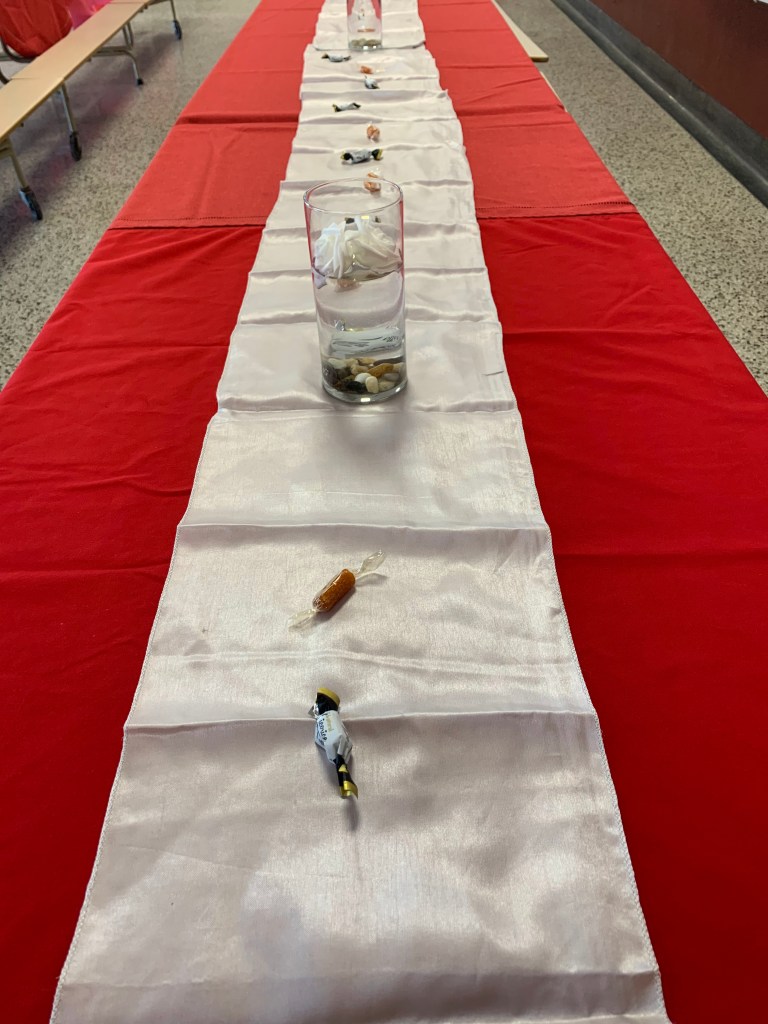
This evening, the cafeteria buzzed as teenagers covered the tables with red tablecloths and white runners. One student’s mother helped out. They strewed traditional candies along the runners and filled “vases” from the science department (“They’re not beakers, Miss, really!”) with water and white flowers. They decorated the hallway and laid out the dates. Soon, a father showed up, and students started shuttling in the meals – rice and skewers and salad. The imam arrived, along with his wife and young children. Before we knew it, the cafeteria contained a community – from babies to grandparents, Muslim and non-Muslim, students and teachers and their families – well over 100 people in all.

Those who were fasting broke their fast and prayed; those of us who were not fasting or praying finished setting out the food. Everyone came together to eat and the room filled with talk and laughter. 

As we cleaned up afterward, I could feel the joy: our first annual Iftar – and another way to celebrate the community our students create. 

Puzzling #SOL23 29/31

I came home tired. Scratch that: I woke up tired, even though I woke up before my alarm went off, which I thought was supposed to be a sign that you’re getting enough sleep. I’m here to tell you: that truism is false. Anyway, I was still tired when I came home. There, that statement is more true.

Even though I was tired, I went for a walk because, thanks to Lisa, I have walked at least a mile every day for 1045 days, and a little fatigue is not going to end that streak, thank you very much. While I was walking, it started to rain and, as I got home, the rain turned to snow. I silently railed against the weather. For pity’s sake, it’s the end of March.

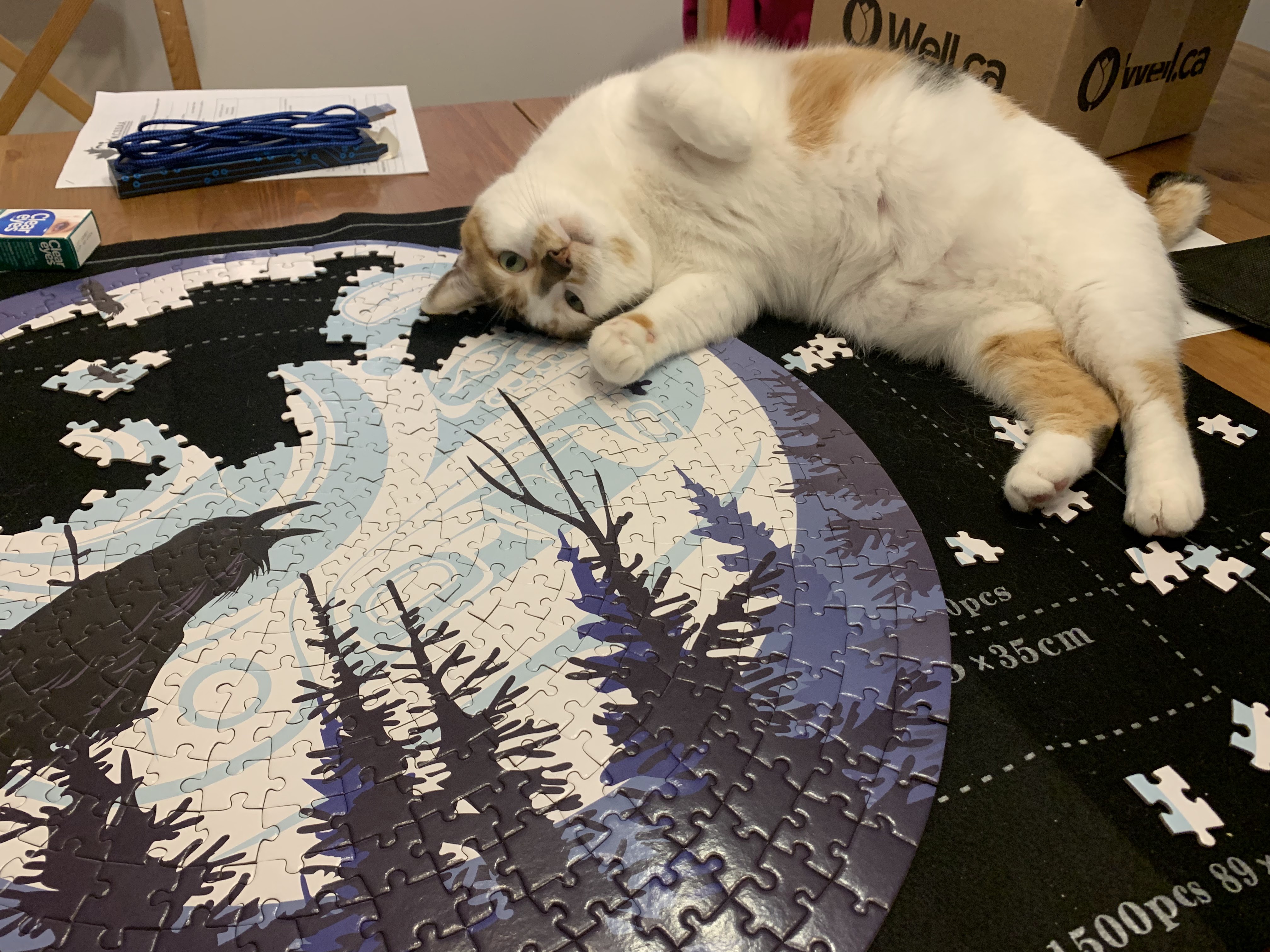
I came inside and shook out my jacket. I should have sat down to plan tomorrow’s lessons – the grade 9 class did not even come close to finishing what I had planned for today; the reading class got distracted by – wait for it reading (yes, I did an internal happy dance while I pretended that was totally normal for them to ask to read a news article) – but now I was tired and slightly damp, so instead of working on work, I found myself listening to a podcast and working on the puzzle that has bedeviled me for several weeks.

Hera came to “encourage” me by covering up one of the unfinished spaces.

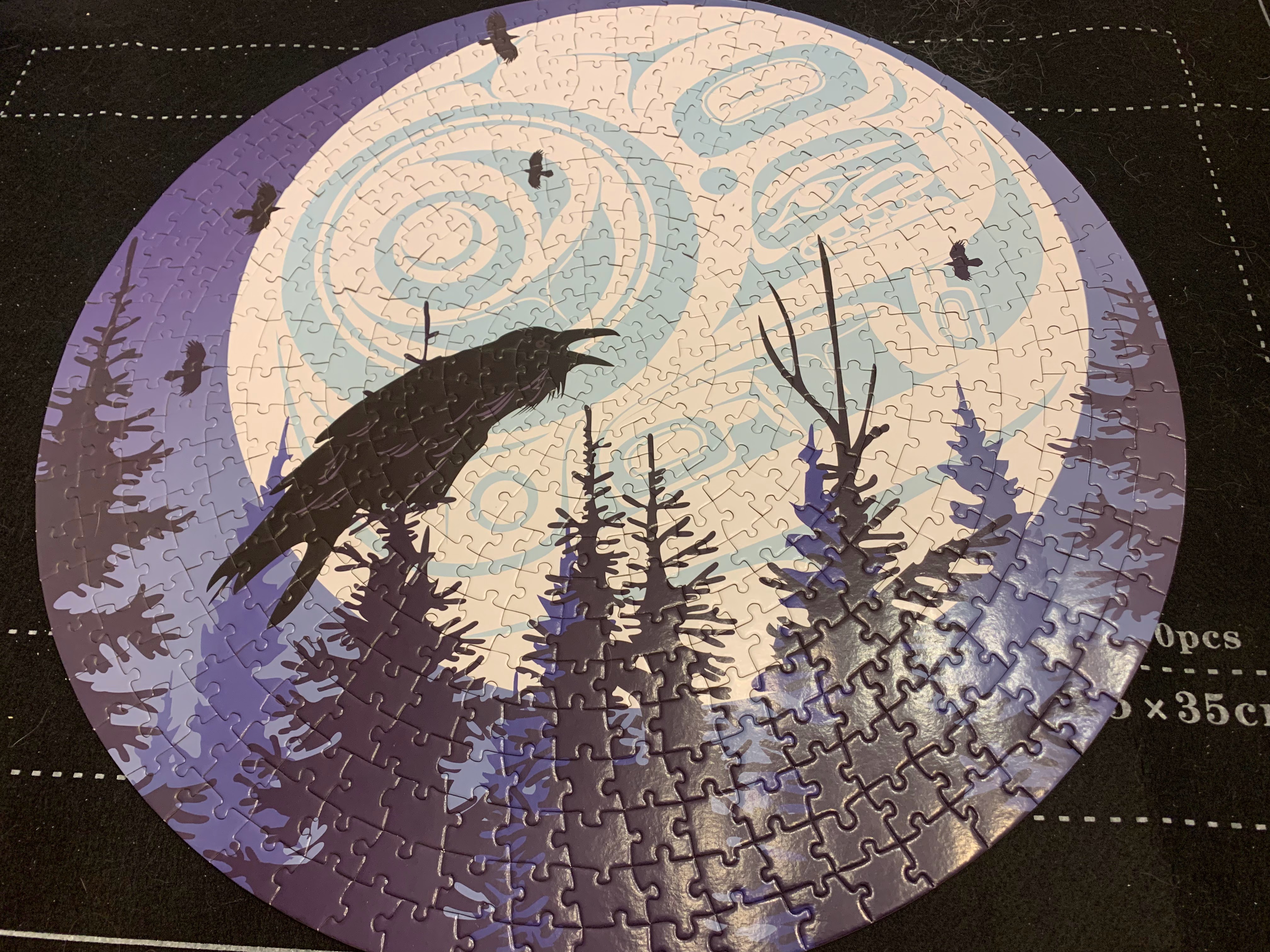
I persisted. The kids came home. Andre came home. Andre left with one of the kids for a father-son dinner out. I kept puzzling. And I finished. Here it is:

Look, I’m still tired, but I finished a puzzle. Seems like a reasonable outcome.

It was supposed to be funny #SOL23 28/31

“It was supposed to be funny.”

That’s what I told my grade 12 students on Monday when I shared one of my recent blog posts – the one with the squirrel pictures. I pointed out the title and the photographs. “I started with funny, but I ended with sappy.” This was my writer’s dilemma: “So what I’m looking for are ideas for how to revise this to make it funnier – or even just a little funny.”

Cue uncomfortable shifting in their seats. Critique the teacher’s work? Not likely.

Undaunted, I continued. “OK, R has volunteered to be the leader,” R nodded, “so he’s going to tell us our first step.” 

“Um, ok, um…” he shuffled the papers in front of him, trying to figure out the next step. “Oh! You need to read it out loud.”

I did. I had planned two class periods (minus our daily reading and writing time) for the students to share their work and offer suggestions. I was following the Feedback Protocol developed by Peggy Silva and shared with me by Xan Woods and, not surprisingly, when I told students that they would read their work out loud to their peers panic had ensued. Telling them that someone else could read the piece out loud for them was not the balm they had anticipated. So I’d pulled out my next trick and asked them help me with my writing. 

You can imagine the wary looks I got. I explained about the Slice of Life challenge and how I had been writing every day for almost a month. EVERY DAY? They were half impressed, half worried about my state of mind. Those latter concerns were heightened because now I was offering – no, asking – to have them help me. As I read aloud, I found a mistake in my *published* piece. “Oops, I need to fix that,” I said – and I didn’t die or anything. I just fixed it.

“Ok, R. What’s next?” I asked.

“We have to read it again, then offer you ‘warm’ feedback.”

Because I know this is hard, every time we use the Feedback Protocol, I give students a script (also developed by Xan & easily modified to fit our needs) in addition to the general how-to. Now, we continued through the script. The students had plenty of nice things to say about my piece, and they were able to be pretty specific with their compliments. Then came time for cool feedback. 

“Oh, I feel bad about saying this.”
“Miss, are you sure you want to hear this?”
“I just feel kind of mean.”

I reassured the students that I had asked for this feedback, that I wanted to do better. “Look,” I said, “I really wanted this to be funny. I know you can help. You are 100% funnier than I am.”

As they spoke, I took notes in front of them. The more I wrote down their comments, the more confidence they gained. After a few minutes, time for cool feedback was over. I thanked them and reflected on what I had heard and what changes I thought I would make.

Just like that. Like it was no big deal.

Then it was their turn. Tentatively, they moved into their groups. On the first day, only one student from each group was able to receive feedback. As the class left, the mood was less tense, maybe curious.

Today, after reading time, the groups re-formed quickly. Essays appeared out of notebooks and folders. No one had lost their papers. Around the room, students huddled together around papers, their pencils scratching down notes or writing in margins. Laughter, questions, talking… was this the same group that couldn’t quite remember everyone’s names just a week ago? Were these the same students who looked stunned yesterday when I told them they would read their work out loud? 

Yes, yes these are the same students, I promise. As class came to an end, I asked how they felt about the protocol. “So good,” said someone. “Really useful,” said another.

“Excellent,” I said, then added, “Revisions are due Friday.” Good natured groans sounded around the room. As they kids left for their next class, I overheard someone say, “that was really good, wasn’t it? Like, really good.”

Ah yes, pedagogy for the win.