Home again, home again #SOL21 4/31

I woke up with a tiny bit of a sore throat and a foggy sort of headache. I hadn’t slept particularly well (possibly because I literally dreamed up a really great assessment for next week – it’s going to be excellent!), so I was sure that everything would be better after a cup of tea and a shower.

Downstairs, I turned on the kettle and fed the cats. While I waited for the water to boil, I closed my eyes and put my head on the cool kitchen counter. I was tired. Once the water was hot, I tried to bustle around the kitchen, getting the morning set up, but my bustle was more of a shuffle. Time for that tea.

By the time the rest of the family was in the kitchen, I knew the truth: “I have a tiny sore throat and I’m a little tired.” Meaningful glances ricocheted around the table. The messages were clear if cacophonous You need to get a test – you’re not allowed go to work if you have even one symptom – she’s not going work – hey, that means we can’t go to school – oh no, we can’t go to school – oh no, now they are ALL going to be home while I try to work. Only my partner spoke, “You need to schedule a test.” Which means we would all need to stay home. This was not how I had envisioned my day. I groaned, but I knew he was right.

While I made an appointment – plenty were available – the ten year old slithered out of the kitchen and slyly installed himself in front of the computer, volume turned down. “I’m checking my Google classroom,” he said when I found him, “but there’s nothing for me to do.” A pathetic attempt to justify Minecraft at 9am; I found several unfinished assignments to keep him busy. The twelve year old, already dressed and ready to go, texted his walking buddy to say he was staying home, opened his laptop, and pulled up a project. “I’ll go ahead and finish that slide show I’ve been working on.” My partner checked on everyone then went to work in what was the guest bedroom but is now his office.

And me? Well, I got a covid test with no waiting – and realized that I haven’t been tested since early November, which means I haven’t felt sick at all since then, so I’m trying to feel lucky. If I can’t muster up “lucky” I can at least fall back on “fine.” I’m giving it a 99% chance that the test comes back negative, hopefully in time to send both kids to school tomorrow, but this is what it means to be part of keeping the community safe. (Update: negative & the kids are off to school.)

355 days. It’s been 355 days of watching for symptoms, of staying distant, of reminding each other of what it means to work together. I’m tired – and it’s not just from a poor night’s sleep. I really hope that my next visit will be for the vaccine. Until then, I’m hoping for lots of early bedtimes and lessons that plan themselves when I’m not trying to sleep.
Thanks to https://twowritingteachers.org for hosting this annual challenge

.

Crossword #SOL21 3/31

When all else fails, there’s the crossword. In the world of the crossword, everything fits: every letter has its place; every word interlocks. The grid is clear even when the clues are not, the perfect combination of word thinking and pattern thinking. Even if I can’t solve a crossword, I’m comforted by its self-contained certainty.

I do the New York Times crossword. Weekdays, the puzzles are published at 10pm. I should be going to bed by ten, but lately I’ve found myself up, puzzling. What body part name comes from the Latin for “little mouse”? No idea, but – wait – I can almost capture it. I think I knew this once. It will come once I get one of the letters. When will I get the vaccine? I cannot know this; I will not think about it. Metaphor from Homer’s Odyssey, “wine dark ___”? I know that one. I keep going.

Sometimes the puzzles feel like old friends: clues I half recognize, names I dredge up from the past, facts I can place without batting an eye. Sometimes they delight me with their cleverness. Sometimes I am disgusted by their cleverness

Tonight, I told myself that I would be upstairs by 10, but when the time came my mind was jumpy. Monkey mind, I’ve heard it called, and these days I’ve got it. I need to settle my monkey down; racing thoughts will do me no favours as I try to fall asleep. If I just turn on the computer… there, laid out in orderly black and white squares, the reassurance that the world is, ultimately, knowable, that if I can make the right connections, I can complete something. Anything.

I do the crossword, even though I know that in the morning, I will regret having finished it tonight. Ah, well, the morning will have to provide its own reassurances. Sudoku has a lovely grid, too.

Thanks to https://twowritingteachers.org for hosting this annual challenge

A little sweetness #SOL21 2/31

Just yesterday I was talking with a friend about the evils of sugar. Just yesterday I agreed with her that the only rational choice is to limit sugar or even to avoid it altogether. I talked about the month a few years ago when I went sugar-free; I remembered that I felt really good by the end, though it was hard in the middle. We commiserated about our children’s sugar habits. Really, we said, when it comes down to it, we should be setting a better example.

So it’s just as well that no one is in the kitchen right now as the gooey insides of a warm butter tart drip down my fingers and into my mouth. My eyes shift to the right: no kids. I scrape my teeth across the cupcake liner to get the last caramelized bits from the edges then quickly crumple the evidence and throw it in the compost. No one needs to know about this.

I’m home today, playing hooky with my older child. Well, I say we’re “playing hooky” but the truth is that I’m not calling it hooky, I’m calling it rest because we both needed a break. Pandemic school is tough, and we’re practicing being kind to ourselves when we need it, so when he asked if we could extend the weekend by a day, I said yes. This morning while he slept in and read in bed, I took a walk, went to the library, and sent a few emails. When my almost-teenager, still wrapped in a blanket, wandered into the kitchen around 11 and asked if we could bake something, I delighted in the opportunity to say yes.

We thumbed through a cookbook, and he chose butter tarts. Before I moved to Canada, I had never heard of these, but the idea is simple: they are tiny pecan pies, usually minus the pecans. Traditionally they are made with a flaky pastry crust, but we opted for a simpler pâte brisée. Easy peasy. Then the filling: a cup of brown sugar, 1/3 cup of melted butter and one egg. That’s it – I mean, you can make it more complicated and some people add raisins or pecans or (shudder) chocolate chips, but we went for the classic. We whisked the ingredients together and spooned them into our crust-lined mini-muffin tins. Mere minutes later, we had butter tarts.

They’re a little pale, but they taste just fine.

They needed some time to cool and set, so my 12-year-old co-chef went upstairs to play video games while he waited. And I can hardly be blamed if some of the filling had oozed out of its shell, onto my fingers and into my mouth. I sigh, and realize that I won’t be giving up sugar until the sweet days of baking with my boy have passed.

Thanks to https://twowritingteachers.org for hosting this annual challenge

The little plow

About halfway through my drive to work, I caught myself letting my car drift gently from one lane into the other without signalling. Bad habit, I thought. The windshield wipers swished across the glass in front of me, temporarily clearing the melted snow. I signalled belatedly.

As I approached each stoplight, I pumped the brakes, aware of how long it might take me to slow down. I turned the corners with care. I noticed how much easier it was to drive in someone else’s tracks, and how I felt briefly out of control when I tried to drive in a different lane.

I’m an English teacher and a writer: I was already developing a somewhat ham-handed metaphor as I drove – carefully – through the snow. Snow driving and this school year – snow driving and hybrid learning – snow driving and equity work… I shaped the metaphor in one part of my brain even though most of my brain was occupied with getting me to school safely.

Then I saw the truck. A semi, big for the downtown streets, was paused at the corner ahead of me. Wait. Not paused; it was stuck. Or… not quite stuck, but not far from it. I was driving slowly, and now I slowed even more. As I came to a stop a good ways back, a little orange sidewalk plow skittered off the sidewalk and across the street. The driver waved and placed his little plow between two lanes of traffic and the truck, creating a nice gap to let the big rig maneuver. The semi backed up and tried again to move forward. Nothing. The plow driver waved to us again, then turned his bright orange machine so the plow was forward, ran up behind the truck and pushed. I almost laughed at the earnest effort of the little plow coming to the aid of the giant truck. We were rooting for them – and not only because we’d now missed two light cycles. Still, no luck.

Now the little plow backed up, hesitated, then scooted up alongside the truck’s cab. The plow driver gestured, and the truck’s reverse lights lit up again. I’d almost swear that little plow did a joyful little skip as it wiggled in front of the truck and started clearing the offending corner.

Safe now, I drove slowly forward, a line of cars following behind me in a gentle curve around the area – just enough to make sure the truck and its plow had lots of space – and towards the signal twenty feet in front of us. The light turned green right when I got there, but a glance in my rearview mirror showed that little orange plow up on the sidewalk again, spinning around, as the now-freed truck pulled onto the main street.

Who needs a heavy-handed metaphor when a little orange sidewalk plow comes to rescue a truck?

Image result for ottawa sidewalk snow removal
This isn’t the plow, but it could have been.
March is coming! Two Writing Teachers will host us as we write every day for a month. Join us!

I threw them out

Our school board moved from fully online teaching to hybrid in-person when February began. No transition day, no time to clear out the classrooms we had been teaching in when Winter Break began and online learning was abruptly declared. No time to move textbooks, supplies or decorations into our new classrooms. Friday we were at home teaching one set of classes; Monday we were teaching new classes in a new semester and often in new rooms. Less than ideal.

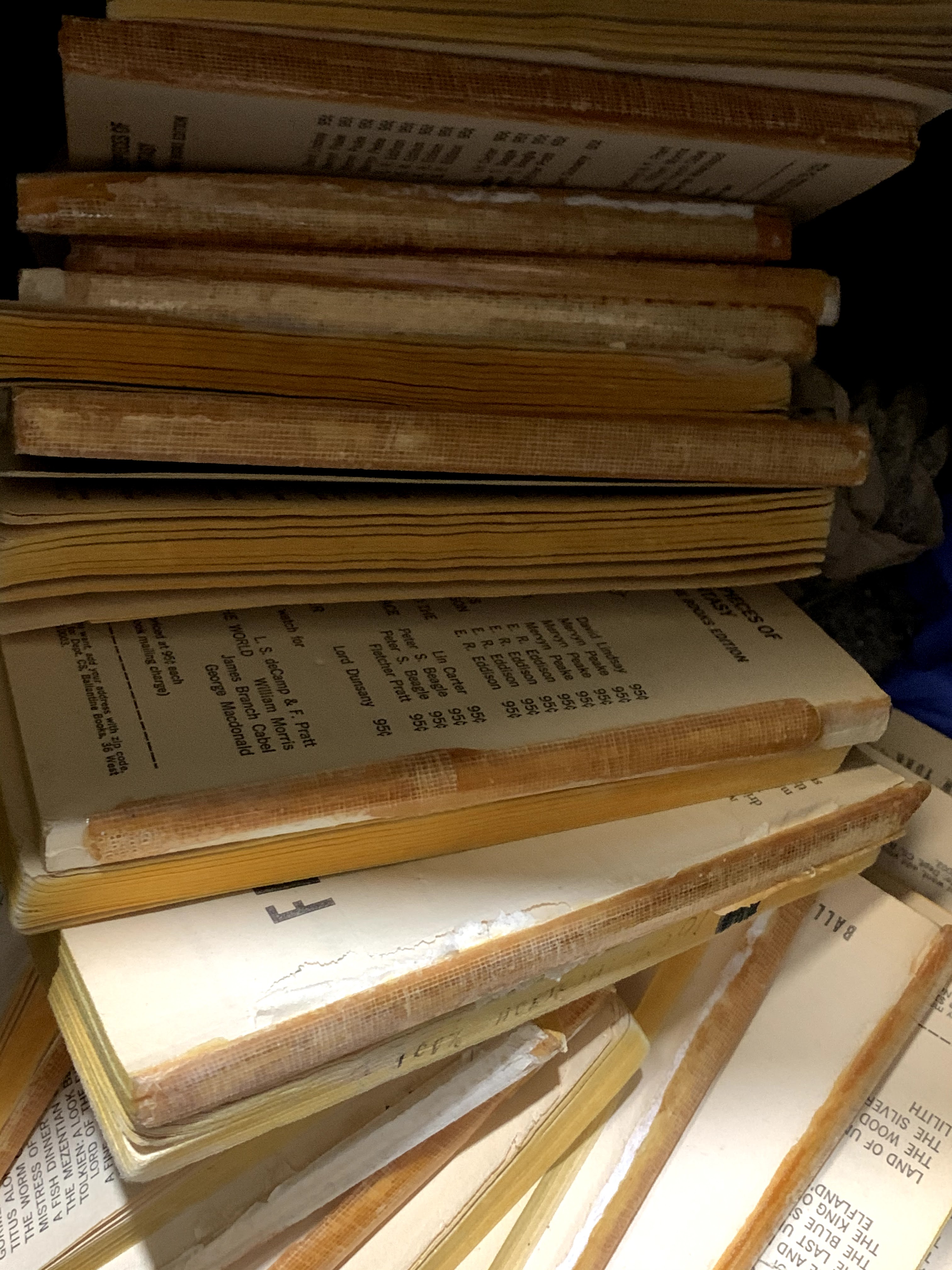
I have a prep period right now, so I’m trying to help clear out some of the classrooms that aren’t occupied this week. This gets a little complicated because teachers can’t go into classrooms with students who aren’t theirs, but there’s still plenty that can be done. For example, today I went into my old old classroom (from two terms ago) and found that my now sad-looking displays of student work were wilting off the bulletin boards. As I started to pull them down, one pushpin at a time, I spied a stack of shiny objects tucked into the corner of a shelf. Books! From a distance, I couldn’t tell which ones.

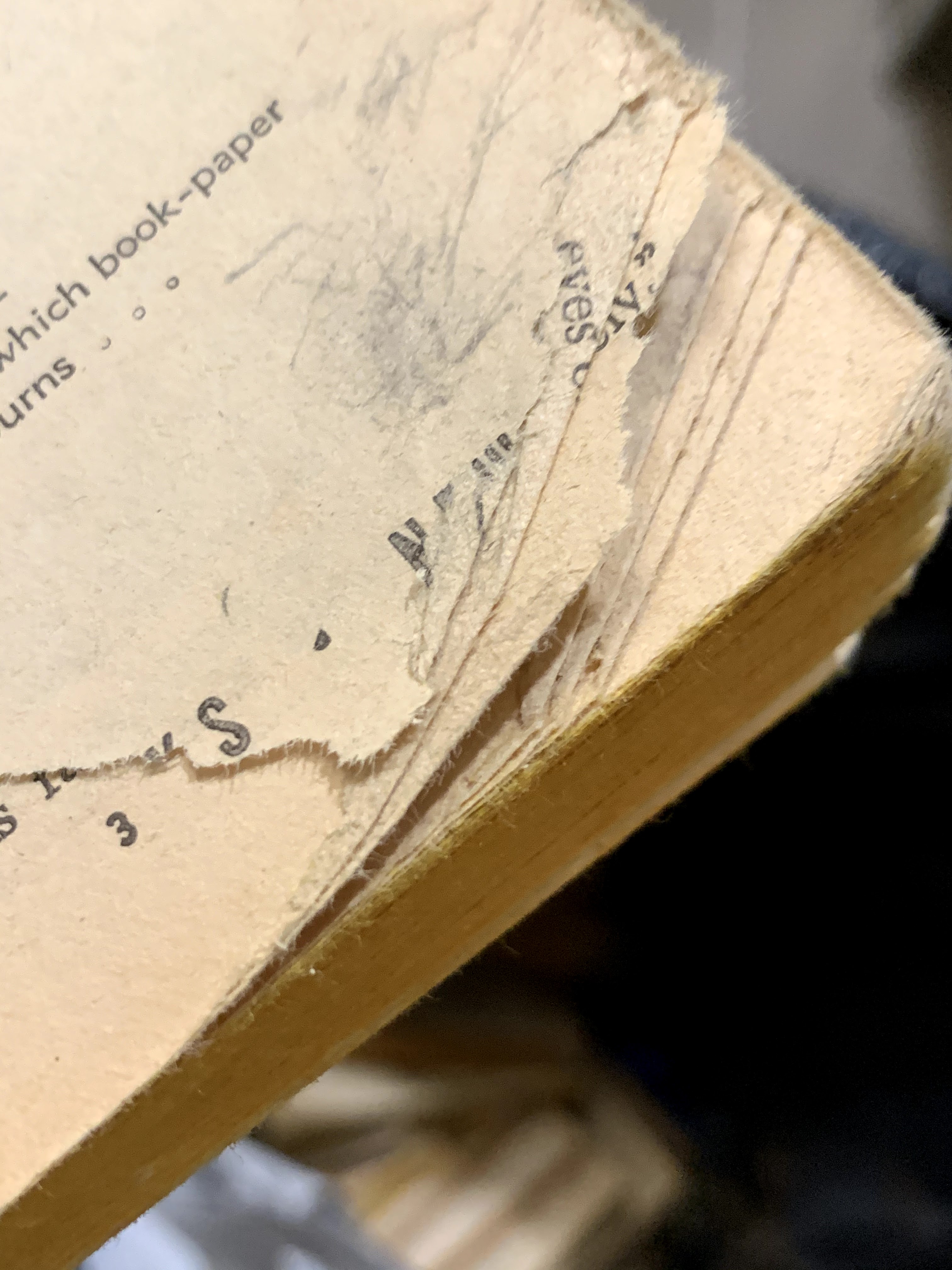
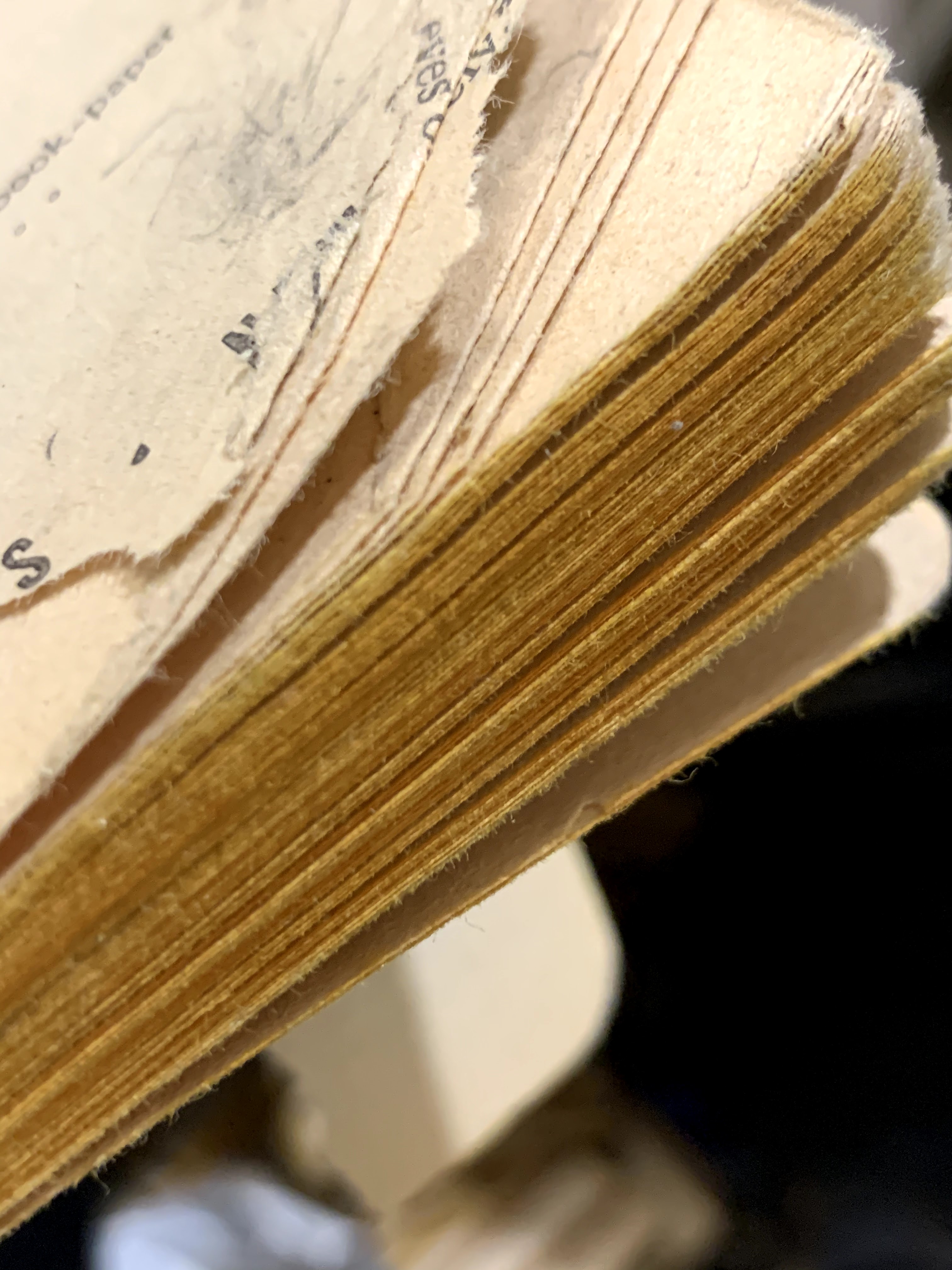
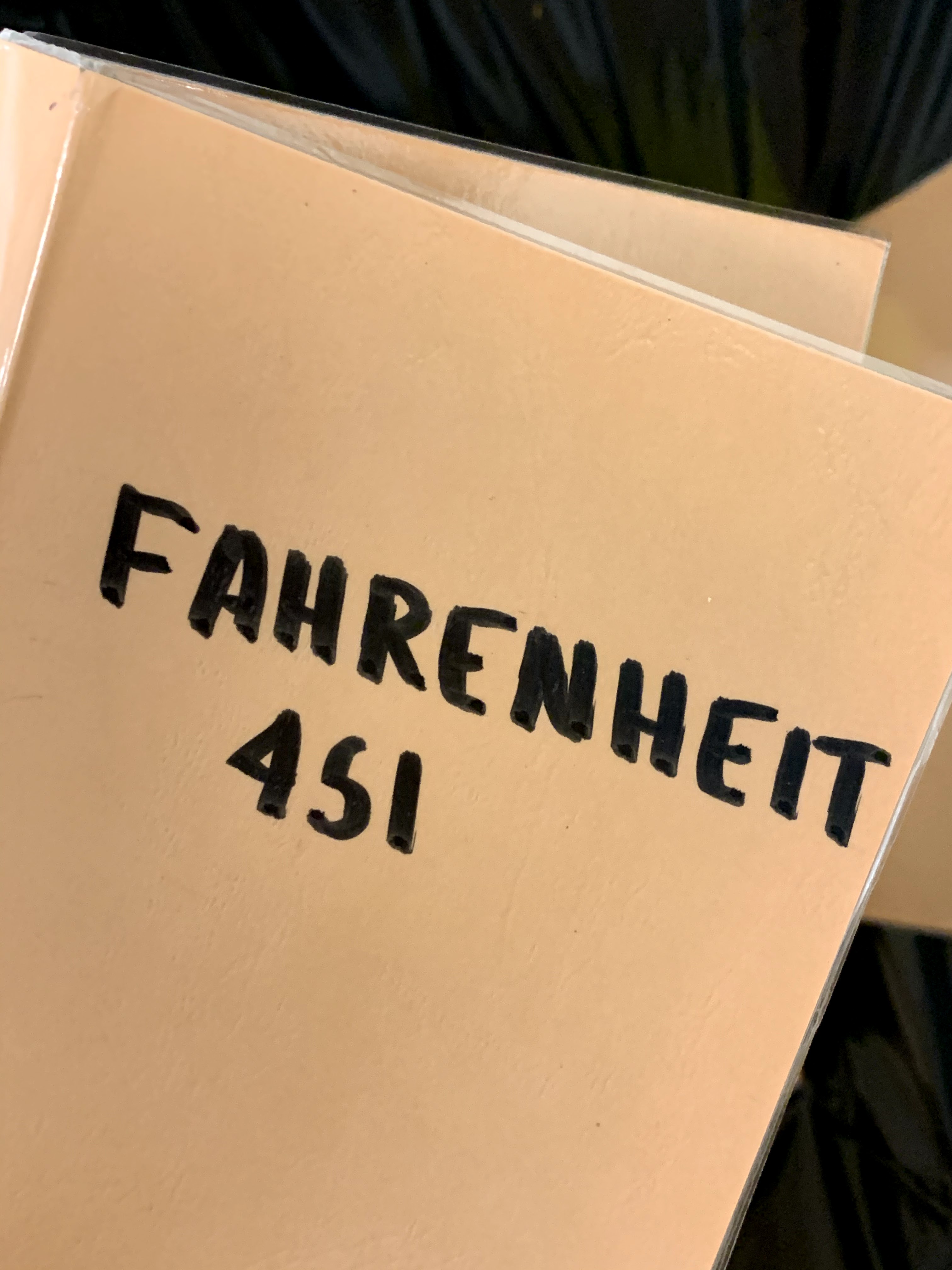
Ever willing to be distracted from a dull task, I cupped the sharp tacks in my hand and ambled over to see what people had been reading, but my heart was already sinking: these books were not appealing to readers. At some point in their lives, these poor novels had been denuded of their original covers and reclothed with paper, laminated, folded and glued on after someone used a thick marker to scrawl the title – but not the author’s name – across the front. Now the cheap covers clung somewhat desperately to the books’ spines creaking open to reveal torn, yellowed pages full of tiny print. I flipped sadly through one of the books and realized that a teacher had handed these out as a class novel last quadmester.

I’ve written several pages of unpublishable material about the infuriating task of trying to update a book room with no budget, but despite my frustration, our school is in no way left with only books whose very appearance actively repels readers. Teachers are not required to choose novels whose presentation tells students that their reading lives are not valued. We have better books than this. My initial curiosity about the books in the corner was rapidly shifting.

We have better books than this. What we don’t have right now are better books that require little prep by teachers because they have been taught off and on for 50+ years. No, wait. Even that is not true: Our bookroom houses many old “classics” that are in much better shape than this. We are trying to update our reading lists to better reflect our diverse student population, but we are far from throwing the baby out with the bathwater. We have plenty of books that would have honoured our young readers by showing them that they deserve books that still feel alive.

I stood there for a minute, laminated book slick in one hand, sharp tacks gently pricking the other. I loved this novel when I was in high school, but I am nearly 50 and so, I suspect, are these books. The world has changed beyond what the author would have recognized; it may have changed into what he feared. Still, few readers are hooked by books so old they are barely hanging together. Will we have enough money to replace these books? Will we choose to replace this title if we do have money? I didn’t know. I don’t know. I can’t know.

But I do know that we have to show our students that their intellectual life matters to us. These books didn’t do that. I threw them out.

Join us at twowritingteachers.org

A Mile In Whose Shoes?

This afternoon, I walked a mile around the kitchen island. I was on the phone with a student, having a one-on-one discussion after a tough “public” discussion at the end of class. I wanted to really listen to the student, to hear the thoughts behind their words, because I had the sense that I was missing their deeper truth.

During those last minutes of class, I heard this young person complaining about “too much emphasis” on “Black issues” and “victims” in our English class. I heard their desire to stop talking about Black Lives Matter and to get politics out of the classroom. I heard this, but I had trouble hearing these things. Their concerns were hard for me.

As we talked – me with my camera on, the student with their camera off; me in my house, the student in theirs; each of us deeply and personally involved – other students came back into the main room and started listening. People stayed long after class had officially ended. This conversation mattered.

What does a teacher do when a student is questioning her? More importantly for this blog, what do I do? I was trying to listen, but I was aware that I was feeling defensive. Online teaching is exhausting. Online teaching when I had planned to be face-to-face is worse. Online teaching that I wasn’t expecting that is offered a different number of hours and days than I had planned for is nearly killing me. I am doing the best that I can, and it’s pretty good, but even pretty good is taking every bit of me. I believe that my students should ask me hard questions about what and how I teach, but I realized that it’s hard for me to listen well when I am tamping down emotions.

My students this term are largely 17 or 18 years old. They are thoughtful and well-spoken. They are reflective and desire to do good things in the world. Most of them are reasonably well-versed in current events. Ten days ago, we spent the full class period discussing the attack on the US Capitol. It was easy for my students to condemn the attack, but I was left wondering how many truly understood that the problem wasn’t solely with the individual people who attacked but also with the rhetoric that brought them to that point. If we believe that rhetoric and systems were the problem in addition to individuals, then we have to acknowledge that we, too, might fall prey to ill-considered ideas.

At any rate, as our class was ending today, the student who was questioning our studies was struggling for words. I know them to be an excellent student, an deep reader, an eloquent writer. I know they hold strong religious beliefs and they feel somewhat isolated from peers for that reason. I tried to keep all of this in my heart as I listened, but I struggled. How do I listen deeply to this student and honour others who are listening, some of whom have experienced racism first-hand?

I thought about Matthew Kay’s book Not Light, But Fire and its lessons for leading meaningful race conversations in the classroom. I thought about holding space and about helping white people recognize their own racialized existence. I knew I needed to be clear about what is fact and what is my opinion; I knew I needed to be humble; I knew I needed to be involved.

But y’all, I was tired. 20 minutes after class had officially ended, after what had stretched into two hours and fifteen minutes (yikes), I called it – I ended the discussion and closed the room. Had I been even-handed? Had I prevented others from casting one student as the villain? Had I heard the student’s beliefs? Had I been forthright in my own beliefs? I wasn’t sure.

And then the student’s parent called.

Before I called back, I ate some lunch and talked to a wonderful colleague who helped me find some words and work through some reactions. When I called I was able to speak honestly. The parent was curious, I was clear; I am not sure that we came to agreement, but we certainly were not at odds. I suggested that I could speak to the child at the end of the school day.

The student and I spoke for a long time. I walked. And I listened. I listened to understand, not respond. I sat in my discomfort. I asked, curious, “Can you explain what you mean?” and “Can you tell me more?” My student, ever interested in learning, asked me similar questions, trying to understand what I meant. I am not sure yet that I know the students’ deeper concerns, but I am closer, just as they are closer to articulating their thinking. I suspect there may be more uncomfortable conversations. And that’s ok. Because learning is about asking and thinking, asking and thinking. As long as the dialogue continues, we are learning.

Later, another colleague checked in. She offered some sage advice: it’s ok to tell your class that you need time to think about how to respond to this. It’s ok to go back and tell them your “why” again. I suspect I will do both of these things tomorrow. I will remind them that reading text – any text – critically may leave us with unanswered questions, and that’s ok, too.

Hmmm.

I can’t say I walked a mile in anyone else’s shoes today, but I can say I walked a mile in mine. I walked and I walked around the kitchen island, listening, speaking and reflecting. This, I think, is the work of anti-racism. This, I think, is the work of learning. This, I think, is the work.

Ask

It’s January, so lots of people – or at least lots of teachers – or at least lots of teachers I know – are considering their One Little Word for the year. The idea here is that we choose one word as a focus for the year – kind of like a New Year’s Resolution.

For the past two years, my word has been listen. I’ve been having a hard time letting it go because I’m not convinced I’m very good at it yet. Every time I think I’ve got listening down, I realize that my brain is talking over other people again and I have to try again. Also, listening seems wildly important to teaching (and, of course, to life). Pretty much every step I’ve taken in teaching has come from listening. I like listen. It’s a good little word. I considered making the whole thing moot by “not choosing” a word and secretly holding on to listen. We won’t discuss the fact that pretty much no one besides me knows or cares about my word and I can’t exactly hide my perfidy from myself. Sigh.

Then, over at The Librarian’s Journey, Beth Lyons suggested we could try one word x 12 – a word a month for a year. Clearly I was addled by the thought of converting my entire class plans to online teaching because I thought this was the perfect solution. Had I paused (hmmm… there’s a word) I would have realized that this means having to choose a focus word TWELVE times. I did not pause. I told Beth & a few others I was in. Impulsive. There’s another word. Still, I like the idea of setting an intention each month. Over the course of a year, I sometimes get distracted – which may be why I still need to work on listening.

Beth took things down a notch by admitting that last year she often found herself choosing her little word somewhere in the middle of the month. This practice is both calming and intriguing: it allows me to choose a word that is aspirational – I’d like to focus on this for a while – and definitional – this is what this month is shaping up to be. It also recognizes that I am both a procrastinator (I’m writing this waaaay too late at night) and an observer. I decided to give myself a few days to consider what word might fit for January.

Last night I was up late trying to prepare myself for a week of teaching from home while both of my children have online classes and my partner works from home. I was feeling frantic and a little hopeless. I know that one way to quell this emotion is gratitude so, on the spur of the moment, I decided to write to several of the authors of the books my students are reading. Many of them might be surprised to find out that their novel is being studied in a high school book club and, for the most part, my students are loving their choices. I wanted to tell the authors that their work was making this moment a little more bearable. I wanted them to know that their work matters.

So I wrote. I put in a little effort, aiming for a tone that was light but sincere and adding some specific details for each author. I wrote about moving to online instruction – how hard it is, how my students are a little down and, almost as an afterthought, really as part of my attempt to find some upsides to where we are, I invited each author to come to our class for a few minutes if they wanted. I may have said “pop in.” I even decided to throw caution to the wind and write to some of the bigger names – doesn’t everyone benefit from a compliment? My students really do like their books. And then, one by one, I hit send. I felt a little silly afterwards, but whatever; it was done.

Y’all – one of the most well-known award-winning authors wrote back 20 minutes later and said, basically, “Thanks for the great email. I don’t usually do this, but I’d be happy to stop in.” There are some caveats – this is just for my class & will be entirely student-led – and I’m not going to share who it is because I think this kind of a private little thing, but the author is going to join our Google Meet next week – for an hour! I’m nearly giddy with excitement, as are the students who have read the novel. The rest of them are preparing by reading articles and essays. I honestly think we’re going to have a great time.

This morning, I realized that I’d found January’s word: ask. I like it. When I was growing up, my mother often said “it can’t hurt to ask” and “if you don’t ask, you don’t get” but I can’t say that I always followed her advice. So this will remind me to ask for what I want rather than assuming that I already know the answer. In the virtual classroom, I know that intentionally asking the students how things are going, what they need, what they are learning is part of what makes online learning work, so ask is a good word there. And, I have to admit, ask is pretty closely related to listen – after all, asking ideally implies that you will listen to the response – so I get to ease myself into my new little word.

I can’t wait to see how ask will show up this month.

This image has an empty alt attribute; its file name is 3d17d-screen2bshot2b2014-12-152bat2b7-37-262bpm.png
Thanks to Two Writing Teachers for hosting the Slice of Life blog challenge every Tuesday.