Snow day? #SOLC26 11/31

By the time you read this, I will already know my fate.

I might be at home, curled up in a blanket, marking essays or reading a book.

I might be driving on an icy road, heading to a school likely to be all but empty – buses cancelled; schools open.

And, though this is very unlikely, I might be preparing to teach a full class of students.

Weather forecast: up to 20mm of ice accumulation (25 mm = 1 in) from freezing rain. 
Warning level: orange

(No one really seems to know what an orange warning is – but it’s more dire than yellow and less dire than red, so that’s something.)

When I was a student, I didn’t fully appreciate how much teachers sometimes long for snow days. Here in Ottawa, a true snow day is a rare thing indeed – we almost always stay open – which makes it even more wish-inducing. For tomorrow, I have my money on option 2: buses will be canceled, but teachers will still be required to go in. A few intrepid students will show up, but we won’t be allowed to teach anything new, so the day will be lost. Sigh. 

Still, I’m up a little later than I should be, writing.

Still, I haven’t told my children they must go to sleep.

Apparently that childhood longing for an unexpected day off never fully goes away.

Once, when I was a young teacher working with many other young teachers in Washington, DC, several inches of snow were predicted to start on a Thursday night. DC had no ability to handle snow, so if it snowed, we would have the day off. In anticipation, after work we all went to a local basement pool hall – one of our favourite hangouts. As the evening progressed, we played pool and drank beer, laughed and sent various teachers up the stairs to open the door onto the street and check for snow.

The evening crept onward, but no snow fell. We worked at a very small school; fully half of the faculty – probably more – was playing pool in that basement bar, drinking beer and waiting for the snow. By 10pm, with no snow falling, the more clever amongst us went home, hoping to sleep off whatever damage they had already done in time for school the next morning. But most of us stayed. 

11pm. More beer. No snow. A few more people left. But not many.

Then, around midnight, just when we were beginning to recognize the reality of what we had done, someone went up the stairs – ostensibly to go home – whooped loudly, turned around and raced back down to rejoin the crowd. “It’s snowing!” The bar erupted with cheers. The bartender gamely turned up the tv and we rejoiced to hear that DC schools were closed the next day.

I don’t remember what time we went home that night, but it was late, and – oh – how I remember our joy. 

A snow day. An unexpected day off. What a gift.

It could happen. And listen, I’m far too old to be out playing pool until all hours of the night, but, just in case, I might wear my pajamas inside out. And I think I’ll let my kids stay up late.

Tuning in #SOLC26 6/31

After I broke my wrist in December, I took a few weeks off from walking the dog. In fact, I took a few weeks off from walking at all; I had no desire to find out what might happen if I slipped on another patch of ice. Can one break a currently-broken wrist? What if I slipped and broke my left wrist? What does one do with two broken wrists? I decided that I didn’t want to know the answers to these questions so, since Ottawa is definitely icy in the winter, I stayed home and “let” my partner and the kids walk the dog.

The children were compliant but not thrilled with their new duty. Mr. 15 wondered pretty regularly exactly how not icy it would have to be before I would take up my former duties. “Winter lasts a long time, Mom,” he stated bleakly. Mr. 17 tried to talk me into “just” using my left hand – but walking Max, our large energetic black lab mix, is a two-handed endeavour. Still, I missed my daily walks, so in mid-February I tentatively rejoined the dog-walking rotation: anytime the sidewalks were mostly clear, I took the dog.

Things were different now. Where before walking Max was just something I did, now it required my full focus. I scanned the sidewalks for icy patches; I looked ahead to spot other dogs that might cause Max to pull on the leash; I checked the streets for any vans he might need to try to attack (he really hates vans and buses). To protect my right hand, I needed my wits about me, so I did not put in earbuds and listen to podcasts as I used to do. I didn’t even look for things to photograph – something I love to do. I just walked the dog.

Suddenly I could hear those much-detested vans earlier and help settle Max before they arrived. When the weather broke for a February thaw, I heard the birds. And I noticed anew that people who passed me spoke several different languages – one of the many things I love about our neighbourhood. When I felt steady on my feet, my mind was able to wander. I hummed songs and just sort of thought.

This morning, as my mind meandered, I remembered the first time I realized that headphones (or MP3 players, I guess, though I didn’t know it at the time) were going to change the world. I was walking down the Champs Elysees, trailing the students I had accompanied overseas. The iPod was relatively new, and several kids had brought theirs on the trip. As some of the boys exited yet another patisserie (I’d be willing to swear that all they did on that trip was eat), I realized that Ben was bopping down the wide sidewalk of the great boulevard with his ears full of his own music. He wasn’t hearing the language swelling and swooping around him or the street noises that rose and fell as we passed various stores or even the thrum of the traffic. He was taking in the sites with his own soundtrack. I’m not 100% sure, but I think I told the kids to take out their headphones and be in Paris. I know that at some point I gave up the fight. 

My objection seems almost quaint today. Now, students sit in class, an earbud in one ear, strategically hidden behind a shock of hair or under a hat. They are vaguely offended when I ask them, again, to take out their personal life soundtrack. During silent reading time, they insist that they “read better” with music on. When I ask, many can’t think of a time that they aren’t listening to something unless they are forced to take their earbuds out. They hate the “silence” and tell me it’s uncomfortable. In my office, most of my colleagues have something in their ears all the time so that they can “concentrate.” I, too, often go through the world with someone else’s voice in my ears. 

My broken wrist may have broken that spell for me. Sure, I miss my podcasts, but I am enjoying the space that I’ve found. I can’t call it silence because the world is full of sounds, I’d just forgotten that they could be enough. Maybe I’ll get sick of it soon. Maybe I’ll slip back into the sense that every minute needs to count as two – or that every minute is mine to control in some way – but I’m starting to think that maybe I won’t. I think that maybe it’s time for me to remember that the world provides its own soundtrack and that my mind is happy there. It turns out, I like the space that comes from being a little tuned out.

What to Wear on Wednesday #SOLC26 5/31

When I was in high school, friends of mine kept track of how many times our Chemistry teacher said a particular phrase. I think it was “um,” but surely that is too banal. Surely we had better things to do in Chemistry than tally the number of times our poor teacher hesitated every class period, day after day, right? Of course, we also kept track of at least one teacher’s outfits: ah, there’s Tuesday’s skirt! Right on cue, Thursday’s dress! And my sister’s class once united to torture a student teacher by tearing out their notes, day after day, then pretending she had not given the previous day’s lecture. 

Clearly, this was before cell phones.

I am now in my 50s, and some days I feel lucky if the students even notice if I’m in the room, but these memories explain this morning’s dilemma: what to wear to school? I have plenty of options, but it’s March and I am sick of every item of winter-adjacent clothing I own. Plus, of course, I couldn’t wear the green palazzo pants today because I want to wear them tomorrow when we have a guest speaker. Why do I need to wear those pants for a guest speaker who I’ve never met before and may never see again? I do not know, but this morning that was my only fully-formed idea about clothing. As a result, I stared longingly at the green pants for several minutes. 

Eventually, I reached for a black dress with white stripes, but I suddenly feared it might be my “Wednesday” outfit. I put it back, deciding that my safest bet was something navy – because when was the last time I wore navy? Minutes later, I realized that I probably hadn’t been wearing anything navy because I couldn’t find my navy shoes or any cardigan that coordinated even vaguely with navy. 

At this point, getting dressed – something that normally takes me no time at all – had taken me quite a bit of time indeed. I texted my carpool buddy that I was running late and, ignoring the nagging voice in my head – the one with a distinct Southern accent – that whispered “No white before Memorial Day,” I grabbed a white cardigan. I finally located my navy shoes, then ran downstairs to grab breakfast. I threw together a lunch, and took my breakfast to go. My carpool buddy arrived, and we headed off to school: me, confident that I was not wearing a Wednesday outfit and knowing that, at the very least, my shoes were appropriate. No tally sheets for this teacher!

No tally sheets, that is, unless my students are keeping track of days when I have completely forgotten to put on any make up. Sigh.

At least tomorrow’s outfit is ready to go, and – who knows? – maybe the guest speaker will be really impressed by my green palazzo pants. Maybe he’ll add them to a secret tally sheet of “really well-dressed teachers for a Thursday in March.” I bet I top the list for that one.

What does it mean to be American?

It’s been twenty years since I taught American Lit to 11th graders in a high school in Washington, DC. After I’d taught the course a few times, I used to start the class with the question students would answer on the final exam: What does it mean to be American? In September, students answered glibly: duh, you have to be born here. But even as they said that, they could feel that it wasn’t right, so they would hack away at the edges of the answer: you have to have an American parent, or maybe an American passport. But a cursory look showed that didn’t work, either. First, not all Americans have passports and second, does the passport make a person American? The rest of the school year just made things more complicated.

Were the Pilgrims (born in Europe) and other early settlers American? We read some of William Bradford’s Of Plymouth Plantation. Ok, the students said, the Pilgrims count as American (even though “America” didn’t exist at the time and obviously the original settlers weren’t born here); if you came to America for a better life, that counts. I complicated things: So, if people who fled their homeland in search of freedom count as American, what about people who do the same in modern times? We read short stories by Edwidge Danticat (American, born in Haiti) and Jhumpa Lahiri (American, born in England to Indian parents). Are their characters American? 

What about the people who already lived on the continent when the colonists arrived? What of the Native Americans? (Honestly, I’m a little relieved to realize that even 20+ years ago we read at least one speech by a Native American, though we should have done much more.) And what if you didn’t choose to come? What of people who were enslaved? Surely Jim in Huckleberry Finn was American. 

Maybe being American is about a set of values? We looked at Puritan leader (born in England) John Winthrop’s “City upon a Hill” (from his essay “A Model of Christian Charity”) and considered what he calls on fellow Puritans to try to create: a community of virtue, effort, and compassion. We read the beginning of the Declaration of Independence (written by Thomas Jefferson, born in the colony of Virginia) and excerpts of (French author) de Tocqueville’s “Democracy in America.” Does he see in the mid-1800s what Winthrop dreams of two centuries earlier? Is that what Huck Finn seeks when he decides to “light out for the Territory”? Is it what Jay Gatsby is striving for as he reaches for the green light? What Janie longs for in Their Eyes Were Watching God?

Gatsby is definitely American – no question about it – but there is the pesky concern of the “foul dust [that] floated in the wake of his dreams.” Perhaps, students thought, Americans had strayed from important original values, as Jonathan Edwards (born in America) thundered in his famous 1741 sermon “Sinners in the Hands of an Angry God.” Again, this gets complicated. In The Scarlet Letter, Hester Prynne’s (born in Europe) sin is the impetus for the whole novel, but in the end, (like Gatsby? unlike Gatsby?) she is the best of them all, except for maybe her daughter Pearl (born in America) – but Pearl takes her riches and moves to Europe. Hester stays in the New World. So who is American?

But, those are just characters, the students protested. True enough. But many real live Americans, good Americans, I insisted – Americans who shaped our nation – were sinners and criminals. Some students were doubtful – 20+ years ago was, I think, a more innocent time. Still, I said, Roger Williams (born in England) was banished from Massachusetts for advocating religious tolerance and the separation of church and state. We read Thoreau’s “On Civil Disobedience” and Martin Luther King, Jr’s “Letter from a Birmingham Jail.” We read Walt Whitman, Zora Neale Hurston, Emily Dickinson, Langston Hughes, and more. One year we read My Antonia and made popcorn balls. Always we came back to our central question.

(How did I get them to read so much? I have no idea.)

By the end of the course, no matter what we read, we had a massive tangle. Americans, it seemed, could be born anywhere and live anywhere. They could be Americans by birth, by choice or by force. They could be saints and sinners, criminals and leaders. And then it was time for the exam. We ended where we started: “What does it mean to be an American?” The answers were always complicated.

****

Last week, on the 13-hour drive from South Carolina to Buffalo, my two sisters and I had plenty of time to talk. We usually see each other only once a year, and we never run out of conversation. This year, after a gas stop in West Virginia and a possible sighting of ICE agents, our talk turned to politics and family. 

I guess you could call our family “blended,” but mostly I think of it as chaos held together by love. Even if I just tell you about the children (my six various siblings) who go with my dad and stepmom, things get complicated. My step grandmother was born Dutch and became an American; my stepmom is Alabaman through and through. I was born in the US but am now a dual citizen. My children, born and raised in Canada, are dual citizens. My partner is pure Canadian, but his mother, my mother-in-law, is a dual citizen; my father-in-law is 100% American. One of my sisters was born in Panama on an Air Force Base, but she doesn’t remember it at all and does not speak Spanish. Her daughter, my niece, born in the US, does speak Spanish and is dating a young man whose family is Mexican (his dad was born there; I can’t remember about his mom); he is American. My sister-in-law is a naturalized American who was born and raised in Cuba. Her mother is living with them (very legally) but is not yet a citizen. My brother, her husband, is pretty much a good ol’ boy (in the best of ways), but his kids have olive skin and dark hair and speak both Spanish and English. Except for my sister-in-law’s mother, I would say all these people are American. Even she may be a future American.

Adding in my mom’s side – she has four siblings – doesn’t make things any more clear. My uncle married a Filipina woman who is now American. One of their two sons, my cousins, just got out of the Marines, so definitely American, right? But when he was on tour, children in Saudi Arabia made the “slant eye” face at him, annoying him to no end. My mother’s sister married a Brit, and they live in the Cayman Islands; their child, my cousin, is American-British-Caymanian. He went to college in the US and worked in NYC before meeting an American woman and moving back to Cayman. Their children were born in Cayman. All except my uncle have American passports. 

As a family, we are Lutheran, Catholic, Presbyterian, Jewish, atheist. We are white, Asian and Latino. We speak English, Spanish, Tagalog, and French. We are gay, straight and bi. We are addicts and we abstain.  We have committed crimes and been arrested for them or gotten away with it. We have done good things and been recognized for them or overlooked. We have high school diplomas, bachelor’s degrees, master’s degrees, MDs or PhDs. We are business owners, doctors, teachers, CPAs, hourly employees, unemployed, researchers and more. We were born in six countries, and we currently live in three countries; we have lived in many, many more. We voted for Harris or for Trump or not at all. We are all American.

In the car, my sister worried about a friend who is married to a US permanent resident who was born in El Salvador. His parents brought him here when he was a toddler. As a young teen, he got involved with a gang and committed “a bad crime” (yes, it is bad). He was arrested and went to jail. He served his time, got out, got a job and got married. Now in his mid-40s, he has never committed another crime. As we drove north, he was on his way south to his annual check-in with immigration, and they were terrified. The family has money and a lawyer, and a no-deportation order. But they had no idea if, after he followed the law and went to the courthouse, he would come back out or be disappeared. “We talk about ICE deporting ‘criminals,’” my sister said, “and everyone seems to think that is ok; but he’s a good person who did an awful thing. He’s here legally. Should we deport him because of something he did when he was 15? Why can’t we talk about the human cost? When did we stop thinking of immigrants as fully human?”

As we drove through the mountains of West Virginia, I mused, “What does it mean, then, to be an American?” I still don’t know, exactly, but I am sure the definition should be rooted more in love than in hatred. If there’s one virtue that my loving, chaotic family and all those texts I used to teach have in common, it is compassion. 

Well, maybe not “Sinners in the Hands of an Angry God,” but really, that one is kind of over the top.

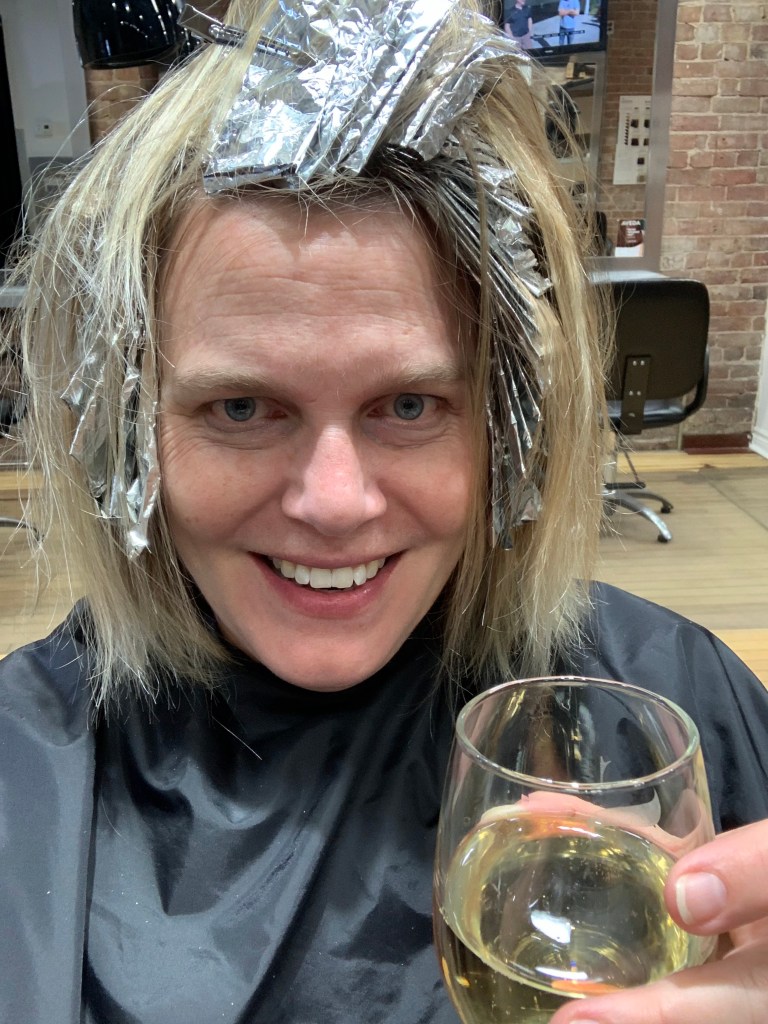
Immigrant

Last week, my child had to interview an immigrant for a grade 9 Geography assignment. Everyone in his class had to do the same. Pause for a moment and take that in: we live in a place where a teacher can safely assume that every child in a class of 25ish can, with relative ease, find a person in their life who has immigrated to the country. Oh, and we live in a place where that is a good thing.

I no longer take this for granted.

My child chose to interview me because I am an immigrant. Some days I am highly aware of myself as an immigrant; others, it seems like a word that pertains to other people. As an American immigrant to Canada, right now I feel horribly connected to my birth country: people who, like me, have immigrated, only to the US instead of to Canada, are being targeted and deported – sent to rot in foreign jails from which they may never return – for no reason other than being immigrants. Yes, yes, I realize that there are trumped-up reasons for their deportation, but even the Cato Institute (not exactly a bastion of liberal thinking) has determined that many of the men recently deported to an El Salvadorean prison had no criminal record and had never violated immigration law. The immoral actions of the current US government must surely give many immigrants pause.

So, when my child started asking me questions, I was a little tense. He was conducting the interview in Frenglish because I refused to answer exclusively in English for a class that he’s taking in French. Soon, he learned that I had lived in five places (and two countries!) before I was ten; that I have taught in four countries; that people in the US don’t take their shoes off when they enter a home. (“Wait? Really? That’s weird. Why don’t I know about that?” he asked. I said that his American relatives probably just laugh at him behind his back. Hee hee hee.)

He learned about the visa process and what it was like to move to a country where I could not yet hold a job and didn’t really have any friends.

“What did you do?” he asked.
“Learned to knit,” I replied, which is sort of true.
“I never really thought of you not knitting,” he said.
Oh, my sweet child. One is not born knowing how to knit.

After the interview, he drafted his “article”. It was still in Frenglish, though the French was coming along. Tonight, he’s polishing it, so we’ve spent quite a long time making sure the French grammar is right and double-checking accents. “I trust you more than Google Translate and BonPatron,” he tells me.

I point out that I am American. He is literally writing about me being American. I am not a native French speaker and still have a bit of a Southern accent when I speak. He says my French is still “really good,” and I decide to accept the compliment.

He decides he wants pictures to accompany his article. He’s particular – he wants me at specific ages and doing certain things.
“Do you have any in the snow?” he asks.
“Not if I can avoid it,” I tell him, but I live in Ottawa now, so of course I do. I send him what I can.

After a few minutes he says, “Do you have any of you looking normal?” which makes me laugh – I love making silly faces for the camera. Still, for him, and to make immigrants look good, I find some “normal” pictures. 

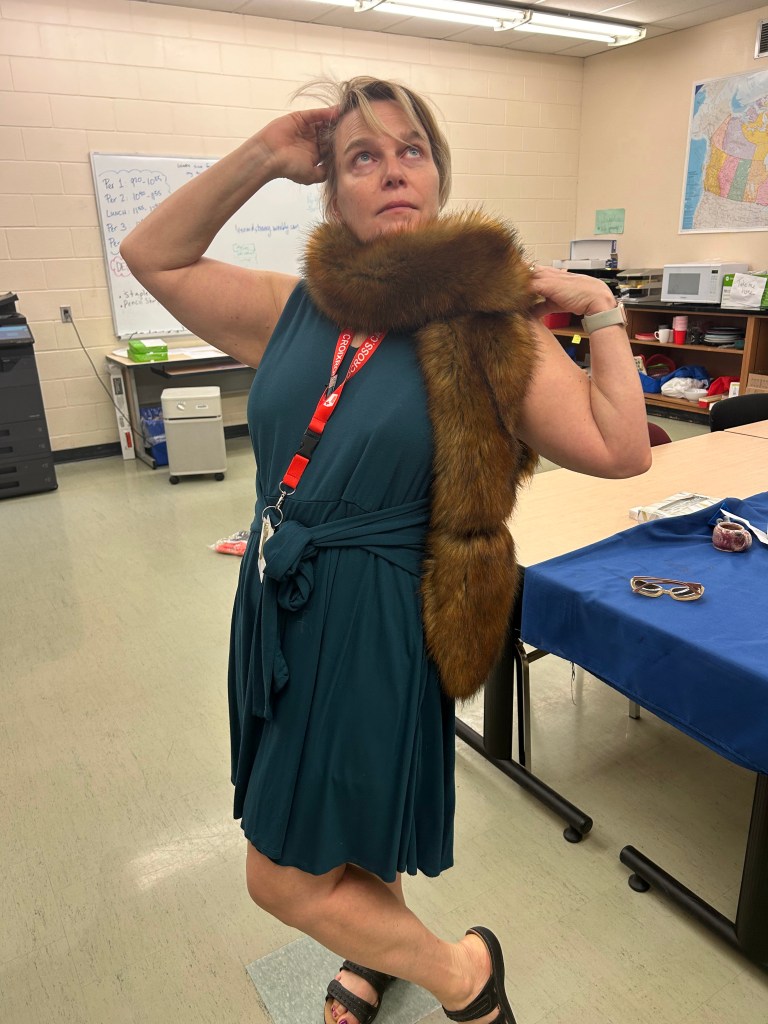
For you, however, I will share some of the funny ones.

There: faces of an immigrant. Remember this the next time another person gets deported. They might be a lot like me.

Cheating Cheater #SOLC25 18/31

He was shamelessly cheating. While the “big boys” (my teens) and my spouse splashed around the small pool, calling loudly to each other, my cousin’s 7-year-old ducked underwater every time he heard the dreaded cry, “Marco!” Others might give away their position by replying, “Polo!” but he was no fool. You’re a lot harder to find if Marco can’t hear you.

Of course we called him on it, tickling him and dunking him. “You’re a cheating cheater!” my sons teased, and he didn’t deny it. Seven is the perfect age to check out what happens when you break the rules. Turns out, if you cheat long enough, we’ll change the game – and we’ll love you anyway. 

***

After school, my child tells me that one of his teachers has accused him of cheating. “The worst part,” he says, “is that I did it: we wrote that section together – but only because we thought we were allowed to.” He takes a deep breath. “I tried to explain. I tried to tell him that we obviously thought it was ok because we used the exact same words. If I was trying to cheat I wouldn’t be so dumb about it, but he wouldn’t even listen.”

My son is upset, and rightly so. The idea that someone thinks you have intentionally been dishonest can be devastating. Worse, he likes this teacher and this subject; he’s worried about the ramifications of this incident. 

“Will you write to him and tell him I’m not a cheater?” he asks. I counsel him to send an apology email, even though he’s still upset about the accusation itself. He pulls out his phone and shows me the email he’s already composed. “Is it good enough?” he asks. “Can I send it?” It is and he does.

***

We all knew that the 9th grade Mythology test was nearly impossible. Senior students recounted horror stories. “No one passes,” they assured us. “It’s killer.” I studied and studied, and worried so much that I made myself physically ill before the test. I vomited and got sent home at lunch.

My teacher announced to the class that what I had done was a form of cheating. She gave them the “easy” version of the test and “saved” the hard one for my return. Then, she told me that she assumed I had lied about being sick. I cried while I took the make-up test – which I aced, even though it was very, very hard. I’m still not sure if she ever thought of me as completely honest after that. I know that I never quite trusted her again.

***

I don’t know what to write to my son’s teacher, but I know what I want to say. I want to say, even if he did it, even if he intentionally did the wrong thing – and I don’t think he did – please remember that he’s a child, not a cheater. Please don’t do to him what my teacher did to me all those years ago. 

I’ll find the words for the email, but before I do, I’m going upstairs to give my child an extra hug. I can’t change this particular game, but I’ll love him anyway.

Late to the Party #SOL24 30/31

My friend’s text makes me laugh: Argument in our car: everyone but Dad, “We are late.” Dad, “the invite was for any time after 3, so we are not late.” Everyone else, “We are so late.”

Follow-up: We arrived 20 min late. And by far the first to arrive.

****

I am 22 or 23, living in Washington, DC. Somehow, I’ve fallen in with a crowd of young French people who are here largely working for the French government. We meet up for drinks, go out dancing, and generally spend a lot of time being young and single with few obligations in a city full of things to do. Eventually, I am invited to a dinner party at the home of the one married couple in our group. 

I’m pleased that I am officially part of the crowd (and secretly proud that my French is good enough for this invitation), but I play it cool. I’ve lived in France for a year of study abroad, so I know that French time is different from American time. I plan my arrival carefully, and show up a full half hour after the suggested time. 

I am by far the earliest. Seriously by far. 

Anne is gracious. She offers me a peeler and asks me to help with the potatoes. We chat as she finishes getting ready for her guests. By the time the others arrive, a slow trickle starting about 45 minutes later, I’m at ease. The rest of the evening goes well.

Over the next few months, I learn to arrive on Paris time (or young-person Paris time): at least an hour after the time of the invitation. It’s hard, but I manage. Then one night, at another dinner, a slightly tipsy conversation partner leans over and says, “Anne dit qu’elle n’a plus besoin de planifier quelquechose pour t’occuper.” (Anne says she doesn’t have to plan something to keep you occupied anymore.) I must have blushed, but he didn’t notice.

Over drinks later that week, Anne ‘fessed up. “Oh yes,” she laughed, “I had heard about Americans arriving extremely early, and how they like to be useful. So I saved a task for you to do when you arrived. And it worked!” 

****

Looking back, I marvel at how each of us tried to adapt to the customs of the other. No wonder we remained friends for several more years, even visiting each other when I lived in France again. 

If I were to find her now, I suspect Anne would shake her head fondly and say, “Yes, I have heard about how you Americans hop from friendship to friendship. We French, we keep our friends for a long time” and then, she’d probably hand me a peeler and some potatoes, and we could sit down with plenty of time to catch up before the others arrived, both late and perfectly on time.

Cheesy #SOL24 13/31

Tonight’s dinner will be raclette. The potatoes are already boiled, the cheese is laid out, and the raclette grill is warming. Soon, the whole family will be melting the cheese then pouring its oozy deliciousness over the potatoes. Everyone is excited.

As I prep, I’ve been thinking of the first time I ever had raclette – which was also the first time I’d ever heard of it –  in France during my junior year abroad. My (French, obviously) boyfriend and I had been together long enough that I was finally starting to meet his friends. That day, we drove into the countryside for dinner with a group of people I’d never met before. After aperitifs, we sat down at a table with this odd contraption on it. Small potatoes were piled in bowls interspersed between the guests. Long trays were layered with thick slices of cheese and various cured meats. Here and there were small bowls with cornichons. Everyone was talking and laughing and I had no idea what was going on.

Pause here. Prior to arriving in France that September, I had eaten cheddar cheese, Swiss cheese mozzarella cheese (on pizza) and Velveeta. Surely I had seen brie before, but I’m not sure I had tasted it. I had definitely heard of blue cheese, but all I knew was that it stunk. Similarly, I had never drunk more than a sip of wine and certainly had never had an aperitif. Also, I didn’t exactly speak French. I mean, I had *studied* French, and I did very well on grammar tests. I could even write a reasonable paragraph. I could not, however, actually talk to people. 

So, when I moved in with a family that spoke only French and who cooked only French and Alsatian food, I had had to either figure things out or, I suppose, go home. Then I met Jean-Luc, whose English was also limited, and promptly fell head over heels for him. That turned everything up a notch. 

Now it was maybe January, and I had gotten used to only understanding some of the conversation and not always knowing exactly what I was eating, but tonight I really wanted to make a good impression on Jean-Luc’s friends. I wanted to be part of the gang. But what does one do when seated in front of something like this (see below) and given a tool called a pelle – which I knew darn well meant “shovel”- and a wooden paddle?

At first, no one noticed my unease and, I had become expert at copying those around me. Soon enough, however, Jean-Luc realized that I was a neophyte and started helping me pile various meats on the grill and melting cheese underneath. Raclette, I discovered, was essentially an excuse to eat all the cheesy potatoes you could. It’s not especially refined and lends itself to laughing and chatting as you wait for something to melt or cook – or accidentally take your neighbour’s pelle. We had a fantastic evening. I was hooked. 

My American friends in Strasbourg also discovered this dish, and by June we were all more than happy to go with Erin to a raclette restaurant for her birthday (even though raclette is, at its heart, a meal often served in the winter). There, we saw “real” raclette: a heater brought up to a giant wheel of cheese while a server scrapes the melting cheese onto a plateful of potatoes. 

After I left France, I doubted I would find many places willing to serve melted cheese as a large part of a meal. I was going home to a land of cheddar, Swiss and mozzarella. I knew there was always fondue, but somehow that seemed almost as unlikely as raclette. And, sure enough, none of my friends at home had ever heard of raclette. It became just a delicious memory…

Until I got engaged to a Canadian. We were looking at things to put on our registry (“just in case”) when I noticed the raclette machine. My fiancé was taken aback by my extreme enthusiasm for something which he thought was, well, kind of normal. I tried to explain – France, cheese, years ago – but he just shrugged and said, “well, let’s put it on the list.” So we did. And we got one.

Pretty much every winter we find raclette cheese at the grocery store and drag the raclette machine out of the basement. We boil the potatoes and find the meats; we cut some veggies and, often, gather friends. Then we put the cheese in the shovels and thrust them under the heat. While it bubbles away, we grill the meats and veggies on the warm stone. We scrape it all onto potatoes and eat until we’re bursting. 

I love it every single time. And now, dinner’s ready!

N-less #SOL24 11/31

For a few days last week, my keyboard’s n stuck as I tried to reply to others’ posts. I was frustrated. My discomfort made me ask myself if I could write a whole post without it because I like to test myself. I will admit, it is very difficult. Years ago, I worked at a small DC school where, at a PD day, the facilitator asked us to write for a short time without “e”. For me, that was easy. I immediately chose to write about a topic without “e”: swim stuff, e.g. swim practices, with their laps, or swim meets with their races. I wrote quite a lot, which frustrated the speaker because she had hoped to illustrate how hard it is to write without a simple letter. If I had appreciated her motive, I would have stayed quiet. Such is youth, I suppose. Hmm… maybe I will ask my pupils to try this exercise.

As I write today, I realize how much has shifted. At that PD, we all wrote with paper. Today, however, I write with a computer; I have a tab with access to a thesaurus; my spellcheck tries to correct misspelled words to add the letter I avoid. As I cease this exercise, I will use Ctrl-f to check if I used what I promised to dodge. Truly, spellcheck is how I was able to reply to posts last week. It took a lot of time, so I replied to very few posts, which made me sad. If I missed you, I am sorry! I swear that I read, but to reply was quite difficult.

As I write, I also realize that without this letter I avoid, I must be upbeat. Without it, I have become aware that the adverse is hard to write. The words for bad possibilities or outcomes all use the letter. Hmm… this is a fresh thought for me. I pause to marvel at this simple idea. Whoa. Lots of ideas/objects use this letter, too, because of suffixes. Lastly, I have realized that I must write exclusively for this time or the past. The future requires this letter. So… I am forced to write about the positive, past or immediate with few words for big ideas. It’s complicated. As I wrap up, I try to visualize this n-less world. Impossible. I am over this self-imposed exercise: I would like all the letters back, please! 

Bangs #SOL24 10/31

On Friday, my best friend from high school texted me a picture of my high school yearbook senior photo.

Look at those bangs! They started about ⅓ of the way back on my head. Every morning, I carefully curled them, brushed them to the side, and then hairsprayed them until they were stuck together in one giant flap of “feathered” hair. And, though you can’t tell here, that blue sweater has sparkles in it. Sparkles! Oh, the 80s.

That picture was still on my mind on Saturday when I went for a hair cut. Chuckling, I pulled out my phone and showed my stylist. I couldn’t quite tell if he was horrified or impressed. He chatted on about 80s and 90s clothes and hairstyles, while I stifled a laugh: He wasn’t around for those eras, so what does he know?

The picture must have stayed on his mind, too, because after my colour was done, as he was starting the cut, he said, “You keep saying you want something different. How about bangs?” 

It was my turn to look horrified. “No, no,” he reassured me, “not like in the picture. You know, something more modern.” I still looked doubtful. “I wouldn’t recommend it if I didn’t think it would look good.”

So I said yes, and now I have bangs again for the first time, I think, since that high school photo. Way back then, in English class, Libby had once declared, “everyone looks better with bangs.” (At least I think it was Libby. It could have been Anne. At any rate, one of the stylish girls.) I haven’t thought of that comment in a long time, but she might have been right. If nothing else, I like the new look: it hides some of my wrinkles.