Cheating Cheater #SOLC25 18/31

He was shamelessly cheating. While the “big boys” (my teens) and my spouse splashed around the small pool, calling loudly to each other, my cousin’s 7-year-old ducked underwater every time he heard the dreaded cry, “Marco!” Others might give away their position by replying, “Polo!” but he was no fool. You’re a lot harder to find if Marco can’t hear you.

Of course we called him on it, tickling him and dunking him. “You’re a cheating cheater!” my sons teased, and he didn’t deny it. Seven is the perfect age to check out what happens when you break the rules. Turns out, if you cheat long enough, we’ll change the game – and we’ll love you anyway. 

***

After school, my child tells me that one of his teachers has accused him of cheating. “The worst part,” he says, “is that I did it: we wrote that section together – but only because we thought we were allowed to.” He takes a deep breath. “I tried to explain. I tried to tell him that we obviously thought it was ok because we used the exact same words. If I was trying to cheat I wouldn’t be so dumb about it, but he wouldn’t even listen.”

My son is upset, and rightly so. The idea that someone thinks you have intentionally been dishonest can be devastating. Worse, he likes this teacher and this subject; he’s worried about the ramifications of this incident. 

“Will you write to him and tell him I’m not a cheater?” he asks. I counsel him to send an apology email, even though he’s still upset about the accusation itself. He pulls out his phone and shows me the email he’s already composed. “Is it good enough?” he asks. “Can I send it?” It is and he does.

***

We all knew that the 9th grade Mythology test was nearly impossible. Senior students recounted horror stories. “No one passes,” they assured us. “It’s killer.” I studied and studied, and worried so much that I made myself physically ill before the test. I vomited and got sent home at lunch.

My teacher announced to the class that what I had done was a form of cheating. She gave them the “easy” version of the test and “saved” the hard one for my return. Then, she told me that she assumed I had lied about being sick. I cried while I took the make-up test – which I aced, even though it was very, very hard. I’m still not sure if she ever thought of me as completely honest after that. I know that I never quite trusted her again.

***

I don’t know what to write to my son’s teacher, but I know what I want to say. I want to say, even if he did it, even if he intentionally did the wrong thing – and I don’t think he did – please remember that he’s a child, not a cheater. Please don’t do to him what my teacher did to me all those years ago. 

I’ll find the words for the email, but before I do, I’m going upstairs to give my child an extra hug. I can’t change this particular game, but I’ll love him anyway.
Late to the Party #SOL24 30/31

My friend’s text makes me laugh: Argument in our car: everyone but Dad, “We are late.” Dad, “the invite was for any time after 3, so we are not late.” Everyone else, “We are so late.”

Follow-up: We arrived 20 min late. And by far the first to arrive.

****

I am 22 or 23, living in Washington, DC. Somehow, I’ve fallen in with a crowd of young French people who are here largely working for the French government. We meet up for drinks, go out dancing, and generally spend a lot of time being young and single with few obligations in a city full of things to do. Eventually, I am invited to a dinner party at the home of the one married couple in our group. 

I’m pleased that I am officially part of the crowd (and secretly proud that my French is good enough for this invitation), but I play it cool. I’ve lived in France for a year of study abroad, so I know that French time is different from American time. I plan my arrival carefully, and show up a full half hour after the suggested time. 

I am by far the earliest. Seriously by far. 

Anne is gracious. She offers me a peeler and asks me to help with the potatoes. We chat as she finishes getting ready for her guests. By the time the others arrive, a slow trickle starting about 45 minutes later, I’m at ease. The rest of the evening goes well.

Over the next few months, I learn to arrive on Paris time (or young-person Paris time): at least an hour after the time of the invitation. It’s hard, but I manage. Then one night, at another dinner, a slightly tipsy conversation partner leans over and says, “Anne dit qu’elle n’a plus besoin de planifier quelquechose pour t’occuper.” (Anne says she doesn’t have to plan something to keep you occupied anymore.) I must have blushed, but he didn’t notice.

Over drinks later that week, Anne ‘fessed up. “Oh yes,” she laughed, “I had heard about Americans arriving extremely early, and how they like to be useful. So I saved a task for you to do when you arrived. And it worked!” 

****

Looking back, I marvel at how each of us tried to adapt to the customs of the other. No wonder we remained friends for several more years, even visiting each other when I lived in France again. 

If I were to find her now, I suspect Anne would shake her head fondly and say, “Yes, I have heard about how you Americans hop from friendship to friendship. We French, we keep our friends for a long time” and then, she’d probably hand me a peeler and some potatoes, and we could sit down with plenty of time to catch up before the others arrived, both late and perfectly on time.

Cheesy #SOL24 13/31

Tonight’s dinner will be raclette. The potatoes are already boiled, the cheese is laid out, and the raclette grill is warming. Soon, the whole family will be melting the cheese then pouring its oozy deliciousness over the potatoes. Everyone is excited.

As I prep, I’ve been thinking of the first time I ever had raclette – which was also the first time I’d ever heard of it –  in France during my junior year abroad. My (French, obviously) boyfriend and I had been together long enough that I was finally starting to meet his friends. That day, we drove into the countryside for dinner with a group of people I’d never met before. After aperitifs, we sat down at a table with this odd contraption on it. Small potatoes were piled in bowls interspersed between the guests. Long trays were layered with thick slices of cheese and various cured meats. Here and there were small bowls with cornichons. Everyone was talking and laughing and I had no idea what was going on.

Pause here. Prior to arriving in France that September, I had eaten cheddar cheese, Swiss cheese mozzarella cheese (on pizza) and Velveeta. Surely I had seen brie before, but I’m not sure I had tasted it. I had definitely heard of blue cheese, but all I knew was that it stunk. Similarly, I had never drunk more than a sip of wine and certainly had never had an aperitif. Also, I didn’t exactly speak French. I mean, I had *studied* French, and I did very well on grammar tests. I could even write a reasonable paragraph. I could not, however, actually talk to people. 

So, when I moved in with a family that spoke only French and who cooked only French and Alsatian food, I had had to either figure things out or, I suppose, go home. Then I met Jean-Luc, whose English was also limited, and promptly fell head over heels for him. That turned everything up a notch. 

Now it was maybe January, and I had gotten used to only understanding some of the conversation and not always knowing exactly what I was eating, but tonight I really wanted to make a good impression on Jean-Luc’s friends. I wanted to be part of the gang. But what does one do when seated in front of something like this (see below) and given a tool called a pelle – which I knew darn well meant “shovel”- and a wooden paddle?

At first, no one noticed my unease and, I had become expert at copying those around me. Soon enough, however, Jean-Luc realized that I was a neophyte and started helping me pile various meats on the grill and melting cheese underneath. Raclette, I discovered, was essentially an excuse to eat all the cheesy potatoes you could. It’s not especially refined and lends itself to laughing and chatting as you wait for something to melt or cook – or accidentally take your neighbour’s pelle. We had a fantastic evening. I was hooked. 

My American friends in Strasbourg also discovered this dish, and by June we were all more than happy to go with Erin to a raclette restaurant for her birthday (even though raclette is, at its heart, a meal often served in the winter). There, we saw “real” raclette: a heater brought up to a giant wheel of cheese while a server scrapes the melting cheese onto a plateful of potatoes. 

After I left France, I doubted I would find many places willing to serve melted cheese as a large part of a meal. I was going home to a land of cheddar, Swiss and mozzarella. I knew there was always fondue, but somehow that seemed almost as unlikely as raclette. And, sure enough, none of my friends at home had ever heard of raclette. It became just a delicious memory…

Until I got engaged to a Canadian. We were looking at things to put on our registry (“just in case”) when I noticed the raclette machine. My fiancé was taken aback by my extreme enthusiasm for something which he thought was, well, kind of normal. I tried to explain – France, cheese, years ago – but he just shrugged and said, “well, let’s put it on the list.” So we did. And we got one.

Pretty much every winter we find raclette cheese at the grocery store and drag the raclette machine out of the basement. We boil the potatoes and find the meats; we cut some veggies and, often, gather friends. Then we put the cheese in the shovels and thrust them under the heat. While it bubbles away, we grill the meats and veggies on the warm stone. We scrape it all onto potatoes and eat until we’re bursting. 

I love it every single time. And now, dinner’s ready!

N-less #SOL24 11/31

For a few days last week, my keyboard’s n stuck as I tried to reply to others’ posts. I was frustrated. My discomfort made me ask myself if I could write a whole post without it because I like to test myself. I will admit, it is very difficult. Years ago, I worked at a small DC school where, at a PD day, the facilitator asked us to write for a short time without “e”. For me, that was easy. I immediately chose to write about a topic without “e”: swim stuff, e.g. swim practices, with their laps, or swim meets with their races. I wrote quite a lot, which frustrated the speaker because she had hoped to illustrate how hard it is to write without a simple letter. If I had appreciated her motive, I would have stayed quiet. Such is youth, I suppose. Hmm… maybe I will ask my pupils to try this exercise.

As I write today, I realize how much has shifted. At that PD, we all wrote with paper. Today, however, I write with a computer; I have a tab with access to a thesaurus; my spellcheck tries to correct misspelled words to add the letter I avoid. As I cease this exercise, I will use Ctrl-f to check if I used what I promised to dodge. Truly, spellcheck is how I was able to reply to posts last week. It took a lot of time, so I replied to very few posts, which made me sad. If I missed you, I am sorry! I swear that I read, but to reply was quite difficult.

As I write, I also realize that without this letter I avoid, I must be upbeat. Without it, I have become aware that the adverse is hard to write. The words for bad possibilities or outcomes all use the letter. Hmm… this is a fresh thought for me. I pause to marvel at this simple idea. Whoa. Lots of ideas/objects use this letter, too, because of suffixes. Lastly, I have realized that I must write exclusively for this time or the past. The future requires this letter. So… I am forced to write about the positive, past or immediate with few words for big ideas. It’s complicated. As I wrap up, I try to visualize this n-less world. Impossible. I am over this self-imposed exercise: I would like all the letters back, please! 

Bangs #SOL24 10/31

On Friday, my best friend from high school texted me a picture of my high school yearbook senior photo.

Look at those bangs! They started about ⅓ of the way back on my head. Every morning, I carefully curled them, brushed them to the side, and then hairsprayed them until they were stuck together in one giant flap of “feathered” hair. And, though you can’t tell here, that blue sweater has sparkles in it. Sparkles! Oh, the 80s.

That picture was still on my mind on Saturday when I went for a hair cut. Chuckling, I pulled out my phone and showed my stylist. I couldn’t quite tell if he was horrified or impressed. He chatted on about 80s and 90s clothes and hairstyles, while I stifled a laugh: He wasn’t around for those eras, so what does he know?

The picture must have stayed on his mind, too, because after my colour was done, as he was starting the cut, he said, “You keep saying you want something different. How about bangs?” 

It was my turn to look horrified. “No, no,” he reassured me, “not like in the picture. You know, something more modern.” I still looked doubtful. “I wouldn’t recommend it if I didn’t think it would look good.”

So I said yes, and now I have bangs again for the first time, I think, since that high school photo. Way back then, in English class, Libby had once declared, “everyone looks better with bangs.” (At least I think it was Libby. It could have been Anne. At any rate, one of the stylish girls.) I haven’t thought of that comment in a long time, but she might have been right. If nothing else, I like the new look: it hides some of my wrinkles.

Marching through the years #SOL23 25/31

I first saw this format on Elisabeth’s post, and she, in turn, got it from Erica. And Molly, too, wrote about how having her phone available has changed how she takes note of the world. If you follow me on FB or Instagram, you know that I have been walking every day since early in the pandemic and that I started taking pictures not long after I started walking, so I was intrigued by photo posts. Today I had the time to go through my photos and choose from all the March 25th pictures available. Talk about a slice of life!

March 25, 2023 (today)

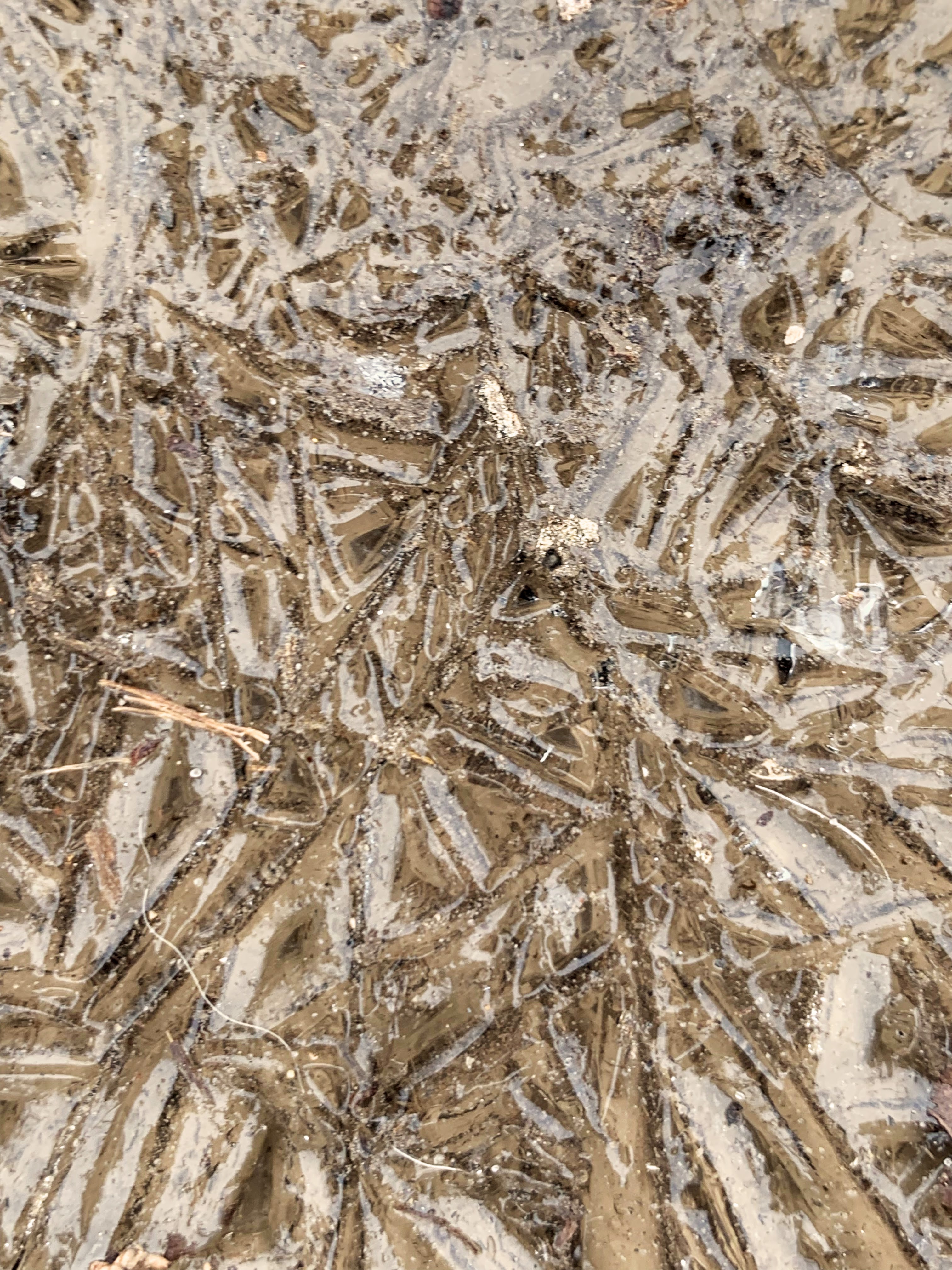
I walked 5km this morning & took a few pictures. There are a few green shoots here & there, but mostly we still have a lot of snow & ice on the ground. Yesterday, I wrote a haiku that matches today’s picture.

Ice stretched thin across
the mud puddles in the road.
Crystalline beauty.

March 25, 2022

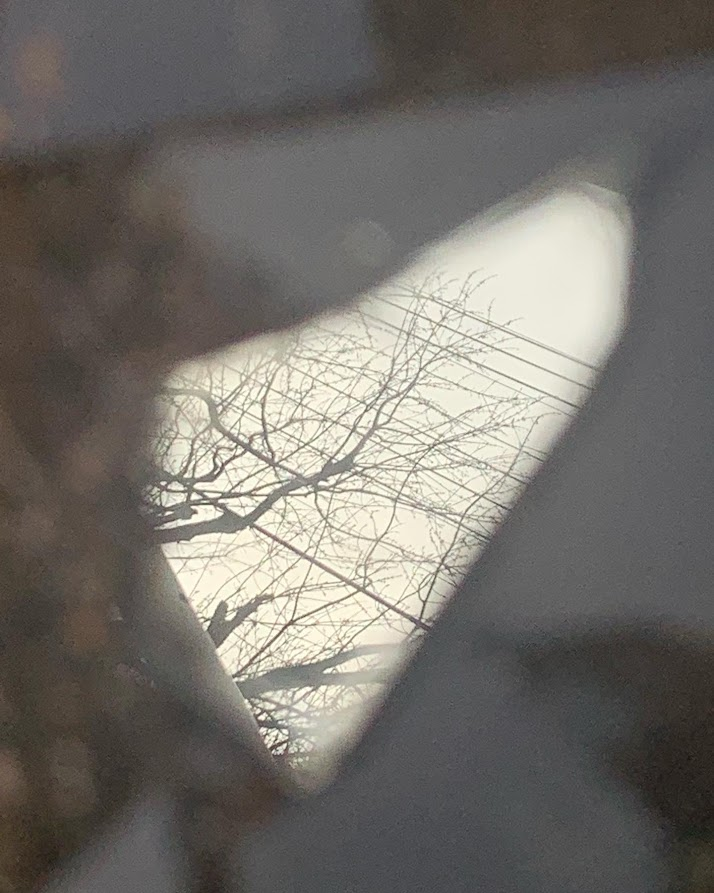
Reflection – tree & wires in a piece of glass on the ground. I remember this being one street over and near our friend Laura’s place. Today (2023) she has an article in the Globe and Mail. I can’t get over how lucky I am to live in this neighbourhood with these people.

March 25, 2021

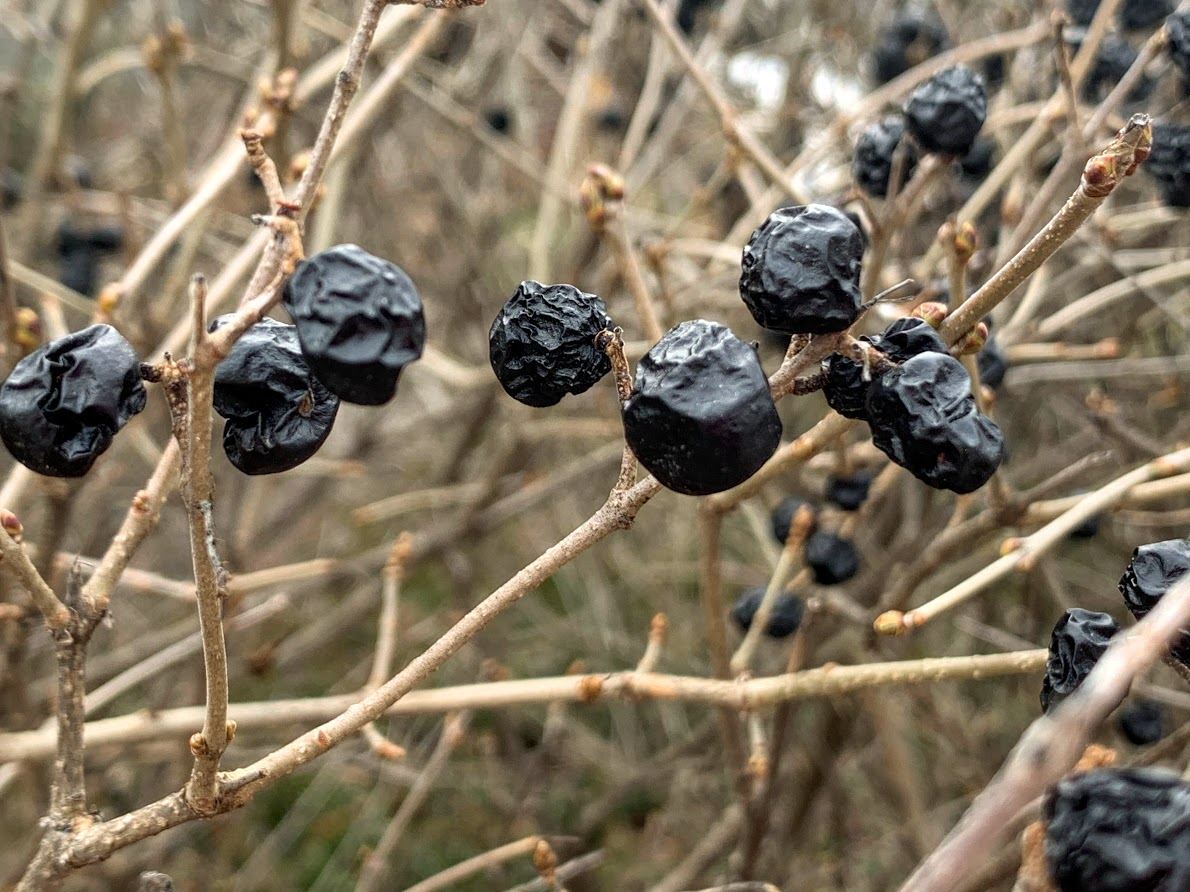
This makes me laugh because I took a picture almost exactly like this yesterday. Apparently I often spend March looking for colour.

March 25, 2020 – pandemic March

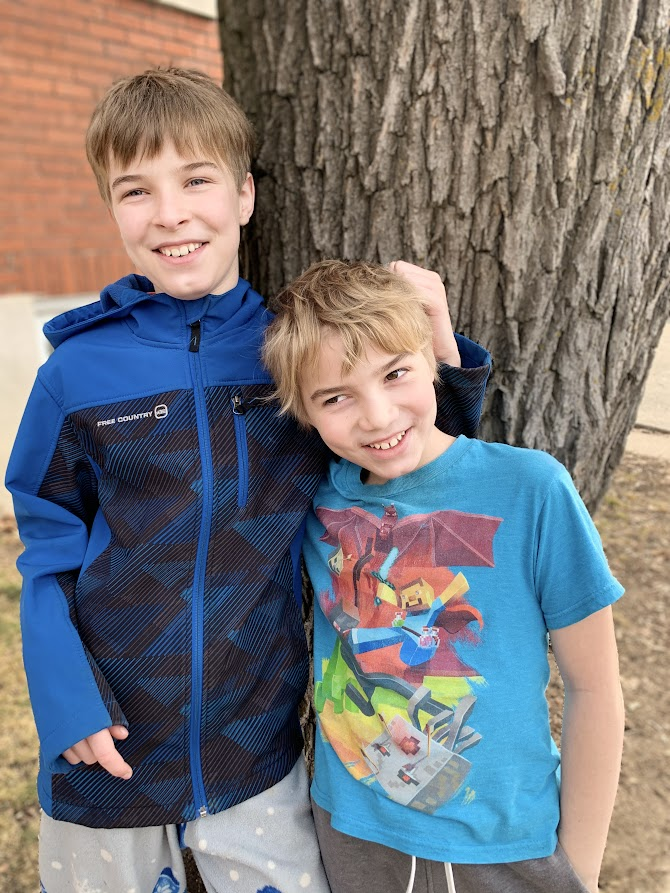
We had spent 8 months in a two-bedroom apartment while our house was being renovated. We finally moved back in the weekend of March 13. (Yes, the weekend things started shutting down – how lucky were we?) The boys were happy to be home & very close after spending a long time sharing a small bedroom.

March 25, 2019

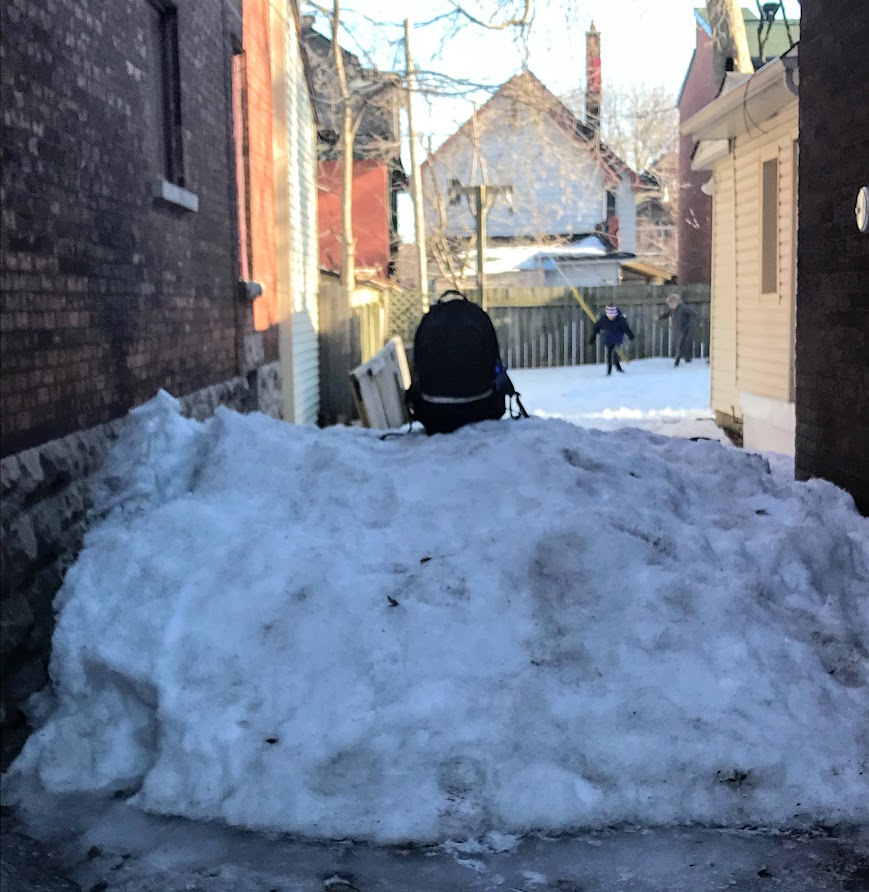
Sometimes, you get home from school, throw your backpack on a pile of snow at the end of the driveway, and go play in the backyard with your friend – just because you can. (Squint & you can see two boys playing in the background.)

March 25, 2018

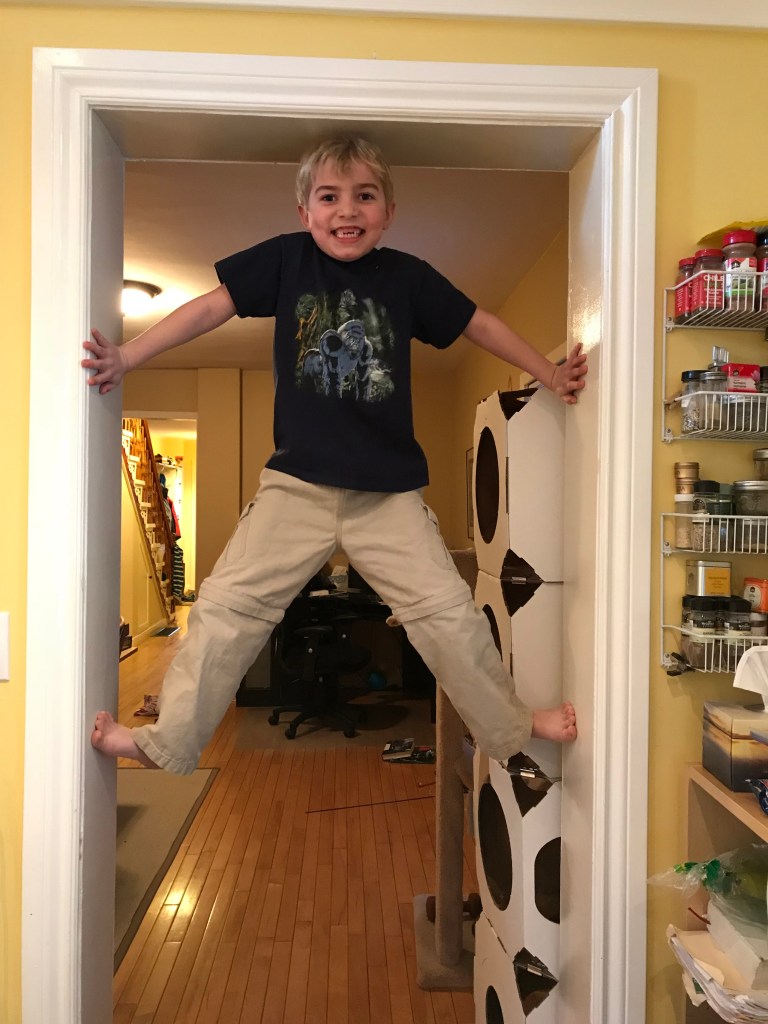
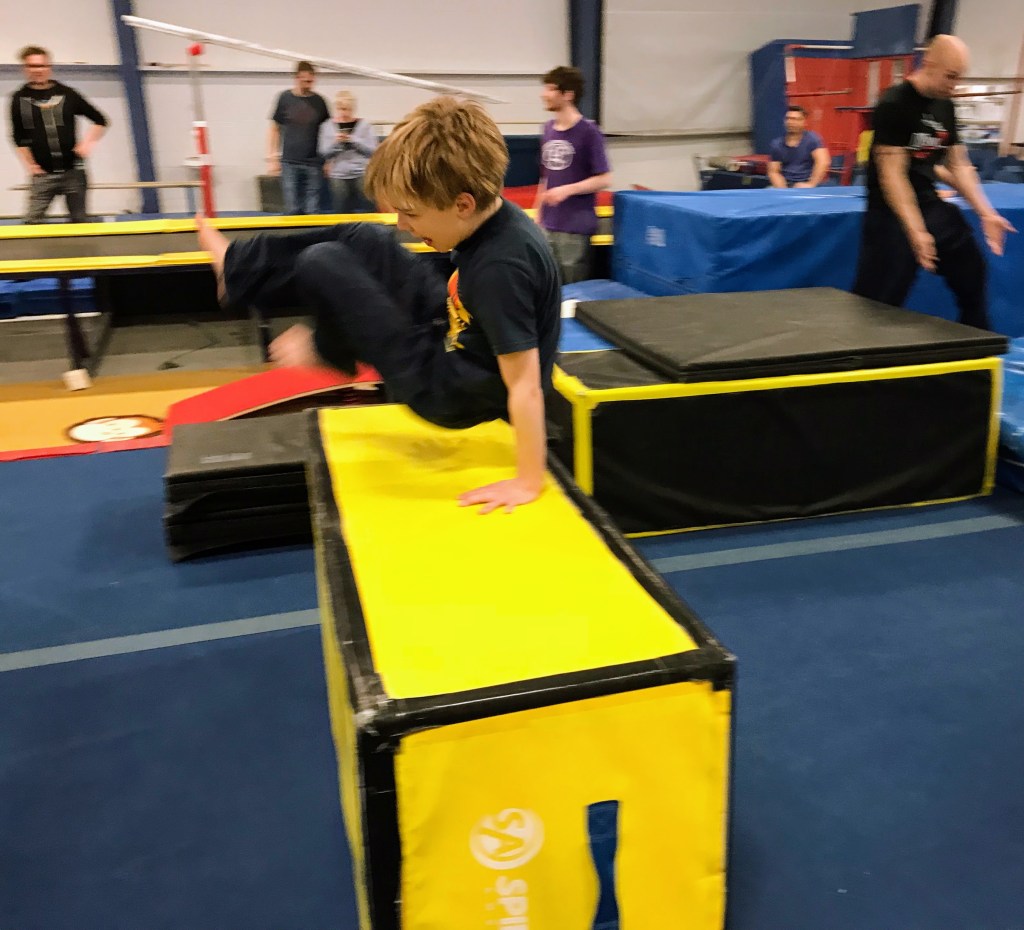
On the move. Mr. 7 was ecstatic about his newfound ability to get to the top of the doorway. Both boys started parkour classes (and one is at parkour right now as I write!).

March 25, 2018

Meeting our friend’s baby. Just got a hilarious video of that baby – now a kindergartner! – doing a butt wiggle yesterday.

March 25, 2017

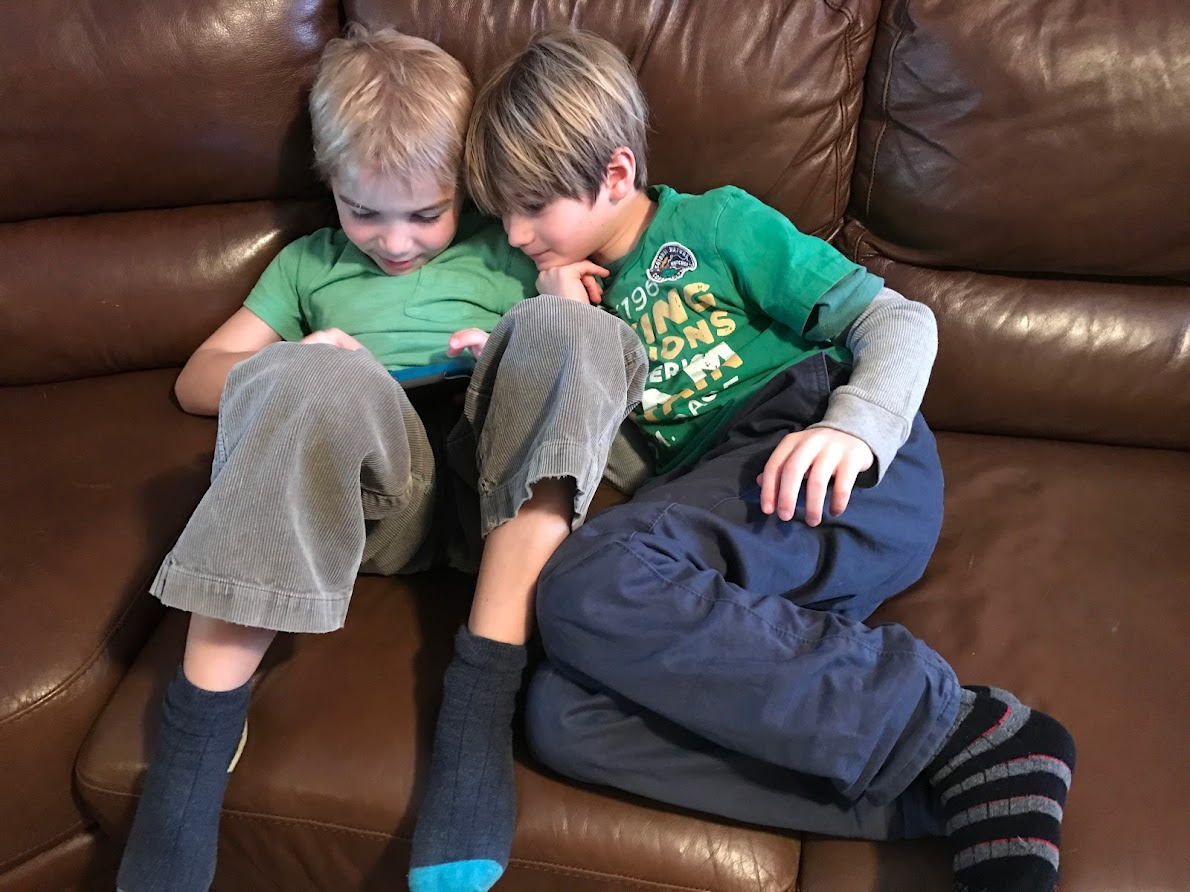
Mr. 6 snuggled up with his buddy. Little did we know that the ipad was prep for the pandemic to come.

March 25, 2012

I can do it myself!

What happens in Arizona… #SOL23 23/31

Today is parent-teacher conferences. As I got dressed, I put on a particular necklace – not a necklace, really, more an amulet, maybe – and I immediately felt a little stronger. Let me tell you a story that I don’t quite believe…

About six years ago, we were visiting my in-laws in Tucson, and my mother-in-law scheduled our whole family for an energy work session with someone she knew. I didn’t really believe in energy work, but I did (and do) really believe in my mother-in-law, and I pretty much always believe in spending time lying down and letting people try to make me feel better, so I said yes.

I’d never tried anything like this before, but I figured it wouldn’t hurt anything. The kids went first, and I was frankly astonished when the therapist (? energy worker? I have no idea) hesitated and then focused on a place on my child’s body that did, indeed, require healing, but that he could not possibly have known about. There was more, but afterwards, when he explained what he had felt and done during the session, he commented about that part of his work. I was intrigued. Nevertheless, when it was my turn for energy work, I wasn’t expecting much. I lay down, assuming I would feel nothing, anticipating thirty minutes of quiet.

Now, the thing is, that I’m not in Arizona anymore and this happened a while ago and I’m still largely a reading/science type of person, so when I talk about this it all feels like a bunch of hooey. If I were reading this, I would probably not believe it, and if you don’t believe this, I’m ok with that, but let me tell you, whatever that man did, I could feel it – and he never even touched me. It was intense. At the end, he told me that he had pulled a sword out of my gut (which, again, is ridiculous) and I shocked myself by looking directly at him and saying, “Give that back. I need it.” Well.

He did not give it back – because even an energy-work-person will not put a metaphorical energy sword back into your belly because that sounds like a terrible idea, even if it had previously been metaphysically there – and I felt oddly bereft for the next day or two. Finally, my mother-in-law (who, as I said, I fully believe in) found me and offered me a necklace-type thing: a green and white spheroid stone set in an odd elaborate metal bezel and fixed to a brown cord. She told me that she had bought it years ago; it had been sold to her as an amulet of protection and she felt that it had called her. Now, she said, she thought it was mine.

I wore it for days and, placebo or not, I felt better. Eventually, I put it away and only pulled it out every now and then. Even today, when I put it on, I feel powerfully protected – and I know for sure that whether that protection comes from the universe, or the stone or the depth of my mother-in-law’s love for me, it doesn’t matter. One way or another, the energy is there.

Parking #SOL23 17/31

I used to drive a school bus. Yup, you read that right. When I taught in Washington DC the school was so small that PE requirements were fulfilled through after school teams and young teachers got our commercial drivers license so we could drive the teams we coached.

Most of the school’s bright blue fleet was short buses, but Amy and I coached the (giant) middle school soccer team, so we drove the full-sized bus all over the DC area. We regularly garnered startled second looks from drivers as they passed us on the highway, but that didn’t bother us: we knew we were more than competent. Mel, Head custodian and general fixer of everything (who was also in charge of the buses) knew it, too, which is why he trusted Amy and me to park the size bus after all the kids had been picked up.

Because the school was in the middle of one of DC’s downtown neighborhoods, there was only one nearby space that could accommodate the big bus. The operation required two people and a lot of nerve. We negotiated narrow one-way streets until we arrived perpendicular to a long alleyway. Here, we maneuvered our  blue behemoth in a fifteenish-point turn, then threaded our way between two buildings, the sides of the bus mere inches from the brick walls on either side. About a third of the way up the alley, a pipe snaked up the side of the building on the right; a few feet further on, a meter jutted out of the building on the left. There was no room for error.

Once we made it through the alley, we emerged into the relative freedom of a very small parking lot, where we slid the bus into a spot right against a wall. Finishing was always exhilarating.

Which explains why I blushed with pleasure tonight as a group of us left the restaurant and the woman at the next table touched my arm and said, “I watched you park your minivan. It was amazing.” I looked out the window, suddenly realizing that everyone inside had been able to see me parallel park in a very tight spot, then I grinned, “well, I used to drive a school bus.”

Compliments #SOL23 11/31

Years ago, my colleague, Aaron Bachmann, walked into our office one day and told us that he had learned that people don’t get enough compliments and that, when they did, something like 90% of them focused on appearance. He was determined to change that. 

Aaron set about giving us all compliments – real ones. It was hilarious and cheesy, but it also felt good. And he kept it up. He gave compliments all the time, to the point where even now, years later, whenever I think of him I smile. Sure, I remember him fondly (we haven’t worked together in almost two decades, more’s the pity), but it’s more than that: when I think about Aaron, I feel better about myself.

There’s tons of research about the power of  compliments (here, for example) and, naturally, about how to do it “right” (here), but you already know the truth: voicing your sincere appreciation of someone else does all sorts of wonderful things.

Now, I have *no* research on this next part, but I think most teachers don’t get a lot of compliments – or at least not the kind we can fully believe. I mean, I love when a student gives me a compliment, but most of the time a part of me is also a tiny bit wary because students have a clear interest (grades) in telling me that they like what we’re doing. (This is why students who stay in touch and say nice things later on are really meaningful to me, even though I’m pretty terrible at writing back in a timely manner.) But the truth of our job is that  we spend most of our days alone in a room with students. We spend our days trying to meet the needs of many humans, and we are often all too aware of the ways in which we don’t live up to our high standards. Parents are rightly concerned about their child’s development and happiness, so they don’t often give compliments either: when things are going well, they leave us alone; when things aren’t going well, we hear about it. As for administrators, well, that is highly dependent on the administrator, but my experience is that most high school principals are not big on compliments.

This week, our Literacy Coach, Xan Woods, came to our school. When she wasn’t assessing students or compiling data or supporting other people, she had time to watch me teach. This is one of her go-to supports: whenever she can, she observes, then provides feedback. Xan knows that these past few weeks have been extraordinarily difficult for me, and she knows how I’ve struggled with my own concerns about my competency in the Reading class I’m teaching. I was excited to have her sit in because I knew she would have good feedback and new strategies to help me improve.

But here’s what actually happened: at the end of the day, she complimented me. She noticed that the students in the class are starting to respond to the instruction. She told me about the various ways she saw them support one another. She pointed out that they were willing to write on the board (a huge step forward), and that every student read aloud – not just in choral and echo reading, but at least one sentence on their own (a miracle) – for the first time. She was genuinely excited for me and said, “You’re amazing! You’re really doing it!” then talked about strategies that were working. Later, she posted a short video clip of me, teaching, on Twitter and outlined things that were going well. I almost blushed. She does this for many of the teachers she observes, so that we can learn from each other as we teach in our separate classrooms. It’s incredible.

I can’t even begin to express how much this meant. She didn’t say I was perfect. She didn’t say that there were no improvements we could make. She simply noticed where I was doing a good job, and for a while, the difficulties that have been dogging me felt less heavy. When I taught the next day, I was a bit more relaxed, a bit more confident in my choices. Xan made a difference.

This writing challenge, too, lifts me up. Yesterday, a high school friend, Katie, told me she loves the time of year when I publish every day. I glowed. Maybe Stacey and Melanie and the others at Two Writing Teachers knew this would happen. Maybe they knew teachers needed this space. Every March so many teachers use their precious time to write something and publish it every day. We make ourselves vulnerable in ways I don’t think we always share: Who will read (and maybe judge) our public writing? What if, as a teacher, I publish something that is not very well-written?(Um, I do this every March. 31 days in a row is a lot of published writing; some of it is necessarily not great.) Whose story can I share? What may I reveal about myself? Others? The school? It’s a lot. Yet every day, people reply to our posts and say wonderful things. We write to each other, sharing connections, observations, thoughts and, always, compliments. For one month, we lift each other high and say what Xan said to me: “You’re amazing! You’re really doing it!”

Aaron knew it all those years ago: compliments change everything. So, to Aaron and Xan, to the people behind Two Writing Teachers, and to everyone who is writing and everyone who is commenting, thank you. Your words change the world for the better.

The First Time #SOL23 2/31

One of the prompts I offer during our memoir unit is “The first time I…” (NB: when working with high school students it is best to *immediately* complete the sentence with a few mundane firsts, otherwise minds tend to wander in directions that are, ahem, not compatible with the classroom.) It’s a funny little prompt because first times are, I have learned, simultaneously memorable and hard to remember. This is one of those prompts that sees students’ pens hover above their notebooks before they drop, scribbling furiously; their writing stops and starts then stops again; sometimes the ideas don’t come until the next day or even many days later. 

Around the time I use this prompt, I often share a short memoir by Willy Conley which opens with a question about when he first realized he was deaf. This ‘first’ can perplex students. “How did he not know he was deaf?” they ask, and I have no ready answer. “How did you realize things about yourself?” I offer as a response, and we often physically look at ourselves. As I ask probing questions, students respond, “But I’ve *always* known I was a boy. I never realized it” or “I just *knew* I was Canadian; I didn’t have to think about it” and on we go, the discussion touching on aspects of their identity that they take for granted. Sometimes we are able to dig in; other times, I gently move the discussion back to riding bikes or ice skating. Physical firsts, it turns out, often stick in the memory.

Each semester, after the discussion, my mind inevitably turns to Zora Neale Hurston and the line in Their Eyes Were Watching God when, as a child, Janie sees a picture of herself and realizes she is Black: “Aw, aw! Ah’m colored!” she exclaims. The first time I read that line, I had to pause just like my students do now when confronted with Conley’s realization of deafness: How did she not know? And, of course, when I asked that question about Janie, I had to turn it on myself and ask “When did I first realize I was white?” 

The first time I realized I was white was in high school Spanish class. Even though my southern school was intentionally integrated (by bussing), almost no Black students were in any of the “Honors” classes I took. I had finished up all the French classes the school offered and switched to Spanish my junior year. There I met Kiki, who was Black. Spanish was easy for me as it was not for her, and our teacher asked if I would help with her. Ever a teacher, I was delighted. We got along famously, but things were the way they were and there was no moment when getting along well would have had a chance to veer into true friendship. One time, as we worked, she said something about me being a “white girl.” I was surprised. I had heard people talk about “the Black kids”, but never “the white kids”. I had never really thought of myself that way, but clearly she did. My mind lingered on that thought for a minute, then Kiki and I went back to the Spanish work in front of us, a white girl and a Black girl, trying to figure out new words in a world that saw our skin color before it saw us.