An unwelcome visitor #SOL24 1/31

I knew for sure that I had an unwelcome visitor on Saturday. I’d heard the quiet knocking every morning for days, but tried to pretend it wasn’t coming: I went to bed early, but soon sleep started to elude me; I woke daily with a tickle in the back of my throat. By Saturday there was no ignoring the visitor: the virus had arrived.

“I think I’m sick,” I croaked at my spouse, as if my voice and the circles under my bleary eyes didn’t make this obvious.

“I think you are,” he replied, and set me on the couch to recuperate.

We’ve had viruses visit before, of course. Mostly we greet them with tea and honey; we entertain them with ridiculous series on Netflix or long cuddles with good books; always, we like to offer them plenty of rest. This satisfies most viruses. After a day or two, they thank us politely and move on, sometimes leaving behind a bit of a mess, but nothing that we can’t handle if we’re cautious.

This virus though, the one that came on Saturday, this one has overstayed its welcome. I tried to coddle it over the weekend, hoping that it would be willing to move on by Monday morning, but no. Instead, the virus – which had initially taken up residence in my throat – decided that it was too confined and expanded into my lungs and my sinuses. There, it stretched out. “Ah… just what I needed: more space.” It took a particular liking to my lungs and hung out there, making it hard for me to breathe.

So, I took the virus to the doctor’s office where we tried to take a picture of it, but it was shy and hid from the x-ray. “Well,” said the doctor, “at least it’s not Pneumonia. She always overstays her welcome – a real hanger-on, that one.” Pneumonia has visited both me and my spouse, so I knew exactly what the doctor meant. She is a terrible guest. “Still,” the doctor continued, “there are some truly ill-mannered viruses going around right now. This one may stay for days.”

I nodded my head, but I didn’t believe her. I know how to deal with a virus, and I don’t get sick very often. I wheezed my way home and curled up on my couch. I played puzzle games with my virus and watched lots of bad TV. We downloaded a mindless game app and played for hours. We drank unending pots of tea with honey. We knit, pet the dog and took naps. Still, the virus stayed. It fiddled with the thermostat, so I tried to help it get comfortable with some ibuprofen. Then, ungrateful, it spent Monday evening painting my throat bright red. “Much better,” it squealed. After that, it yelled at me whenever I swallowed, “You’re ruining the paint job!”

Every afternoon, I checked in with my virus. “Maybe you could leave tomorrow?” I asked. The virus laughed, and watched me write increasingly tearful emails to the vice principal, telling her that I needed to be out yet again. Last night, as I created the fifth day of lesson plans, the virus was not even remotely helpful. In fact, it laughed even harder and said, “I *might* leave tomorrow, but I’m just not sure yet. Maybe you should go in just to see what I do.” I’d gotten wise to it, though. I knew that it just wanted to stay longer, so I called in sick and sent the (now pretty pathetic) lesson plans.

Today is the seventh day of the virus’s visit. I’ve told it that my spouse and I don’t typically welcome guests for more than a week without consulting with one another, so it is reluctantly packing up. The paint job it had so delighted in has largely faded, and it’s moved into a smaller space, mostly in my throat. I’ve offered it more tea and sleep, but I think it’s starting to crave something different, hopefully something it can’t find in this house. By Monday, this unwelcome visitor should be gone, and I should be back to work. Fingers crossed.

Sick Days

Second semester started with days of absent students. Some didn’t understand that the semester began in the middle of the week. Some thought the first few days were “kind of useless” and decided to stay home. Two were out of the country indefinitely. Lots of students were changing their timetables. Of course, most students were there, so I focused on the ones in the classroom, tried to make clear assignments for those who were out, and continued along.

By the end of the first full week, classes were well underway, but students seemed to be coming and going at an unusual rate. I chalked it up to, well, I don’t know what – but weird things happen in small environments, and schools are no exception. So, a lot of students were missing class, such is life, and talk at the teachers’ table at lunchtime suggested that this was true in many classes. Worse, some kids were getting sick and then were gone for days – days! None of the normal “sick for a day and then back” that usually happens. We couldn’t figure it out.

Then, last week, my youngest got sick. He doesn’t love school, so I often look askance at any request to stay home, but on Tuesday, he was visibly unwell, so we let him stay home – and there he stayed for three full days. Three days! He’s 13! 13-year-olds bounce back ridiculously quickly; they don’t stay home for days because of a nondescript cold. (It wasn’t covid.) But here we were. By the time Friday rolled around, he’d missed the annual ice skating outing, pizza day, and more. He was ready to go back.

So I shouldn’t have been surprised when I started feeling sick on Saturday. I was gentle with myself, but I figured it was just a cold. Just a cold… and here I am, four days later, still at home. I am sick. It’s not Covid, but I was sick enough to check with the doctor on Monday. They shook their head and said, “there are some nasty viruses going around.” Indeed. Them they x-rayed my chest to see if I had pneumonia – I don’t. I’m just sick. Last night I slept 13 hours. I’ve spent most of the last three days sitting on the couch. My throat is a hot mess. I’m sick.

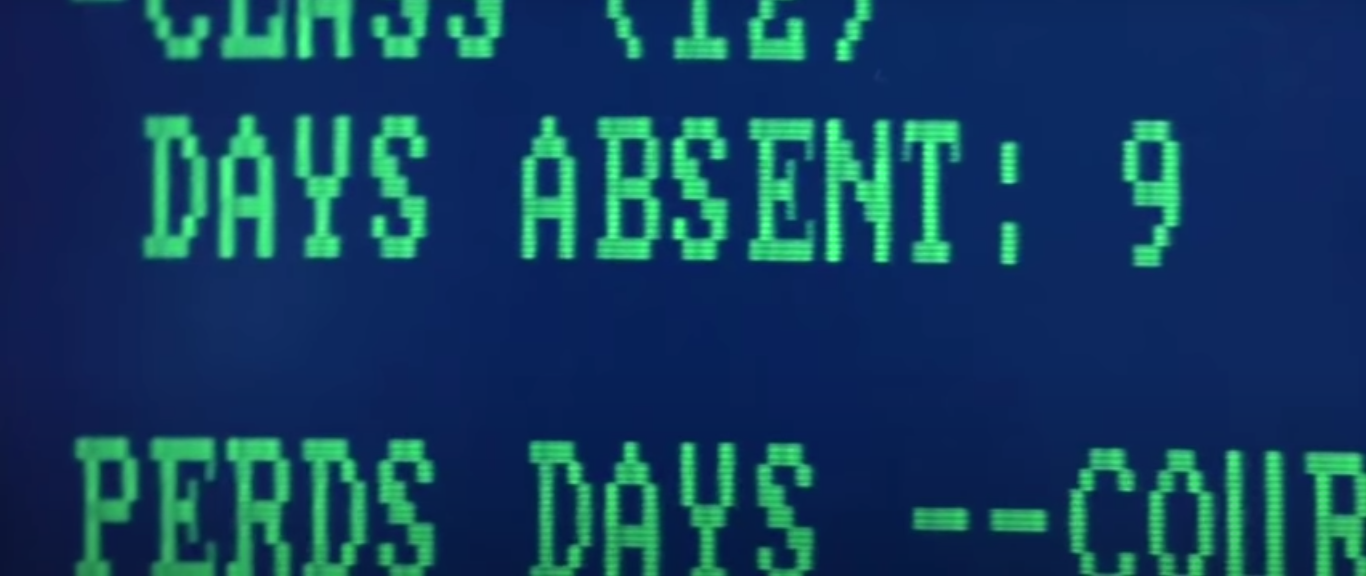
When I check class attendance, I see that the students are still sick, too. To date, only 6 of my 26 grade 9 students have perfect attendance; only 4 of the 21 grade 12s. No wonder I’ve been spending so much of my afternoon literacy block trying to simply find the students I need to work with. Whew.

I’m out again tomorrow – and I really hate being away from school. If I’m lucky, I’ll be better by Thursday. At least I’ve solved the mystery of all the missing students – they’re sick!

If you could talk to your younger self

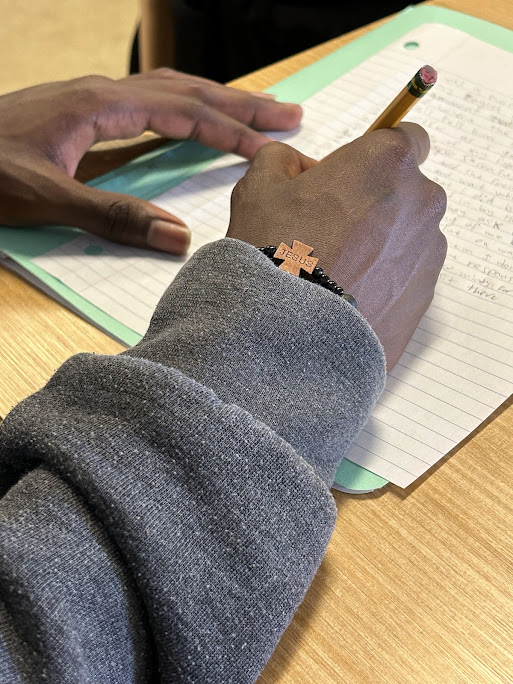
I was tidying the copying area in our office when a sheet of lined paper, adrift amidst the abandoned photocopies, caught my eye. A quick glance told me this was not my writing prompt, not my student. Still, I couldn’t help but read the words – and my heart broke open. Oh, how I wish I could tell this anonymous student about the poetry he has created, tell him that he is so much better than he knows.

If you could talk to your younger self what would you say

I would tell him
not to turn out like
me tell him to get good grades
and go to school dont skip
or anything Be good everything
like that if He turns out like me His
life will suck

My response (quickwrite)
If I could talk to the student whose paper was left behind

I would tell him
not to give up on
himself, tell him to hold on
and keep doing what he can. Be kind, everything
that I wish he could hear. If he knew the power of his
words, he would be stunned.

New shoes

During exam week, as semester one wound down and semester two loomed on the horizon, I bought myself some new shoes. Fluevogs were on sale and I decided to splurge, telling myself that the black and white pair were practically every day shoes. Mostly, I just thought they were awesome.

The Fluevogs, just waiting for me to buy them.

Days later, I wore the shoes for the first day of second semester. Right away, before period one even started, one of my new grade 9 students told me that she loved my shoes. Over the course of the morning, students and teachers complimented my shoes. I don’t think of myself as wildly fashionable, so I quite enjoyed the attention.

After the lunch bell rang, I spent a few quiet minutes in the classroom, straightening the desks and generally tidying. I know that each new semester brings both excitement and nerves, and I suspected I might have a few drop-ins. Sure enough, one of my regulars showed up to run down his classes so far.

I can’t get over how much I enjoy this young man. We spent two years in a row in English class together, and there were times when I wasn’t sure we were both going to make it. Somehow, by the time the second class had ended, we’d muddled through some actual reading and several pieces of writing that involved more than a few hastily scribbled sentences. We had even discovered that he is secretly an incredible teacher – and got him a peer tutoring placement in some ESL classes. Now, in grade 11, he is thriving (still challenging – but thriving).

He knows that I keep a blog – “are you famous yet, Miss?” – and thinks it’s ridiculous that I read so much – “do you even sleep?” He tells me he’s a “baller” and once spent a significant amount of class time explaining why Kobe is better than Michael Jordan. And yes, I tricked him into writing an opinion essay on this. He also likes to mock my “secret crush” on Jason Reynolds. I regularly book talk Long Way Down, the Ghost trilogy and Miles Morales. All the kids know I love his writing, but when I showed a video of Reynolds talking about how he didn’t read much in high school, this student was shocked. Reynolds is a Black man with impressive dreadlocks; I am a middle-aged white teacher with what this student called “the same haircut as all the other teachers” (ouch. And for the record, he is wrong.)

He took my crush pretty seriously. For weeks he came back to it. “But you’re married,” he said. “Does your husband know?” Yes, yes he does. “But for real, if he asked you out, would you go out with him?” I suggested that it was unlikely that I would ever meet Reynolds, much less have dinner with him. “But what if you did?” this student worried. I said that I would go on an author date with him, an English teacher date – we would talk about writing and books. “That would be the most boring date ever,” he said and though I insisted that this would, in fact, be interesting for me, he was unconvinced.

But on this day we were talking about his new classes, not about books or writing. Then, after a minute of boasting that he was going to change a class because it was “way too much work” (“It’s day one,” I said, “you have no idea if it’s too much work.”), he suddenly stopped and said, “Miss, those are some fancy shoes.”

I was startled, then started to thank him, but he interrupted me. “Miss, if Jason Reynolds saw you in those shoes, he would definitely ask you on a date.” He paused. “Yeah, those are your Jason Reynolds date shoes, for sure.”

Though I expect that I will never, in fact, wear these shoes on a date with one of my favourite authors, I’m pretty sure I will call them “Jason Reynolds date shoes” for as long as I wear them. I mean, they are pretty cute.

Smokin’ in the boys room

I’m on hall duty, spending most of my time near the boys’ room on the first floor, the bathroom best known for its – ahem – popularity. Things have been largely quiet and then, abruptly, they aren’t. Literally. Laughter and loud voices echo out of the bathroom and into the hallway. I lean towards the entryway – there are no exterior doors to separate the washroom from the hallways, though there are stalls inside – and raise my voice: “Time to go to class!”

Brief silence, followed by a reply:

“We’re smoking!”

Gales of laughter billow out of the bathroom.

I dutifully contact the VPs, who dutifully arrive, and we dutifully shoo the boys out of the bathroom, smoke trailing behind them. They are almost giddy with their transgressions. We move them towards their classrooms.

After the kids have been, um, relocated, I chat briefly with one of the VPs. Shaking my head, I say, “There must be something we can do about this.” She laughs ruefully, “If you figure it out, let me know.” We commiserate about how this is a problem in every high school we know of, in schools around North America.

Having done what little we can, we both move off towards our next destination.

I’m halfway up the stairs when the old Motley Crue song starts playing in my head: “Smokin’ in the boys room/ Teacher don’t fill me up with your rules…” That song came out in 1989 – and yes, I remember it. I shake my head again, this time with a little laugh.

If anyone out there figures out how to stop the kids from smoking in the bathrooms, let us know. Until then, I’ll spend most of my hall duty near the boys’ room on the first floor.

Refrigerator Art

He was hard at work in the back of the class and, ok, it wasn’t on an assignment, but at least it meant that for a few blessed minutes of class he wasn’t pacing, wasn’t calling out, wasn’t asking to go to the bathroom, to the Resource Room, to get water. And eventually I could tell he was listening to the audiobook – even though his back was to me and he was hunched over the desk, scribbling. I hadn’t actually had any pedagogical goal in mind when I’d asked him to test the markers; I just wanted a little quiet. I think he might have, too.

So when class ended and he gave me a sheet full of drawings, I was calm enough to be kind of tickled. He described each one. I told him – sincerely – that I wished I could put it on the classroom wall, but that probably the blood and (water) gun would be inappropriate, even though things weren’t as bad as they looked out of context. He agreed, glanced down for a moment, then brightened, “You should hang it on your refrigerator.”

So I did. Photo for evidence. I can’t wait to show him tomorrow.

Just the three of us

There were only two students in the classroom. I had guessed that attendance would be low, but this was far lower than anything I anticipated. The hallways, already nearly empty, settled into semi-silence, and I had to accept that this was it. 

Almost – almost! – I sat down to get some work done. Neither of the two were especially talkative students; neither seemed deeply invested in English. Still, before my derrière quite hit my chair, I stood again and walked over to them. I nestled into a nearby seat and asked what they wanted to work on. Nothing

I thought of my own child. He would be furious if he ended up in a class with only one other student – even if they were vaguely friends. If I, as the teacher, asked him what he wanted to work on, he would probably glare at me (although, if I were not his mom, he would probably simply shrug his shoulders and look away). I knew better than to start with such an open-ended question. I needed to try again.

“So, X, I noticed that you haven’t yet revised your 100-word memoir. Want to look at that together?”

Wait.
Wait.
Wait.

Resigned yes.

I try again with the other student. Similar results.

Soon, though, Chromebooks were open, and they were both at least looking at their work. With one student, I was able to clarify the directions for a missing assignment, and they got to work. With the other, I walked through the revision process while I revised his piece in front of him: I asked questions, wrote down phrases he said, and generally showed him what deep revision might look like. Then, confident that he had understood, I reverted to the earlier draft and sent him off to revise on his own. I like to think he wasn’t horrified. 

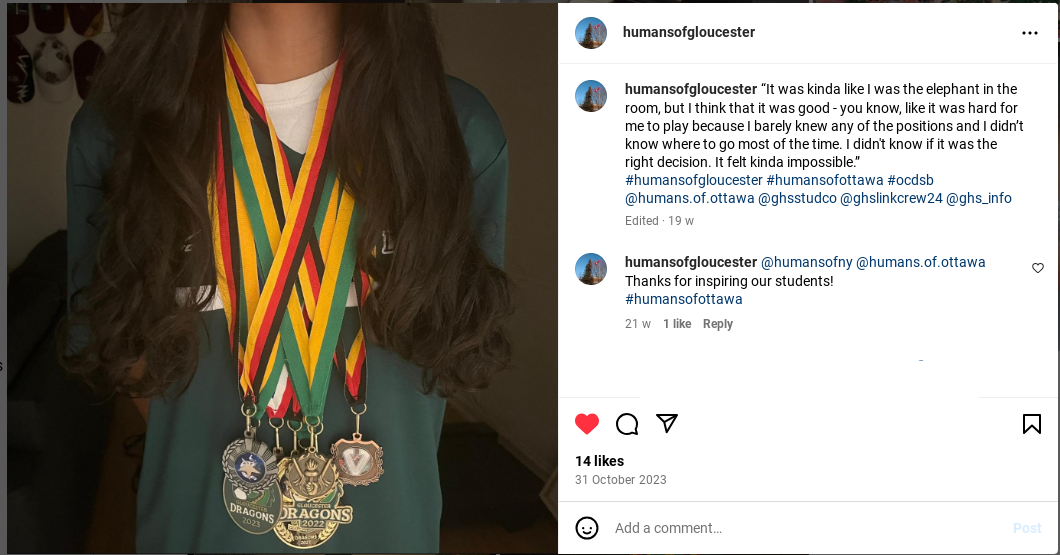
We also all worked a bit on our more recent project – Humans of Gloucester. We looked at the transcript of an interview one had done and talked about what part might be interesting to an Instagram audience. We considered how even a tiny piece of an interview can have a story arc. When the bell rang, we were all startled. 

Two students. Turned out to be a pretty good class.

(And follow us on Instagram: @HumansofGloucester – we’ve already got some good posts up, including the one from this day.)

“Oh!”

I’ve just finished taking attendance and am closing my computer so that I can read along with my class when I hear a muffled gasp from the middle of the room.

“Oh!”

My eyes snap up. Is something wrong? A student has her hand over her mouth, eyes wide as she stares at her book. Her friend shoves her own book – newly started – to one side and leans in to see what’s on the page. The reader’s eyes are wide. She starts to dog-ear the corner but then, just before she creases the fold, she flips the page. Both girls’ eyes dart back and forth as they read quickly down the page. Another intake of breath then, heads together, they hold a whispered conference.

One of them looks up and catches my eye. I nod. I know this book. I know where they are. It is, in fact, gasp-worthy. The student takes a deep breath, then dives back into the story. Just last week she told me that she usually abandons books long before she gets this far, but not this one.

Page finished, her friend reluctantly returns to her own novel. If I had to bet, I’d say that Dear Martin will soon be flying off my shelves. For now, though, there’s at least one reader in the classroom who needs to finish this book.

Heartstopper

I’m at the back of the classroom, trying to choose which title to use for today’s book talk. My hand is hovering over Heartstopper. I want to tell the students about this fun and accessible graphic novel about a cute high school romance – and hey! There’s a Netflix adaptation! I love the series, and am sure that some of the students will love it, too. 

Still, I hesitate. I know that some of the students will not love Heartstopper. In fact, some of them may be offended that it’s on the shelves at all. If I share this book in today’s book talk, they will, at best, giggle and blush; maybe they’ll look away; some will be quite upset. All of this because the cute romance is between two boys.

As a teacher, I want the classroom to be a space where all students feel welcome. I imagine a space where they feel confident that they will be able to learn, where they feel safe and respected.  But already, even as I type this, I can feel the tension in my stomach because this vision – the room where everyone can bring their full self and thrive – is largely a dream. Reality rests on some seriously rocky ground.

Two weeks ago, across Canada, a group of people protested to “protect our children from indoctrination and sexualization.” Many students “walked out” of (well, most simply did not attend) school. I was shocked, though I shouldn’t have been. Conservatives – from the leader of the national Conservative Party to Ontario’s Education Minister – have been ramping up their attacks on LGBTQ+ people for several years. In early September, the Premier of Ontario told a group of supporters that schools are “indoctrinating” students on issues of gender. 

But queer people exist. Our schools welcome people – students, staff, parents – who live and love in all sorts of ways. [I have stared at this paragraph for many long minutes now. Long minutes plus almost two weeks. I want to write this, but how will I say what I mean? I don’t know. I have to remind myself that this is a very small blog, that I am writing mostly for myself, that I am trying to be a teacher who writes which means being a teacher who experiences what my students experience: a blank page, a blank mind and, sometimes, a fear of writing or a lack of words. I *will* write this tonight. I *will* hit publish.] I guess what I want to say is, LGBTQ+ people are people. They love and are deserving of love. They live and deserve to be allowed to live full, rich lives. 

The walkout and the subsequent acts in our school – the defacing of pride flags, the hate(ful) speech in classes – profoundly unsettles many of us. There are tears in the staff room; tempers are short. The Rainbow Youth Club is nervous about meeting. Everyone’s edgy.

Days later, at our staff meeting, two powerful voices help staff refocus. “Be careful,” they tell us, “not to jump to conclusions.” “Lead with curiosity,” they remind us. “Remember that some of our students have recently arrived from places where merely discussing these issues could have serious repercussions. As best as you can, when faced with statements that you might categorize as hate, ask genuine questions.” I am humbled that people whose very existence is being attacked are reminding us to be kind, curious, teachers. 

The speakers help us find balance between the human rights of all people and the right to freedom of religion. We can practice our religion here, read our religious texts, attend any house of worship. We do not, however, have the right NOT to learn about other practices and peoples in our public schools. We may not discriminate against others who do not share our beliefs. They remind us that all children deserve to see themselves reflected in the curriculum, and that statistically, whether we know it or not, someone in our class is probably LGBTQ+. They deserve to be seen.

That night, on social media, I share a post: a person holds a sign that says, “Classrooms that erase QUEER identities are erasing truth and beauty and joy.” The next morning, I wake to a message from an old friend: “I was erased.” 

And now I’m at the back of the classroom, trying to choose which title to use for today’s book talk. My hand is hovering over Heartstopper. I think about my friend and about the presenters. I think about students past and present, about friends, family and other loved ones, all of whom identify as queer. I think about students who will feel uncomfortable and (hopefully not, but maybe) unwelcome if I choose this book. I think about how much we change – how incredibly much we all change – over the course of a lifetime. I cannot know now what someone will believe in a week, a month, a year. I cannot know who anyone will love. 

I’m an English teacher. What I know is stories. Some stories you’ll like; some you won’t. They may make you cry or laugh or rage. You may read a story that you’ll want to throw across the room in anger, or one that you’ll always keep within arm’s reach because you feel so seen. If you’re lucky, you’ll read them all. So I pull out Heartstopper and lean it against the blackboard. Because everyone’s welcome here.

Good and Bad

Today was supposed to be our first day of Inquiry Based Learning. It was going to be new for both me (I’ve never gone all-in on this) and the students in my Grade 9 sheltered English course. The idea came up last week: I suggested that since there were five students, maybe we should do things differently. After all, waiting for five people with five very different learning profiles to do the same thing at the same time sounded silly.

Everyone agreed. And then…

Two of the five students weren’t in class today, *and* a new student joined our class. I’ve only been teaching this particular group for two weeks, but I can already tell that many of the students come to the class with a giant “NO”. No, they are not planning to read. No, they are not going to move closer to the front. No, they are not interested in putting their phone away. No, they will not write anything. NO. Just NO.

Today was no different. The three students who have been in the class for a while warily watched the newbie, letting his presence shape their participation. I knew better than to plow ahead, but I nevertheless gamely tried to lead a discussion about what we might be interested in learning. One student didn’t speak; another stuck to one-word high-school-approved topics: cars, games, computers. The new student refused. We weren’t making much progress.

Somehow (don’t ask me – I just teach here) our conversation morphed into what these young people like and don’t like about school. Sensing potential, I grabbed a whiteboard marker and starting recording their ideas. Soon, even Mr. No was contributing. I think I won him over when another student started to say something, then backed away from it, saying, “Nah, I’ll just get in trouble.”

“I doubt it,” I replied. “Unless you were planning to curse directly at me, in which case, yeah, I’d be mad.”

Once he had shared his (honestly, not very controversial) opinion that teachers were a lot of the bad about school – and didn’t get in trouble – we were on our way. Soon, the board was full of their observations, and they were sharing stories that went with them. Almost every student had, at some point in their schooling, been *very* disruptive – overturned tables, broken windows, one caused their whole school to be “secured”- and it was almost always because they felt unheard, unseen, or not respected. They were pushed beyond their own limits and they didn’t have another way to respond. Some are still unhappy about things that happened years ago. All of them wish things had been different.

As the end of class approached, I shared that I found their ideas powerful. I said that I thought that other teachers, too, might benefit from knowing about these things. After all, I said, not every teacher knows that sometimes they need to help *less*. We all looked at the board for a quiet moment. Then, carefully, I wondered if perhaps our first project – maybe just for a few days – could be to create a sheet of things teachers could do to be less annoying (not likely to be our final title) and share it with the teachers in our school.

I wish I could say they said “YES” but the truth is that they are reserving judgment. We’d used up their quota of focus for the day, so we have to wait until tomorrow for any decision – and who knows who might be in class tomorrow. Still, I’m beginning to believe that with this class, anything could happen.

Here’s what they have to say:

GoodBad
Learning new thingsHomework
Gym – get my energy out & play gamesThe Office (includes being sent to the office
AND “office people” who don’t listen)
Having fun (includes making teachers mad)People who won’t listen
Making my own decisionsAnnoying teachers:
talking to me for no reason,
telling me what to do,
making me focus when I really can’t focus anymore,
trying to help me when I want to do it on my own.
Using phones