Losting #SOL22 8/31

Near the beginning of each semester, my students write 100 word memoirs (thanks, Kittle & Gallagher). These never fail to knock my socks off, and this year that’s even more true. At my new school, many students have clear memories of coming to Canada, and many of them are continuing to learn English. Combined these lead to some great moments. For example, below, Tung wrote about his first time in a Canadian high school. Pay particular attention to the word “lost” – we’ll come back to that.

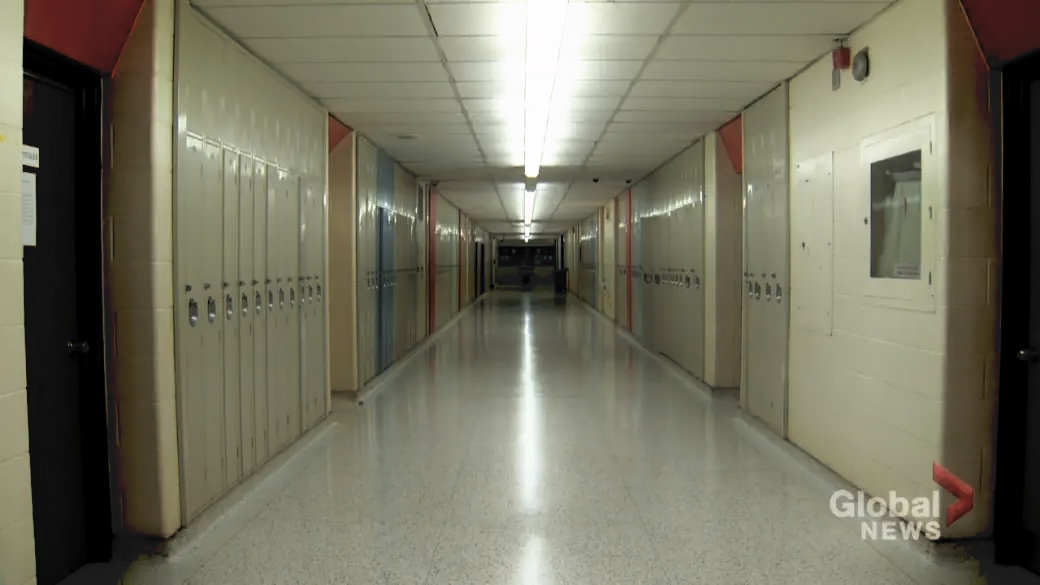
Walking through Canadian high school for the first time was like walking, lost, in an old tunnel surrounded by unknown creatures. The low-ceilinged crowded hallway was an ant’s nest of students trying to sprint through the narrow corridor. The thick moss-green bulletproof door had only a small glass cut-out, covered with an English-only poster. This prevented my curious eyes from spying on the Canadian students in the classroom. Everything was beyond my imagination. Each step I took, one rhythm faster my heart beat. What was I getting myself into? Would there be a light at the end of this tunnel? 

Tung, Grade 12
What I was seeing/ What was in my mind

He added pictures – including some pictures of his school at home. It’s much, much brighter and airier than our school and I can safely guess that it has never seen snow.

Watching Tung try to capture the feeling of that first day was fascinating. Some descriptions came easily – he knew he wanted a tunnel and he knew the door needed to be moss-green and bulletproof. Those things never wavered. Other things changed – coming in, getting cut out, changing form. To me, the most interesting thing of all was the word “lost”. He really wanted it to be “losting”.

We chatted in the back corner of the room – the place he’s chosen for now – about this word. Somehow lost just wasn’t quite what he was looking for. He had a sense that losting wasn’t a “real” word, but he wanted the word to be active. He wasn’t simply lost, he was wandering, loose, casting about, feeling the sense of not fitting in, not knowing if he belonged. He was losting.

I couldn’t help but think of my own child, then quite small, crying as his grandmother left after another wonderful visit. He threw himself into her arms and said, “It’s your fault, the goneness.” The goneness. Really, it’s the only word for the feeling.

I told Tung he could keep “losting” – that it made sense to me and described what he was feeling – but English isn’t thoroughly his yet; making mistakes and making new words are still too intertwined to tease one away from the other. Still, I expect that the word exists now. I suspect that someday, probably soon, I will see a student wandering in the hallway with a particular look in their eye, and I will know that they are losting. When I do, I’ll try to help – because the goneness can be overwhelming.

Join us – or just come to read – as we blog every day in March at twowritingteachers.com

Letting Go #SOL22 7/31

In the front of the room, Mr. P was talking. Technically, this was “my” class – I was the assigned teacher – but I’d stopped teaching and started functioning as a co-teacher/ support a few days earlier. Now, I was moving about the room, answering quiet questions, checking on student work, when one of the Black students touched my sleeve. I leaned down to hear her question. Without taking her eyes off of Mr. P, she whispered, “Thank you.” I knew exactly what she meant.

***

One week ago – on day one of this challenge – I wrote about the moment when Mr. P and I decided to team teach a class. And not just any class: we decided to team teach a new interdisciplinary course called “Anti-Black Racism in the Canadian Context.”

Some background: I am an experienced teacher with a permanent contract in our school board, and I am white; he is an experienced teacher who is not yet a permanent teacher in our school board, and he is Black. I grew up in the US; he grew up in Jamaica. Last June, when courses were being assigned, there was only one – ONE – Black teacher in this school, and he was not able to teach this class, so the principal asked me. I’m not Black, but I have been working towards anti-racism; filled with both trepidation and excitement, I said yes. To be honest, I was kind of proud that he thought I could do it.

Over the summer and the first semester, I read a lot, talked a lot, and thought a lot about how I could teach an Anti-Black Racism course to a group of students from many racial backgrounds. I researched and learned. I was determined to do my absolute best. The course began on a frigid February day, and I started by acknowledging my precarious position. No matter what I said or did, I was still a representative of white authority standing at the front of the classroom. Even though I planned to have an inquiry-based course, the structure of our system means that I was still “in charge”. It was uncomfortable, but we could live with discomfort.

And then came Mr. P. He had been hired to cover a position at our school this semester. We started chatting about literacy instruction almost the moment we met. Each of our discussions was better than the last, our pedagogy in synch, our hopes and expectations for students overlapping. He is wildly knowledgeable and wonderfully expressive. Within days, he was popping into the classroom; days after that, he started co-teaching with me. By Friday of last week, he was leading the course, and I had stepped into the background.

I’m pretty opinionated about what constitutes good teaching, but watching what happened when a person with lived experience of racism taught the course was humbling. I have been taught by Black educators, listened to Black colleagues, sought out Black perspectives. I am aware of the need for diverse voices – especially Black voices – in our schools. I knew all of this. But – oh, how I wish you could have been in the room last week when he talked about Bob Marley or recognized a Jamaican poet I had quoted. I wish you could have seen the moment that he addressed the racist coverage of the war in Ukraine. I wish you could have heard him talk about what it was like for him to come to Canada as a Black man. I can teach all sorts of things, but I can’t teach that.

Friday afternoon, the principal came by to tell me that Mr. P was needed in the room where he was originally assigned – a support position: valuable, but flexible enough that he had been able to spend a week in our class. Still, that couldn’t last forever, and I knew what had to happen: I asked the principal to transfer the course into Mr. P’s name. I didn’t know that the change would happen right away, but it did. This morning, with little warning, I said goodbye to that group of students and to the Anti-Black Racism course.

I’m a little heartbroken – if one can be a little heartbroken. I would love to keep teaching the course for many reasons. I think I’m mourning my preparation. I know I’m mourning my own chance to learn from Mr. P. I’m absolutely mourning the students and the connections we were making. I love the classroom, and I will spend the rest of this semester with only one traditional class.

On the other hand, a highly qualified Black teacher is leading a diverse group of students to a new understanding of race and racism while he shares a powerful lived experience. And that is worth celebrating.

#SOL22 5/31

It was only the beginning of second period, but all of us were already over this day. Before classes had even started, a few teachers had received an email threatening a school shooting. The actual threat level seemed low, but just in case, the police had been called, the doors locked, a “shelter in place” instituted. Then, the internet went out. And it was Friday. We wondered if the universe was laughing at us: “Good luck at school today,” it snickered.

The grade 12 students were unimpressed. Someone had flicked off the lights as they entered the room – “Hope that’s ok, Miss” – and most people were slumped, exhausted, onto the tables. So much for any lessons I had planned. On the other hand, thanks to the power of routine, almost everyone had a book out.

“I have an idea. You read, I’ll plan something that makes some sort of sense.”

“I can set my watch for 15 minutes,” one student volunteered.

“Miss, can it be 20? Please? I mean, the internet is down and…”

I looked around the room. Heads were nodding. “20 it is,” I declared.

They read; I planned. Then I read, too. 20 minutes passed. C’s watch beeped. An impassioned “NO!” slipped out of a student as she turned a page. “I’m so close to the end of the chapter!”

“Me, too!” “Yes!” “Please, just a few more minutes…”

Of course I said yes. And we all read just a little bit more. And our Friday was just a little bit better. Not perfect, but better.

Team teaching #SOL22 1/31

I am finishing my third (or thirtieth or three hundredth) meeting of the afternoon when he pops in. He’s been “pushing in” to a class and thinks that maybe he’s stepping on the teacher’s toes just a little bit. I taught that class last semester and was grateful for every extra adult body I could get, but I trust his judgement. Maybe this new, young teacher has things under control; maybe she has a higher tolerance for high jinks; maybe she likes to have some space to teach by herself. Whatever it is, if he thinks he’ll serve the class better by stepping away for awhile, then that’s probably the right move. I, too, am finding that pushing in is complex.

He and I have only talked a handful of times, but we’ve already had several of those discussions that trip along from one topic to the next, our tongues flying and our hands gesturing. I don’t know much about him yet, but I already admire him. Today he senses my fatigue. “How’s that class going?” he asks. I take a deep breath.

I confess that we have finished unit 1 – Foundations – and are moving into a unit on history. I explain that I am drowning in information. I keep thinking of the title of an article I read in grad school: A Little Too Little and a Lot Too Much. I feel wildly uncertain. What is my next step? How can I honour student voice? How can I acknowledge what they know and what I don’t know?

He understands right away, and he points out – gently, politely – that I am too deep in my emotions and too light on academics. I shake my head: No. No. That can’t be it. I am a white woman teaching a course called “Anti-Black Racism in the Canadian Context”; I have to be aware of emotions and student knowledge and… “No,” he is saying, “no.” He can see through me. I am aiming for perfection. He laughs, “It’s just history. I know that teachers can be possessive of their classrooms, but…would you let me come tomorrow? This is my specialty. I am salivating at the thought of teaching this class.”

We talk. More than once each of us prefaces comments with “can I be honest here?” He finds the holes in the anti-racism that I hope permeates my soul but which I sometimes wear like armour. We talk about the dismal truth about the numbers of Black teachers in our board and our province. I tell him that I hope that someday I will not be teaching this class because someone more qualified will teach it. He reminds me that I am good enough even while he reminds me that I will never be enough. I push back, get frustrated and feel seen all at the same time.

We end up planning together – we are both committed to a pedagogy of inquiry – our ideas intertwine and the course takes shape again. When we pause he says, “I am a hugger. Are you a hugger?” and we hug because for now this course – which until today was taught by me, a white woman doing her best – will be team-taught by a white woman and a Black man who have found a way to disrupt the system that put us in separate spaces when we should be together.

Welcome to Day 1 of the annual March Slice of Life Challenge. Come, write with us for 31 days. We would love to meet you!

So many questions

Today’s post is a small sample of the questions students have asked this week. Online learning is… confusing?

  • What is my overall score 3+, 4-, 4??
    Fear not, I had put the final score on the assignment.

  • Is it possible if you could proof read it before I submit? it would honestly mean a-lot. 
    Turns out that a good spell check & grammar check program works wonders – but I appreciate the vote of confidence for my editing.

  • Hey Mrs P I have  a lot to do like apply for university and work for other courses is it ok if I give you this either between this Friday and Sunday ?Lemme know ASAP

  • Is there any suggestions as to due dates for these assignments ?
    I mean, we actually have due dates. They are on the assignments and posted on the Google classroom.

  • If data is “Facts and statistics collected together for reference or analysis.” and contains “Raw figures and facts”, according to one website, then how can it be biased? Does it depend on WHICH data you collect resulting in the information that is then presented? Is it because of omission and selection of certain data that causes it to be biased? If information can’t exist, as it relies on data, how then is the information never neutral?

  • I was just wondering if you had a chance to fill out the reference sheet that I gave you in an email a while ago? I don’t mean to rush you I just want everything to be finished so I can submit it before the due date before  March. 
    Got it done waaay before that March deadline.

  • I have no clue what is going on.
    Ok, not really a question, but this feels like a question. We chatted; the student now has at least some clue about what is going on.

  • Would you mind just replying to me that you did get this message when you have a chance??
    As you can imagine, this email was somewhat longer.

  • How is the algorithm biased and what makes it biased? It must be us because we all have different lenses, right? So, the data we decide to collect is what makes it biased?

    One of the big ideas we discussed was how language shapes our understanding of information. But how exactly? Is it because language goes hand in hand with culture, therefore changing the way we decode and process the information? Or perhaps it is diction? 
    Look at these amazing questions.

  • I just finished my applications for post-secondary studies and it said I need a minimum of 70 % in ENG4U so can you please let me know where I’m at?
    Pretty sure this question came from the same student who asked to turn their work in between Friday and Sunday.

  • How do you take attendance? I was in class.
    Conveniently, this student had been marked present because, well, they were in class. I even double-checked.

  • I might be slowly going insane, like that woman from The Yellow paper,  and I haven’t even gotten to the part where I connect what I’ve learned to other things.

    How do metaphors influence/determine what and how we think? Yes, metaphors can change the way we think about ourselves, others and the world, but how? These are only physical things to understand abstract concepts, yet how can it change our perception and rationality of things?

    For example, how can your perception change when I say “Jill is like an ugly duckling” compared to “Jill is like a rough diamond”or if I say “love is like a journey” compared to “love is like a fire “. I know we’ve watched a video in class about it, but I can’t grasp the explanation.     
    I feel like this student already deserves an A just for the thinking in the emails they’ve been sending.

  • Hi Mrs. Potts, when is the review due?
    I swear I give due dates. Really.

  • I had 2 questions to ask you one is that I can’t find the meet so can you please send the link or are we not doing one today? Also, I re-submitted an assignment. Can you re-grade that too? 
    Y’all, that meet link is in the same place it always has been.

  • I’m just not sure where to start. Is there any requirements you’re looking for to get a good grade on it? 
    Yes, there is.

To be honest, I love that kids send me all these questions – and these truly are only a sample. I love how easily they communicate and how willing they are to reach out. That doesn’t keep me from giggling every now and then. I mean, who sends an email to their teacher that just says, “I have no clue what is going on”?

Thank goodness we’re back in person tomorrow. Covid notwithstanding, it’ll be good to see their faces and hear the questions they’ve come up with since last week.

Many thanks to Two Writing Teachers for hosting this wonderful space for teachers to write.

After classes

As I watch, the little circles disappear, one by one. Some of the students say or write goodbye before they leave, but some simply vanish. The last one blinks out and I end the call. Then, defeated, I close my eyes, fill my lungs with air, and I let my head fall into my hands. I will not cry, I think fiercely. There is no point in crying. Breathe. Breathe again.

It’s the end of the second day of the most recent round of online school. I will not cry. I close the laptop, close the Chromebook. I stand up and close the folding screen that hides my laundry space when I’m teaching.

This first week, I’m teaching two two-and-a-half hour classes. We found out on Monday that we would be online starting Wednesday. Not enough time. Not enough time to change what would have been on the whiteboard into pre-prepared slides with little room for reacting to the students as they learn. Not enough time to figure out how to slow down to accommodate the pace of online learning and still finish the course in the 10 days that are left. Not enough time to make sure all the students have computers (they don’t) or wifi (they don’t). Not enough time.

But I got it done. Wait – *we* got it done. Four teachers worked together – remotely – for hours to create days worth of effective on-line learning for our grade 9 classes. Teachers shared slides and lessons on Twitter. Everyone chipped in. I didn’t sleep well Monday or Tuesday nights, my brain so steeped in planning that it couldn’t quite turn off.

And now it’s Thursday, only two days into our two weeks of online school. And I’d forgotten about the silence, and the stiffness of being stationary for so long. I’d forgotten about asking questions to a bunch of empty space. I’d forgotten how often I fumble with the various classroom tools, how foolish I feel. I’d forgotten how much I hate this.

To shake off today’s teaching, I take a walk and call a friend. I try to laugh about how much planning is required to give directions well. I remember an assignment in grad school: we had to give our peers directions for a game, and they had to follow our directions exactly. I thought I would nail it the first time. I did not. All these years later, I know how to plan directions – break the steps down; leave plenty of wait time; be precise; anticipate questions; speak slowly; add visuals – but somehow, today, it didn’t work.

I text my planning buddies. I say “no one participated.” (This is untrue). I say “they don’t see the value in learning unless they have already done the work.” (This is untrue.) I swear I am NOT going to teach tomorrow; I’m just going to give an assignment and make them work.

I eat dinner, hang out with my children. Then, when they head off to bed, I go back to planning. I write out the directions I will say. I start writing this post to calm myself down. I remember that this is just a slice of life; tomorrow’s slice will be different.

Tomorrow

TW: threats of violence/shooting in school.

The post circulated during lunchtime, which meant that none of the teachers knew about it until class started. I had opened my classroom early, as usual, and enlisted a few students to help with some tidying. They didn’t know either. We’d been laughing at my apparent infatuation with pretty file folders and had no idea anything was wrong. In fact, as the students wandered in, only M’s dry “I assume you know about the, uh, social media, issue?” caught my attention. I sighed.

“What is it this time?”

High school is busy, you know? Last week, it was a mean instagram account where someone was posting pictures of students without their consent. Or maybe there were two accounts? One of students sleeping & one of eating? And one was mocking but one was not? Or maybe I’m wrong. This year alone we’ve had everything from the really bad – sexual harassment – to the really minor – soccer balls should not, in fact, be dribbled down the hallways. I’d love to blame it on the pandemic, but that’s not the truth: high school is always about transgressing rules. Part of my job is deciding which rules are worth enforcing (sexual harassment is NEVER ok) and which aren’t (I honestly do not care if you use the sign out sheet for the bathroom – but don’t tell the kids).

This time, however, “it” was an explicit angry threat to shoot the Vice Principal, teachers and students tomorrow. Or maybe Thursday – because the day of the week and the day of the month in the threat do not match. The note is chilling, but it’s also oddly high school – a few errors here and there; that date mismatch; the assurance that this is NOT a “hoax” complete with the air quotes that drive me around a bend when they show up in formal writing. There were pictures of guns, too, of course.

I’ve taught through a lot: 9/11 in a school in Washington, DC; the sniper who was targeting schools & children (for days we shielded them with our bodies while they boarded the bus home); intruders in the school; a day when a bunch of children reported that they had taken unauthorized pills and were afraid of the results; drills for an anthrax attack, drills for a “dirty bomb”, lockdown drills, evacuation drills; a shooter in the neighbourhood where my own children attend school – while across the city my school was “secured”. I’ve never taught through the threat of a school shooting, but I’m practiced in helping students deal with threats of violence.

So I listened when my students worried, and I told them we were safe for now. I told them about my plan to keep them physically safe – a plan I didn’t even realize I had but which was remarkably well-formulated when I needed it. I told them about times when my students and I have been safe. I made them laugh, then I made them put their phones away – social media only fans the fire – and I assured them that the antidote to fear is focus and made them write. And, because teenagers are amazing – and trusting – they did.

After school, we had a staff meeting – virtual, of course, because this potential shooter is not the only threat we are dealing with. And, while the Principal tried to offer staff what I had offered students, there really is only so much assurance anyone can provide. Someone has threatened to come to school and shoot people tomorrow. They threatened a VP by name; they threatened an “English class” and students. I am an English teacher. That could be my class.

After work, teachers from other schools wrote to make sure I was aware of the threat, to encourage me to stay home or stay strong. Many students will stay home tomorrow and the rest of the week, and I totally understand. I suspect that many teachers will stay home, too, and that also makes sense – what other protection is there, really?

When I chose teaching years ago no one had ever died in a school shooting. Can you remember that? Can you imagine it? There was a time when people who chose teaching did not also choose to put ourselves in harm’s way.

Tomorrow, I will wake up and decide if I am going to work. I will have to decide if this threat is credible, if the school system can adequately protect me. (It cannot.) This is not a decision I should have to make, but here we are.

As I go to bed this evening, I keep thinking about my students. Do they know how much I care about them – how deeply I wish to help them become themselves? I don’t know what else to hope. I don’t know how else to pray. I will pray with love and for love. I will pray that we can continue to create a society and a school system where all children feel valued and supported. I will pray that someday we create schools full of joy.

And I will (almost definitely) go to school tomorrow.

What’s best

She waits after class until everyone is gone, even rolling her eyes at a friend who normally stays pretty close. “I’ll be right there,” she says, languidly lifting her fingers to shoo the other girl away.

Now it’s quiet in the aftermath of the chaotic class period. She dips her head downward, avoiding eye contact. “What is it, Chrissy*?” I ask and then I wait while she finds her voice.

“Is it really ok with you if I sleep in class?” she whispers.

My heart breaks a little. She has been sleeping through large parts of English class for the past two weeks. Not every day, but many. Dark circles linger under her eyes. I know, more or less, what’s happening, and I know she needs the sleep. In my experience, very few students sleep in class when everything is going well, so I’ve already asked her if she wants me to wake her or let her sleep when she nods off. She chose sleep, mostly. But here she is.

I pause, wondering what she is really asking. Is she realizing that the lesson goes on while she sleeps? Is she starting to be aware of what the other students must think? My guess is that she’s all too familiar with those two things. Ah…maybe she’s asking if we’re still ok, if I can still care for this animal part of her.

“Listen,” I say, “I am here to help you be the very best Chrissy that you can be. Some days, that means you need sleep; some days, that means you need to be awake for class. We can work together to figure out when you need what.”

She looks relieved? doubtful? wary?

“You think my job is to teach English.” She nods. “I think my job is to teach you, the whole you. And sometimes you need to sleep.”

“Really?” she asks, wonderingly.

“The whole Chrissy,” I respond and she smiles.

Is this the right decision? I don’t know. She needs to grow into the strong woman she is meant to become. To do that, she needs to read and write and learn. She needs vocabulary to express herself and knowledge to help her make sense of the world. But there’s no growth without sleep and there’s no sleep where she’s staying right now.

“We’ve got this,” I tell her. She wiggles her fingers at me as she heads out the door to join her friend

* Not her real name
***************************************

I call four homes tonight. Four times I report that their student has lied, has broken the rules, has been rude. With each phone call, with each parent, I talk about wanting to support their child, wanting them to do well. With each phone call, the parents worry:
“My child’s grades have gone down and I don’t know why.”
“Do you think he is spending time with the wrong people?”
“He just doesn’t understand how hard it will be to go to university.”
“I am afraid he has forgotten all the work we did to make his life better.”

My heart breaks a little.

I try to allow each conversation its own space; I try to tell each parent something good about their child; nevertheless, I am calling because I am angry about the lies, angry about the behaviour. I tell the parents, tell myself, that I am calling because I want what is best for each child – I want them to learn more, to engage, to do better – but as I hang up after the last call, I wonder if I have made the right decision. I don’t know. They need to grow into the strong people they are meant to become. To do that, they need to learn. They need to listen to voices that are not their own and find ways to speak truth, not lies, to power. But there’s little growth in anger and they are angry right now.

In fact, one student emails, furious, before bed. They’re probably all mad, but he’s the only one who has written. Yet. My response is fact-based and terse. Yes, I do believe that he lied. Yes, his father did ask about his cell phone in class and no, he’s not managing it well. Or at all, really. I end with a stereotypical teacher phrase: “We will talk about this tomorrow.” I do not try to tell him that I want what is best for him. I’m not sure I know what that is.

The privilege of support

A few weeks ago I wrote a blog post about kids and classroom behaviour. The same week that I wrote it, the same week that I laughingly remembered some of the things my friends and I got up to in 8th grade, the same week that I blithely assumed that my long-ago teachers “didn’t write Michelle off or worry that she would turn out to be a bad one” – implying, of course, that they didn’t write off any of us – that very same week, Matthew Morris wrote something very different in his post What My Teachers Were Saying About Me

Matthew, a Black male educator in an elementary school in Toronto, wonders what his teachers were saying about him and his friends back when they were in school, in part because he hears what other teachers are saying *right now* about the students in front of them. And the conversations he overhears – “(that boy) is gonna’ end up in jail. Kid just doesn’t know how to get out of his own way” or “(that girl)  is going to end up pregnant by 16, watch” – are not the ones that I was imagining in my post.

As I read his post, my heart sank: no matter how many times I encounter it, I am always shocked when I find another way I experience privilege. I never – never – wondered if my teachers said bad things about me. I mean, maybe they got annoyed with me or kids like me, but I don’t think a single one of my teachers ever sat in a staff room and  predicted a negative life outcome for me. Nor did they think that any of my friends – no matter how outrageous – were going to end up pregnant at 16 or in jail. Now, I should be clear that there were no Black students in our magnet program in suburban South Carolina. We were smart wealthy white kids. We were going places. 

Never mind the fact – the FACT – that a boy in the class above me, a nice smart rich white boy, actually *did* end up in jail while we were still in high school. Never mind the fact that I know of at least two girls who *did* end up pregnant while we were still in high school – and I’d bet there were more.

What does it mean to live in a world where you have every reason to suspect that the people who educate you, who are supposed to be helping you create pathways to your future, also think that you are likely to go nowhere? What does it mean to live, instead, in a world where even your bad behaviour is written off as youthful indiscretions? What does it mean that the colour of a child’s skin might be -no, is –  the difference between these two things?

A few years ago I attended a conference that brought together teachers, support workers, and school resource officers – a community of support. One of the keynote speakers that year was a police chief from the States who had transformed the way her department dealt with kids whose parents were involved with drugs, many of whom were Black children. She told a “before story about an officer at a drug bust handing a baby over to a social worker and saying, “Well, I guess I’ll be seeing you in about 16 years.” The social worker nodded in resignation. A baby. A BABY. The very people who were supposed to be protecting this child had already decided their life’s outcome. And statistically, they weren’t wrong.

I cried after her talk, but the future chief didn’t bother with crying. She got to work and changed the way the community handled these children. She made sure that children’s futures were not about their skin colour or their parents’ faults. She created a community of support, looked at the systemic problems and made changes.

I’ve been thinking about Matthew’s post for a week now, and I’ve been thinking about that police officer. I’ve been thinking about what my teachers said about me and what Matthew’s teachers said about him. I’ve been thinking an awful lot about what I hear other teachers saying as well as what I say or believe about the children in my classroom and in all the classrooms in the school.

I think it’s time for me to be 100% sure that my students know how much I believe in them. In twenty years when they look back at their schooling, I hope their memories are like mine – full of the certainty that the adults in the school buoyed them up, even behind closed doors – and not like Matthew’s. Every child should be lifted by the adults around them. That should not be a privilege but a given.

PS – You should follow Matthew. His voice is powerful. https://www.matthewrmorris.com/

Post-pandemic classroom chaos

Somewhere in the middle of Week One, I had to confiscate the thumbtacks and hide the Sharpies because some of my grade 9 students were using them “inappropriately”. Yup, they were poking each other and drawing, well, everywhere. During Week Three, someone repurposed a pin as a tiny rapier and surreptitiously attacked their classmates. Someone else found spitballs in their hair. I have had to keep both a basketball and a model rocket (“it really works”) at my desk.

Since then, I’ve reminded people to sit down – and reminded and reminded and reminded – not to swear in class (at least not at other people), not to talk while others are talking, not to throw spitballs (seriously, who does that anymore?) or erasers or anything, really, and finally – and somehow most shockingly – not to tie pencils into their hair and then swing their head around to see what will happen. Sometimes I feel like an ogre, but I promise that I am not: I’m just helping students remember how to interact with a group of people outside of their family, a group of people with a purpose beyond amusement. 

To make school better for them, I’ve surveyed students about their interests, offered them choice in reading and choice of writing topics. I’ve tried to create activities that allow students to move (we’ve only recently been allowed to let students work in small groups – I think – it’s hard to keep up with the rules) and to work with peers (or not, if they prefer). I’ve tried to identify learning barriers in my classroom and begun to work towards influencing the ones I can. I let students leave their backpacks in my room at lunchtime (no lockers), and I chat with them whenever they pop by. I’ve played innumerable games of tic-tac-toe with one student who doesn’t yet believe me that, played properly, it will always be a tie.

We take long breaks outdoors during each 2.5 hour class. We get social breaks during class time and… it’s exhausting. Teachers everywhere – not just in my school or my city or even my province – teachers I know from all over North America are talking about how different the kids are this year, how they are wild or immature or out of practice. We tell each other that they have forgotten how to school. And they have. Some of the stories are wild – a purposely broken finger, destroyed bathrooms, public displays of what should be very private acts. And all around us, non-teachers share their opinions: articles, podcasts, tweets and posts tell us that this chaos is good – let’s get rid of compliance and control! – or bad – learning loss is awful and they will never catch up! – but we’re still left with 26 fourteen year olds in a small space for hours every day.

I want to complain – heck, I do complain – but sometime last week I remembered a story about my friend Michelle. Michelle who teaches elementary school, who’s married to a pastor and has raised two lovely children. Michelle who collects picture books signed by the author and is incredibly thoughtful. Michelle who is one of the kindest people you could ever meet. But that’s not the story. Instead, I remembered that when we were in 8th grade she kicked Ken in the groin – hard. I don’t remember why. I do remember that we girls only vaguely understood that this was profoundly painful. I do remember that a teacher pulled her aside and explained exactly why this was particularly wrong – and that later she told us, astonished, about how much damage this could do. She was terribly chagrined – there were tears – and apologized quite sincerely. Ken recovered and 8th grade continued apace, this action soon overshadowed by someone else’s particularly stupid decision.

Until this year, until last week, in fact, I had never thought about what our 8th grade teachers must have said in the teachers’ lounge afterwards. I suspect that they shook their heads ruefully and maybe chuckled a little at the drama of the situation. I imagine that they took some deep breaths and made comments about 8th graders and immaturity. I’m pretty sure they didn’t write Michelle off or worry that she would turn out to be a bad one. I don’t think they decided that we as a group were a particularly mean or immature. I bet they took it all in stride. I bet that they don’t remember the incident at all. Or maybe – maybe – if someone mentioned it now they would have some recollection of it. Heck, I hadn’t thought about this for 30+ years; I’m not sure if Michelle even really remembers this. I mean, we’ve all done some really stupid things.

Now, as I look at my pandemic kiddos who are causing chaos in our classrooms, I have to shake my head. I’m not saying that this year isn’t a wild one – it is wild. I may not bring the thumbtacks back out before Christmas, and I’m not sure I’ll ever trust this group with Sharpies. And yet, when I’m not in the middle of it, when I’ve blinked back the tears of exhaustion and the vice principal has, again, reassured me that this is happening in all of the classes – after all of that, I realize that I had to bite my lip to stop myself from laughing about the pencils tied into the braids. And the kids aren’t the only ones who’ve slipped up on the cursing once or twice; I mean, I’ve been stuck at home during a pandemic, too. I’m pretty sure that the spitballs will dry up over time, and I have a feeling that some of the kids who can’t stay seated for more than about 30 seconds may turn out to be school leaders in a few years. Heck, maybe they’ll even be teachers someday – Michelle is and so am I. After all, pandemic or no pandemic, adolescence is always a little chaotic, right? Deep breaths, a little laughter, and a long-range view are going to help.

Many thanks to http://www.twowritingteachers.org for hosting this space.