The Truth About Stories #SOL24 31/31

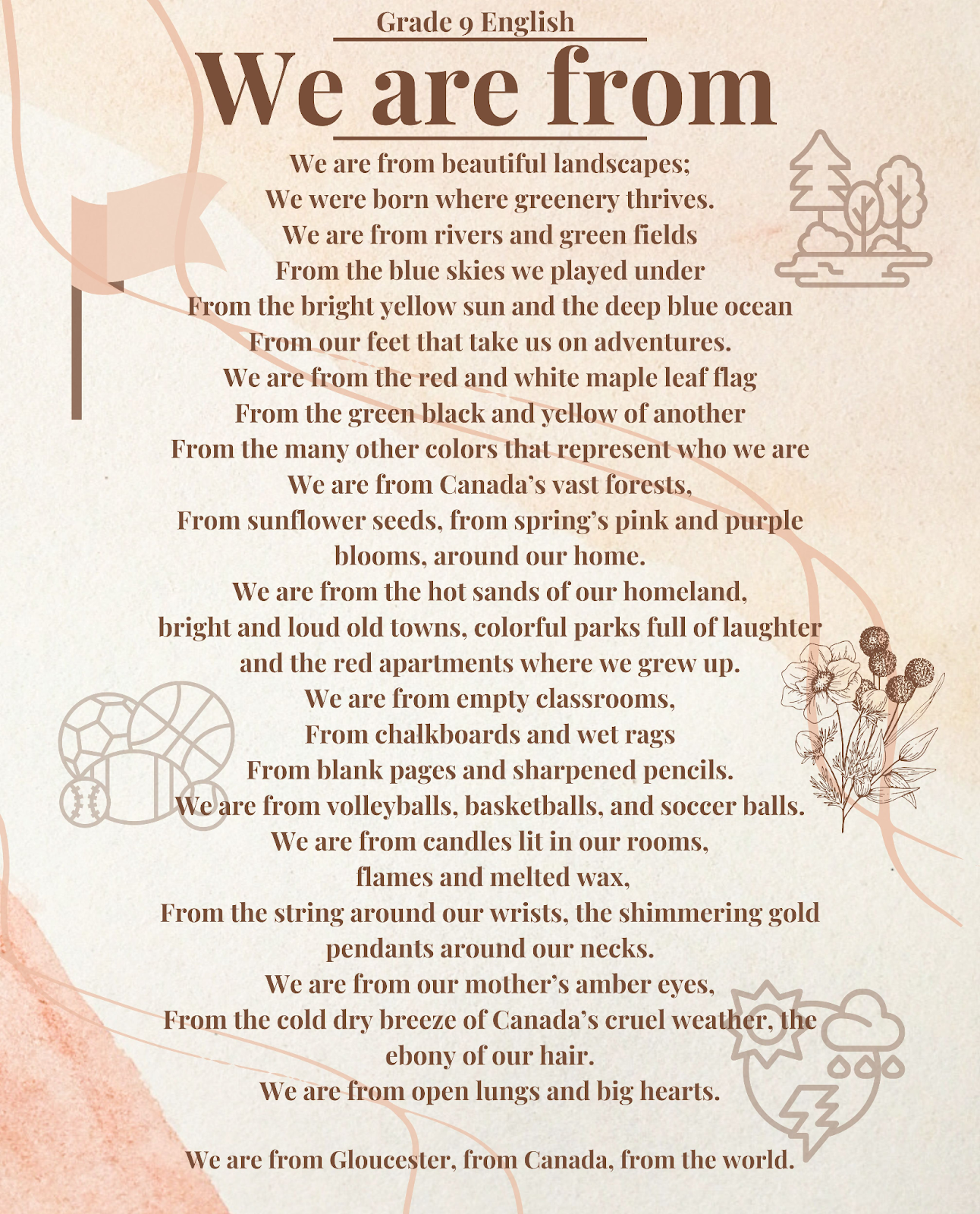
In grade 9, we’ve moved from our first unit – Stories of Us – into our second – Stories of Others. We’ve written Where I’m From using not only George Ella Lyon’s wonderful poem but also interpretations by Melanie Poonai, a young writer from England, and Danika Smith, an Indigenous author from British Columbia, as models. We’ve worked as a class and in small groups to create Where We’re From poems that help us understand our class as a whole. Students turned these into posters or short videos – and the school board’s print shop has delivered gorgeous prints that now decorate our room. We’ve written our own 100-word memoirs, too. Now, it’s time to look outside our classroom walls.
It’s also March, which means that I am in the middle of writing and publishing stories every day. I tell the students about this, and they are interested, impressed, curious, bored, and not listening. Some of them want to know where I get the stories from. I laugh and say, “from you.”

For a few days, we listen to StoryCorps interviews and look at Instagram posts from Humans of New York. We practice active listening and asking follow-up questions. Then, I put this quote up in the right-hand corner of the blackboard as one of our daily quotes:

The truth about stories is that that’s all we are. 
-Thomas King

After reading time, I draw their attention to King’s words. I ask what they think he means. It takes a minute, but when they arrive at an understanding, a few of them marvel. “It’s really true, isn’t it? Our stories are really important,” says one. “It’s like what we think about what happens is as important as what happens,” says another. I just nod.

I think about the quote all the time. I think about how I am made of the stories I’ve heard, the stories I tell myself. I think of how the way I tell the story affects who I am and how the stories themselves change over time. I think about the value of regularly capturing tiny moments, recognizing the story I’m telling myself as I live it. These stories are everything. As Jess writes, “There is gold in every piece of your story.”

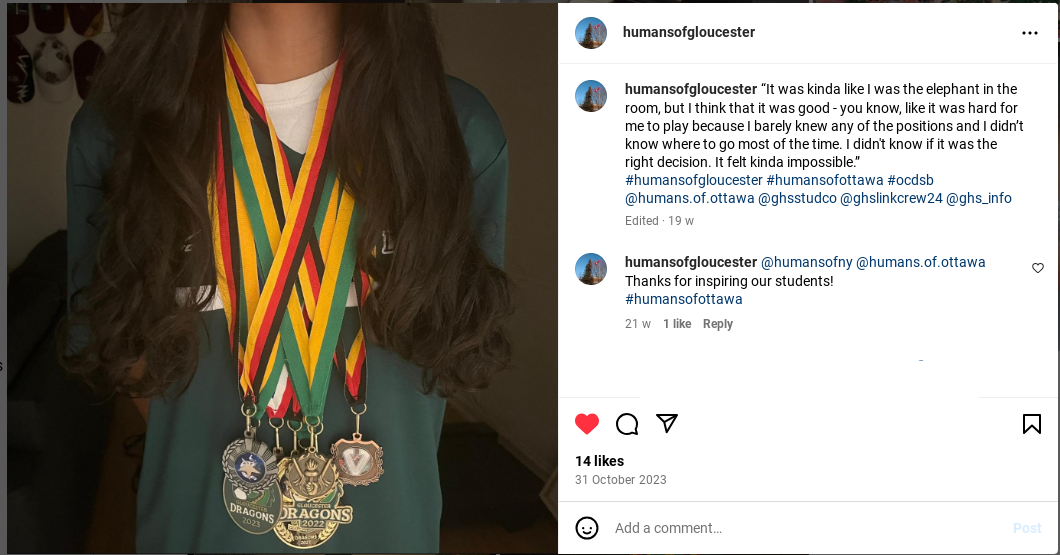
Now, the students are out in the world (mostly in the hallways, to be honest), interviewing other people: family or friends, students or staff. They have to choose a tiny powerful moment from their interview – a story – and pair it with a photo. I post these on our Instagram account, and we marvel at the moments that shape our community. The students must think about what part of their interviewee’s story they chose to tell and what parts they left out. How will that change people’s perceptions? What story are they telling? These students learn to lean in to other people’s stories and consider them deeply.
This year, this part of the unit is closing as March comes to an end. Today marks the end of seven years of this challenge for me. I know that, tired as I am, I will miss this – the writing, the reading, the commenting – tomorrow and in the days to come. And I know it’s because of the stories people share, and the stories I choose to share, too. What a privilege it is to be part of so many stories! What a boon to be allowed so many views of the world!

If Thomas King is right, and I think he is, then I am so much better, so much more because of the stories others have shared this month and in all the months and years past. I am better, too, because of the time you’ve taken to read my stories. Thank you. 
All we need is a miracle

Update, July 10, 2018: My friend, her daughter (and the rest of the family) are in for a long, grueling year or more, but the doctors say that they have every reason to believe she will live. I’ll take it. THANK YOU for all the support you shared when I was in my deepest grief.

My father is a not-quite-retired infectious disease doctor. He chose this path in the late 60s when infectious disease was a research-based kind of medicine, a good fit for my logical, thorough, bookish dad. He liked identifying symptoms, looking them up in the library and finding the best diagnostic fit; disease was a puzzle to solve and he’s good at puzzles. He also liked talking to the patients, but from the stories he tells, I think that was a skill he developed over the years.

He does tell a good story, and by the time I was 10 he was a teaching doctor who was often invited to give lectures in other cities. Sometimes he would take one of us with him, and as I got older sometimes I actually listened to what he told these doctors: corny jokes, technical details that were of no interest to me, and a few stories that marked me deeply.

My favourite story was when my dad talked about a patient he treated in the early days of CT scans. The young man came in complaining of severe headaches. They checked him out and finally ran a CT scan. The diagnosis was devastating: he had brain cancer. The young man was a youth pastor and had a long-planned church retreat scheduled for that weekend. He asked if he could put off treatment for a few days and attend this final retreat. The doctors agreed. When he returned, after a weekend where his whole church prayed for him and took care of him, his headaches were gone and he felt much better. His surgery was scheduled but the doctors decided to do one more scan because the technology was new & they just wanted a clear image to be sure about what they were dealing with. The image came back – no tumor. It was just gone. They had the previous scan: tumor. They had the new one: nothing. A third scan confirmed it: no tumor. What happened? Did they make a mistake the first time? Did the prayers work? My logical father could only say, “Sometimes in medicine you have to believe in miracles.”

My mother-in-law is a nurse who worked for years in a cancer treatment centre. Just moments ago she told me a story about a patient of hers who was diagnosed with mesothelioma and was given mere months to live. He was distraught, naturally, and spent three days in a panic of fear and anger. Then he remembered that he was a statistician and he could understand statistics, so he pored over the numbers and realized that the odds that he could live longer than the median were in his favour. He lived for 20 more years.

I would like to request a miracle, please. The 4-year-old daughter of one of my best friends was diagnosed with cancer on Friday, and I would like a miracle now. She is such a vibrant, funny, smart, HEALTHY little thing. There is nothing wrong with her – except this cancer. Cancer. She is four. I am trying very hard to remember that sometimes we have to believe in medicine and miracles. People are praying for her in all the various ways that people pray, but I’m having a little trouble praying right at this moment. But stories, I believe in stories. So please, accept these stories as my prayers. And if you can add your own, we’ll take that, too.


screen-shot-2017-03-14-at-1-30-42-pm15

Late Night History

It’s late and the long weekend has begun. My mother and my aunt have arrived. The kids are asleep, my mother too. Me? I’m exhausted  – sleep has eluded me several nights this week – but up late trying to write my slice for tomorrow. I am overwhelmed at the thought of this month ending, overwhelmed by the supportive community here, overwhelmed by what I’ve learned and what I’ve experienced. I have changed, and I had planned to write about it. But I’m sitting in at the kitchen listening to my husband and my aunt, deep in animated conversation. Honestly… how can I write or reflect when they are talking history?

For my husband and my aunt, history is alive and fully present. They are teary while talking about Uncle Pete (my great uncle) finding a baby during WW2 and carrying it with him through France until he found a family to care for it weeks. My aunt has a picture of the baby on her phone, but no one knows what happened after Pete gave the baby back. As Pete was dying, he wondered about that baby.

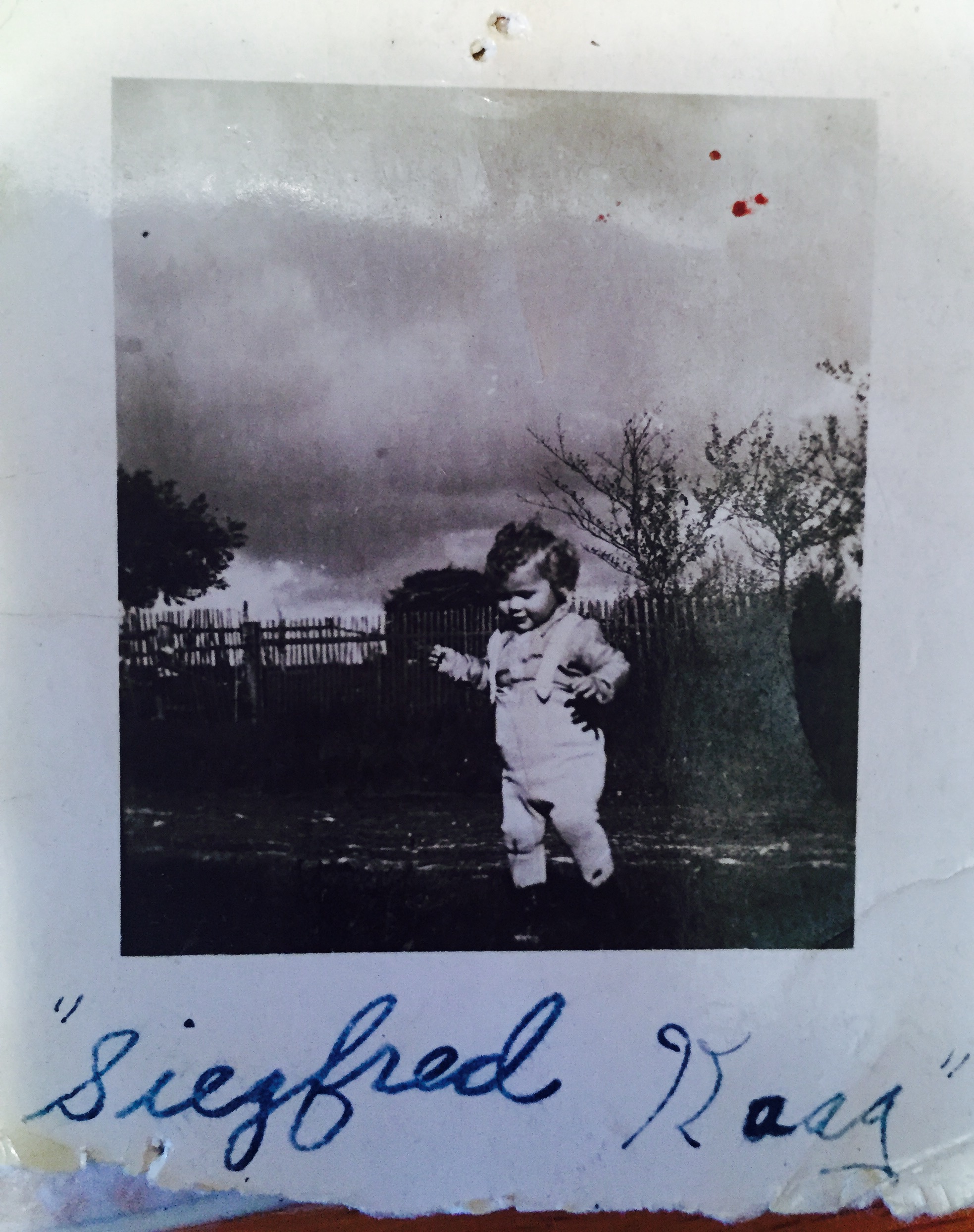
UPDATE: Here’s the picture of “Pete’s baby”
Pete's baby.jpg

And now my aunt is telling another story… and there are more tears – for a soldier who died at 19, for his buddy who lived and married his friend’s widow, for his revelation 50 years later that he had been living his buddy’s life for him and, after all that, he was afraid if his wife died first she would meet his buddy in Heaven and he would lose her forever. He died minutes before she did. These men, their stories, they are real and important right now in this kitchen.

And now they are laughing through the tears – for Uncle Pete who probably would have been diagnosed with PTSD and swore to God on a battlefield that if he ever got home he would never leave Rte 27 again. How he RSVP’d for a wedding by writing on the back of the invitation “Sorry, can’t leave Rte 27 yet.” How he really thought that Eleanor Roosevelt and Churchill were having an affair. And about the seemingly endless keg of beer in his basement…

And now they are on to Band of Brothers. And Saving Private Ryan. And Frederick Forsyth’s “The Shepherd.” Movies and stories and books that have embodied the stories that move them to tears. Their passion, the way they build on one another, their fully focused presence in this kitchen, far from any battle – it’s absorbing.

And here I sit, listening, writing, and marveling at their passion, at how stories bring these men into our kitchen, at how important the stories are. Tomorrow, I’ll mourn the end of this Slice of Life Challenge. Tonight, I’m listening to two of my favourite people discuss their passion like it is alive. What could be better?

slice-of-life_individual


Slice of Life Day 30, March 2018

Thanks to Two Writing Teachers for this wonderful month of inspiration.