Don’t you…forget about me #SOL23 27/31

Mornings in our house are a tightly choreographed dance of who is doing what where when: Andre is in the kitchen and I am upstairs; Andre is upstairs and I am in the kitchen; Andre is making breakfast and I am waking the kids; the kids are eating breakfast and I am finishing getting dressed. On it goes, each of us weaving around the others, chatting, moving and generally getting ready. By 8:15, everyone is out of the house.

Except for last Thursday. Last Thursday we thought everything was going along smoothly: Andre had run out to the bakery for our breakfast; I had woken the children and then finished getting ready; Mr. 14 was putting his lunch together in the kitchen while Andre dressed upstairs. I left first, and Mr. 14 followed me. Andre was putting on his shoes, about to head out the door, when he noticed a backpack in the corner of the front room.

A backpack? But the kids had already gone to school.

Except that we had forgotten about Mr. 12. He had stayed up LONG after his bedtime finishing a book (Skander and the Unicorn Thief – he highly recommends it and is already desperate for the sequel which has not yet been released) so when I woke him up, he said hello, sat up, then laid back down, turned over and went back to sleep. In the morning chaos (ahem, choreography) no one noticed a missing 12-year-old. Oops.

Andre slipped his shoes off, woke up the kid, made him some lunch, thrust a bun at him for breakfast and got him out of the house so quickly that Mr. 12 wasn’t even late for school and Andre wasn’t late for work.

We have tried to foist this oversight off on the child, telling him firmly that he cannot read until all hours of the night on a school night, but he knows the truth: we totally forgot about him.

We don’t share with squirrels #SOL23 26/31

On Sundays, Andre cooks. He’s been doing this for a couple of years now – planning a menu for the week, shopping on Saturday, cooking for most (or all) of Sunday morning. While he makes a few things designed to appeal to the kids – like a delicious mac’n’cheese – I am truly the lucky recipient of most of his bounty: blueberry scones, carrot-pomegranate-pistachio salad, baked squash with toasted almonds, eggplant parm, Navajo stew, all sorts of soups, and a recently perfected Caesar salad dressing that is just the right amount of tangy and creamy.

After he’s chopped and toasted and stirred and baked, he turns to his final act: dough. He often makes a loaf of bread for the week, then enlists the kids to help make some sort of bread for their lunches – for a while they made cheese buns; lately it’s been bagels – and he almost always makes us pizza dough for Sunday dinner.

Today, he wanted to make the pizza dough early, but he worried that if he left it too long, it might over-proof. So while I went for my morning walk, he was online looking for ideas to keep the dough just right. When I got back from my walk, the dough was rising in a container on the back porch – apparently the outdoor temperature was just what he was looking for.

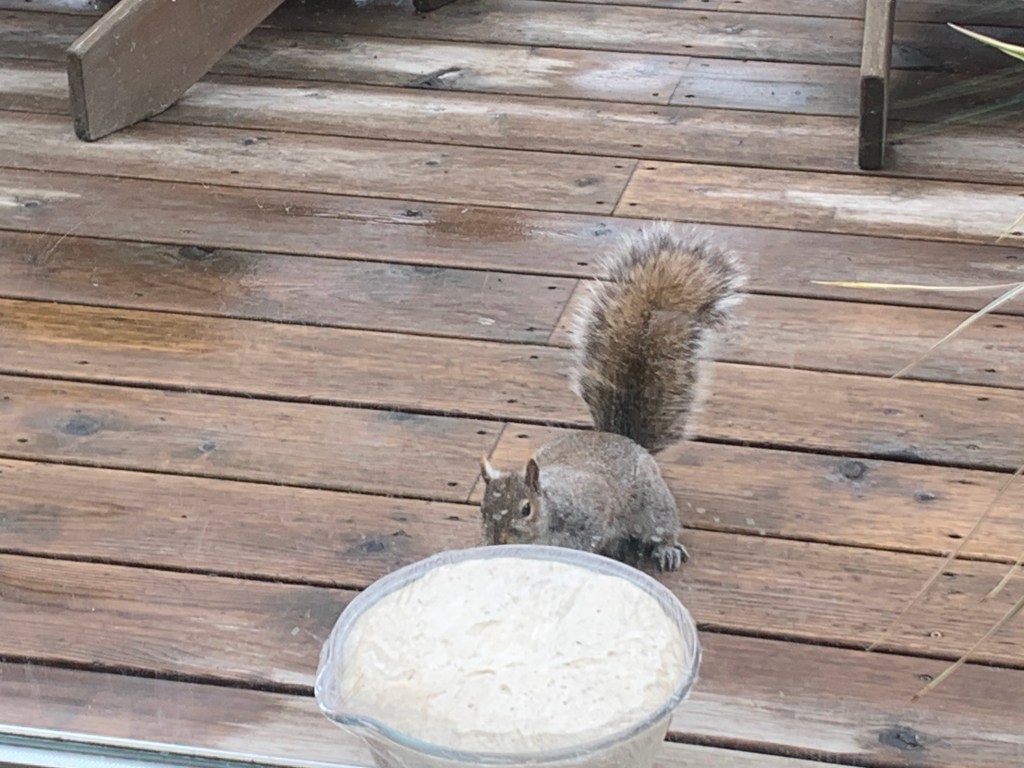
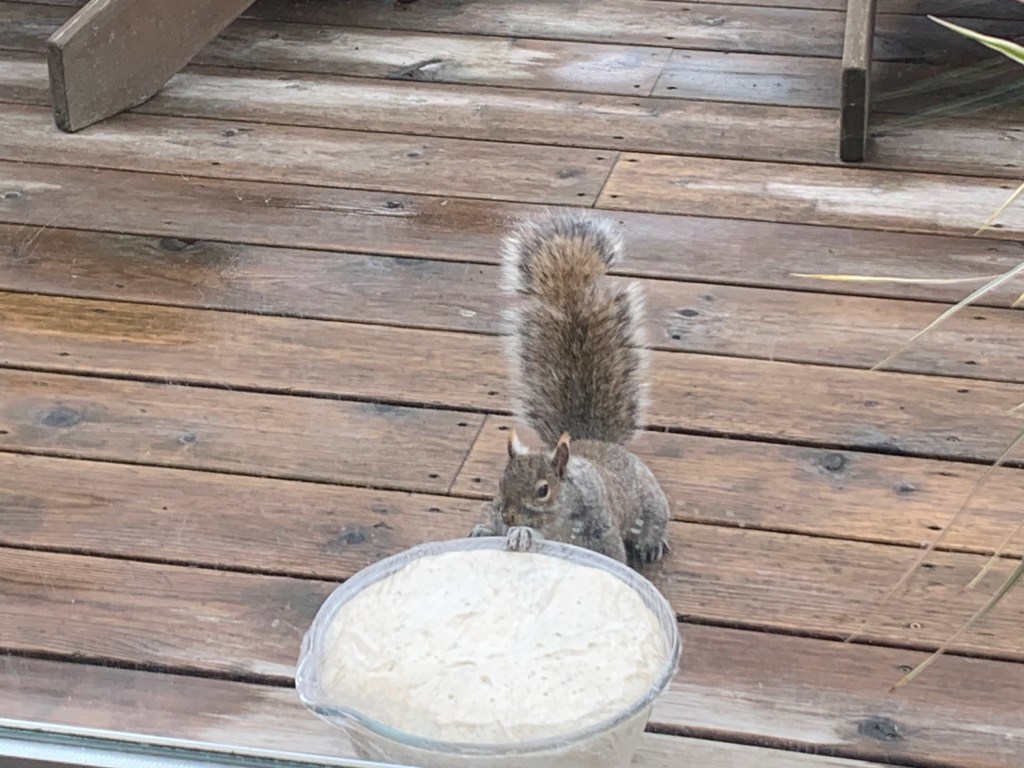
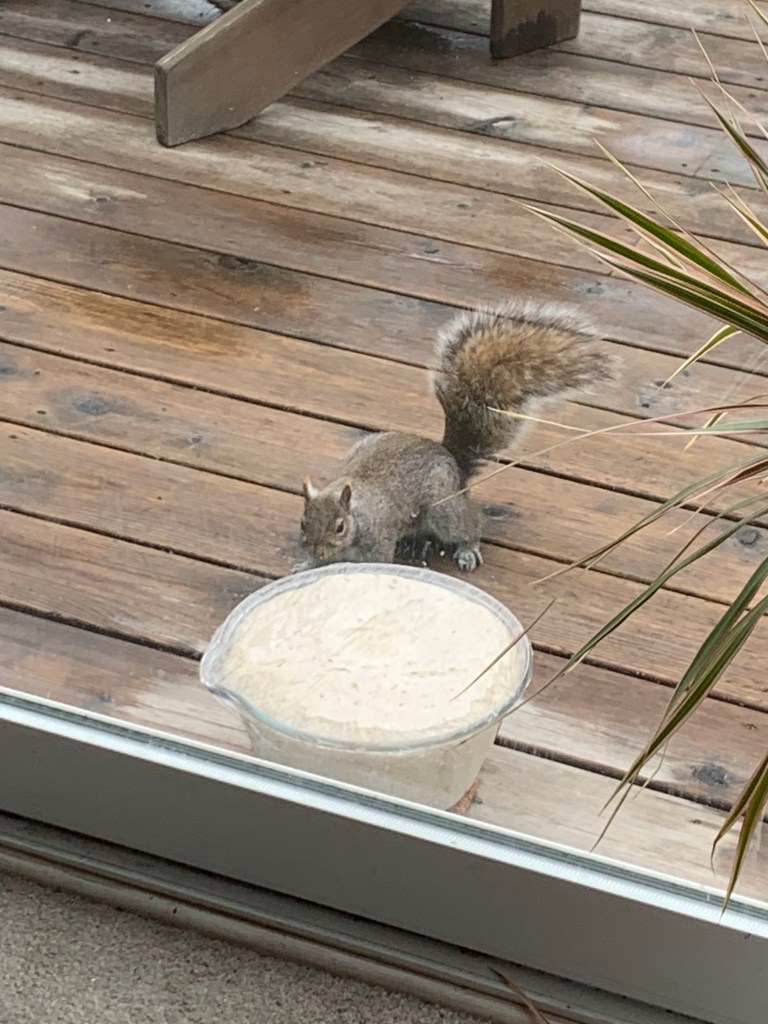
After that, we spent the afternoon as we often do: catching up on work, tidying, planning. At some point I went into the kitchen for some water, looked out the back door and saw this:

Cheeky thing. This food is NOT for you!

(Fear not, the dough itself was covered with saran wrap & then I covered the whole thing with a large metal bowl that stymied the squirrels – no pizza dough was sacrificed to the squirrels. Now, as I write, the pizza is cooking and the salad is ready.)

I thank Andre often, of course, but it’s not really enough – how could it be? He spends hours every week doing this activity that is largely designed to take care of us, his family. I don’t intend to share his creations with the wildlife.

PS: Tomorrow is his birthday and he says it’s not really a big one for him so he wants to keep things low-key – so I’m writing today to keep things the way he likes them. But in case you’re wondering, he’s pretty amazing.

Marching through the years #SOL23 25/31

I first saw this format on Elisabeth’s post, and she, in turn, got it from Erica. And Molly, too, wrote about how having her phone available has changed how she takes note of the world. If you follow me on FB or Instagram, you know that I have been walking every day since early in the pandemic and that I started taking pictures not long after I started walking, so I was intrigued by photo posts. Today I had the time to go through my photos and choose from all the March 25th pictures available. Talk about a slice of life!

March 25, 2023 (today)

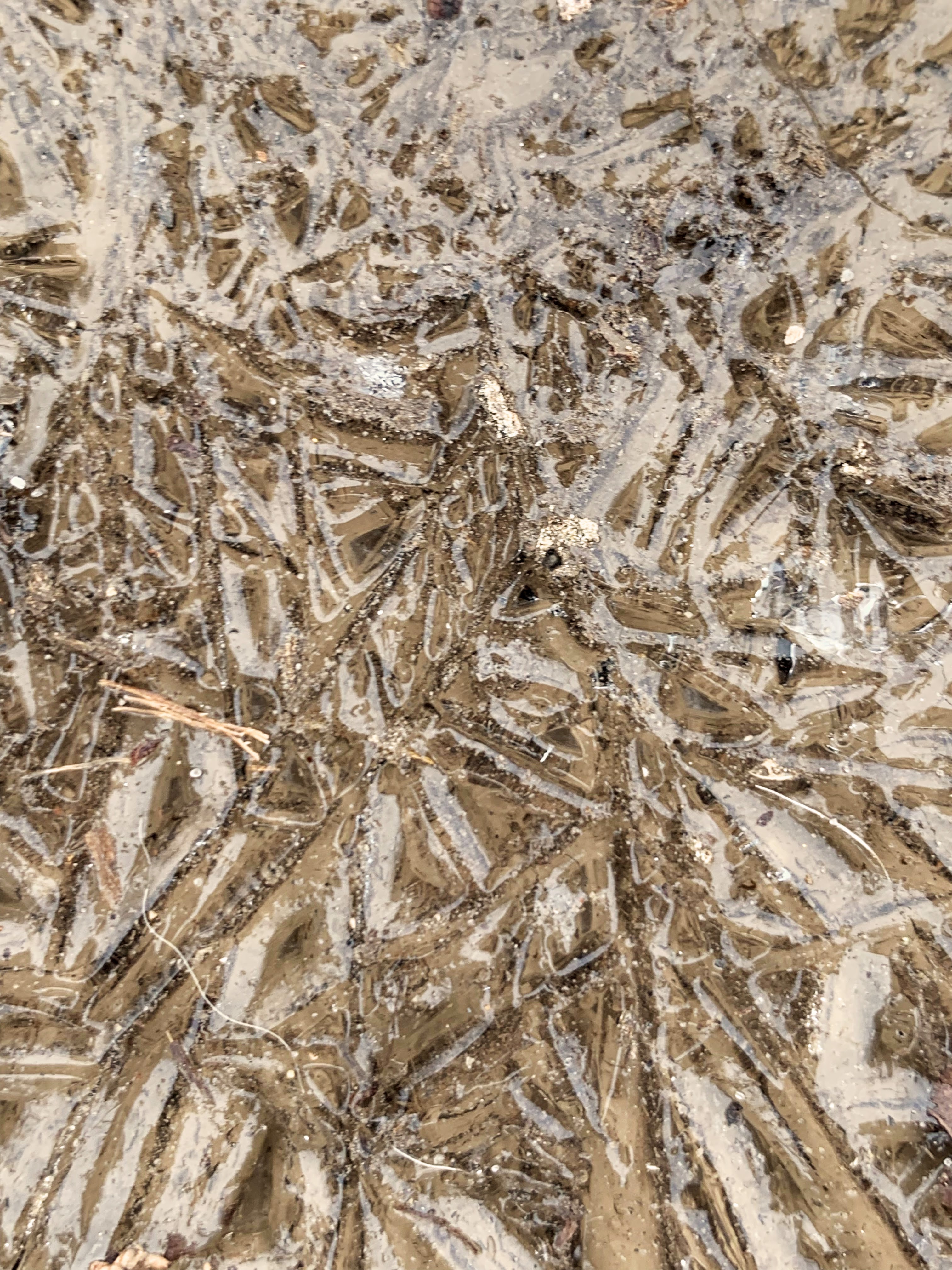
I walked 5km this morning & took a few pictures. There are a few green shoots here & there, but mostly we still have a lot of snow & ice on the ground. Yesterday, I wrote a haiku that matches today’s picture.

Ice stretched thin across
the mud puddles in the road.
Crystalline beauty.

March 25, 2022

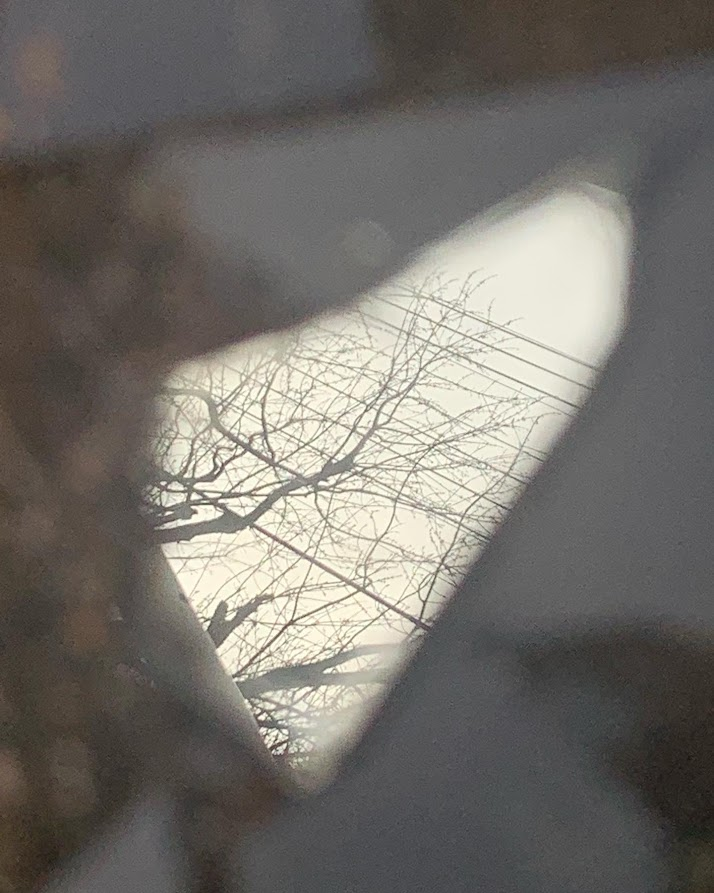
Reflection – tree & wires in a piece of glass on the ground. I remember this being one street over and near our friend Laura’s place. Today (2023) she has an article in the Globe and Mail. I can’t get over how lucky I am to live in this neighbourhood with these people.

March 25, 2021

This makes me laugh because I took a picture almost exactly like this yesterday. Apparently I often spend March looking for colour.

March 25, 2020 – pandemic March

We had spent 8 months in a two-bedroom apartment while our house was being renovated. We finally moved back in the weekend of March 13. (Yes, the weekend things started shutting down – how lucky were we?) The boys were happy to be home & very close after spending a long time sharing a small bedroom.

March 25, 2019

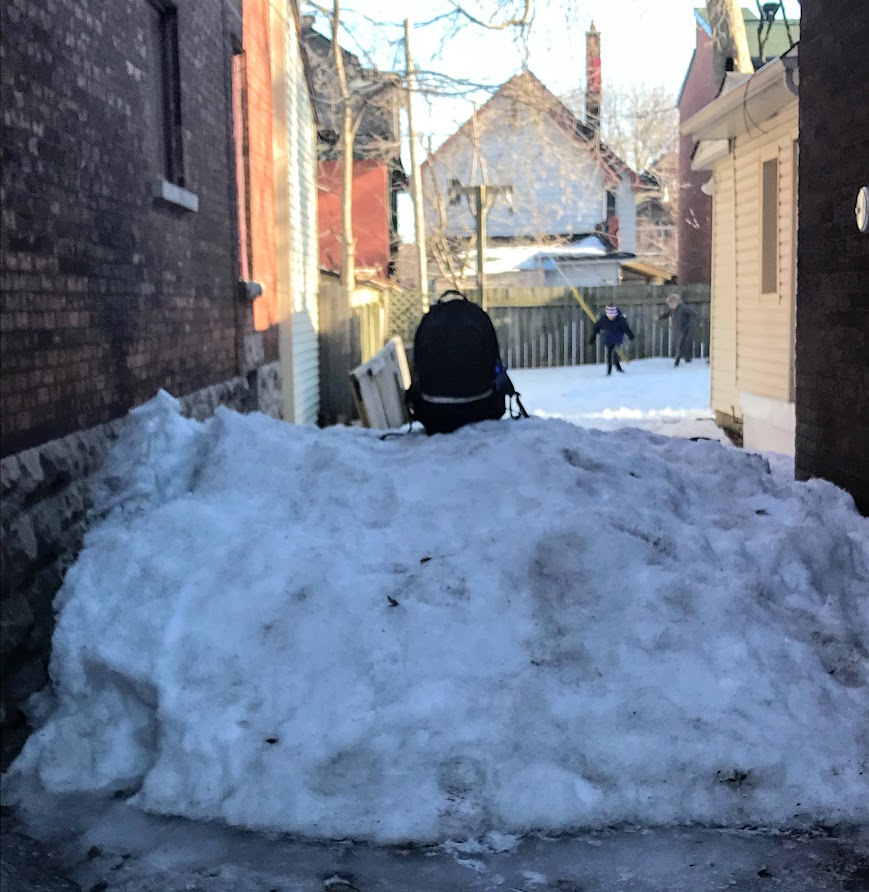
Sometimes, you get home from school, throw your backpack on a pile of snow at the end of the driveway, and go play in the backyard with your friend – just because you can. (Squint & you can see two boys playing in the background.)

March 25, 2018

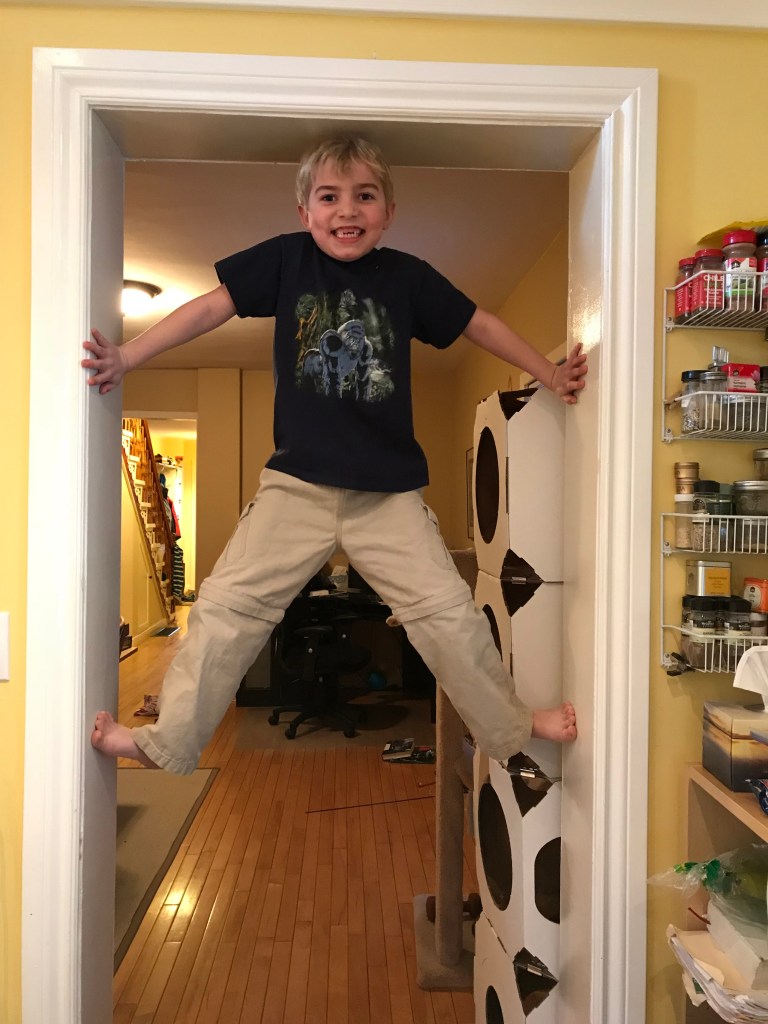
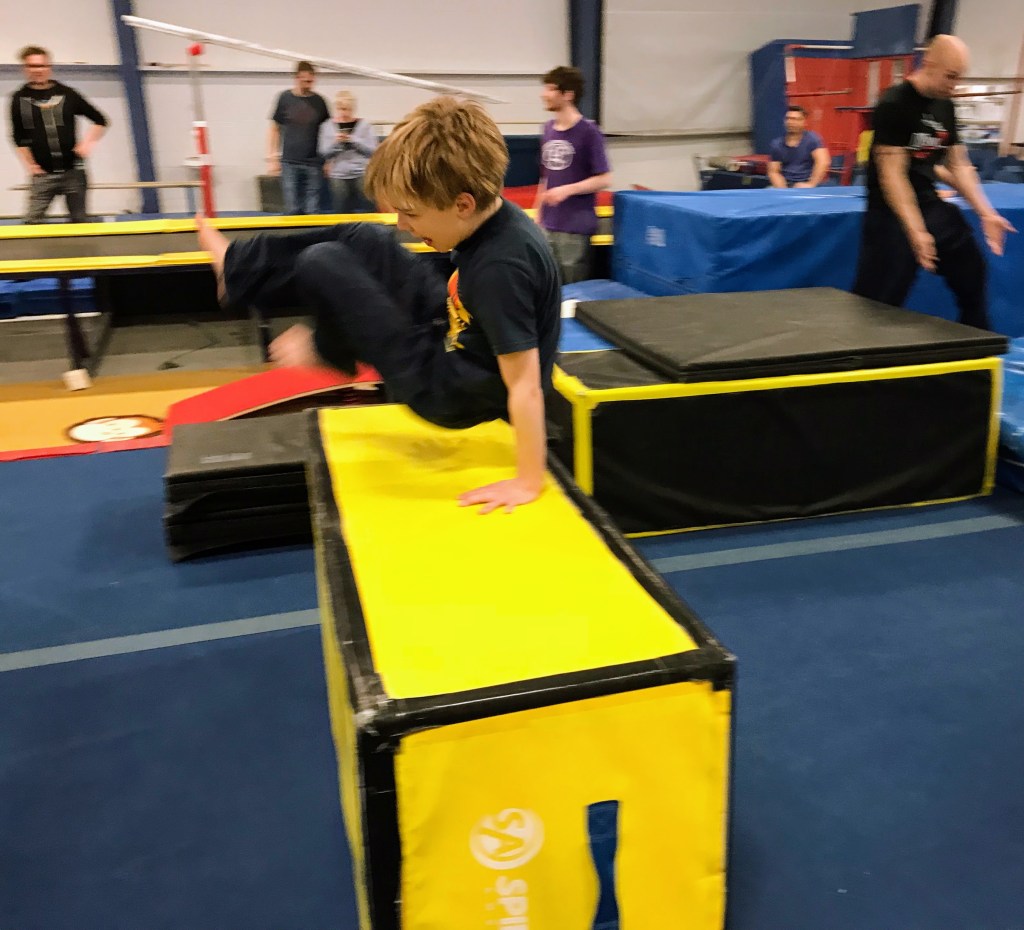
On the move. Mr. 7 was ecstatic about his newfound ability to get to the top of the doorway. Both boys started parkour classes (and one is at parkour right now as I write!).

March 25, 2018

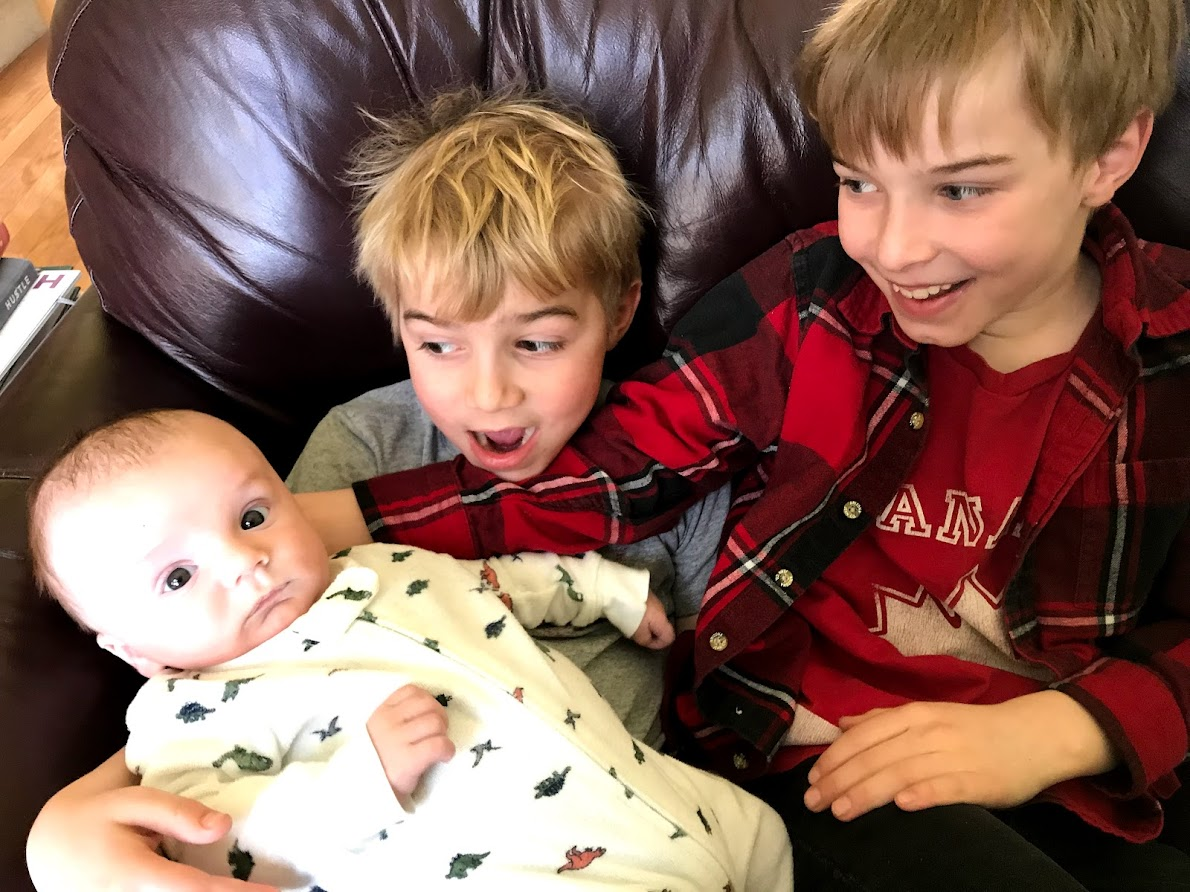
Meeting our friend’s baby. Just got a hilarious video of that baby – now a kindergartner! – doing a butt wiggle yesterday.

March 25, 2017

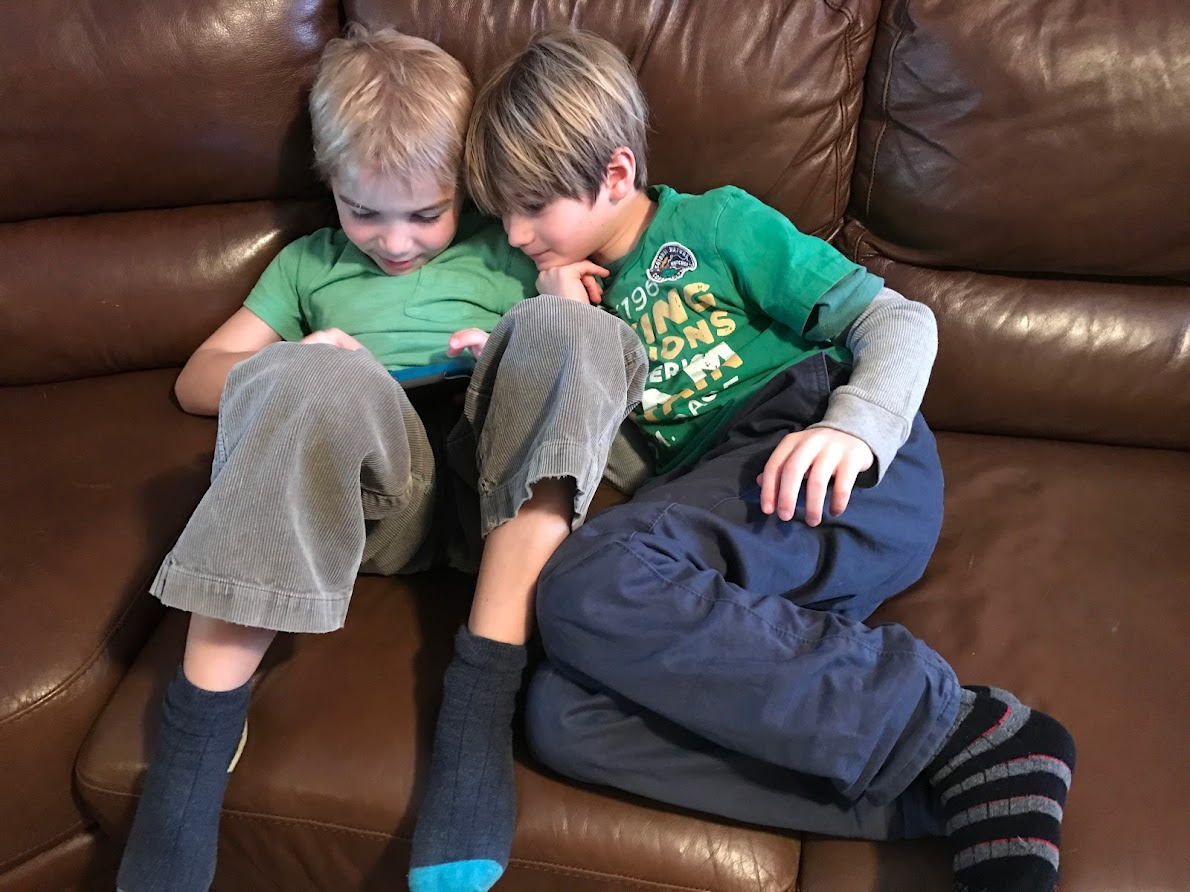
Mr. 6 snuggled up with his buddy. Little did we know that the ipad was prep for the pandemic to come.

March 25, 2012

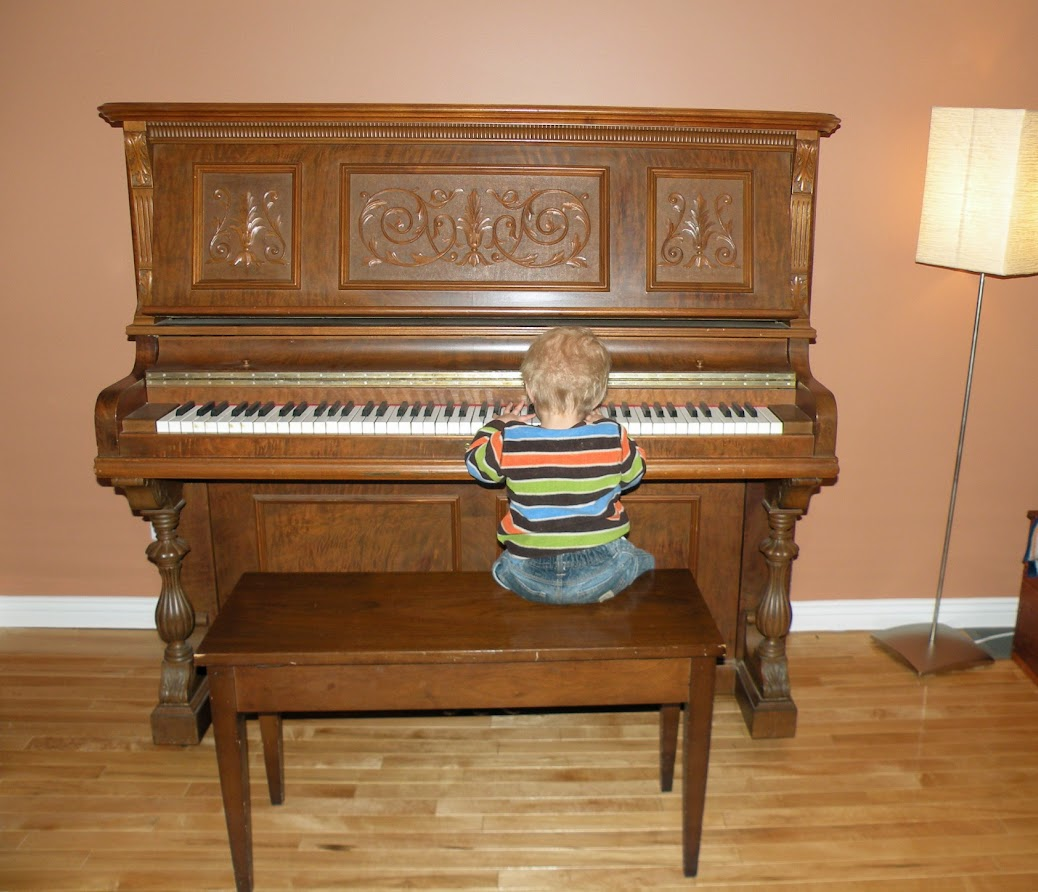
I can do it myself!

Friday #SOL23 24/31

I’m writing this on Friday afternoon, the day after parent-teacher conferences, which means I’m writing this on a Friday following an 11-hour workday most of which involved talking to people, which means I’m writing this when I am really tired.

I’m writing this on the second day of Ramadan which is not a part of my religious tradition but is a part of many of my students’ religious tradition which means many of them are fasting and this is only the second day and they say the beginning is the hardest which means I’m writing this on a day when my students were really tired.

I’m writing this on a Friday afternoon, the day after parent-teacher conferences, the second day of Ramadan and the end of the first week back from March Break, a week which has been gloomily gray and chilly. Snow is predicted for tomorrow. We are all tired.

And yet…

Yesterday, a grade 9 student wore a frog headband during the parent-teacher(-student) interview, so today I shared thirty translations of Basho’s frog haiku and then we wrote haikus even though not everyone knew what a syllable was and lots of students shared and it was pretty great.

Yesterday, the grade 12 students mostly didn’t write at all during the time I’d set aside for them to work on the assignment due Monday, so today I gave very specific instructions and used a five minute countdown timer with very enthusiastic music and – guess what? – they all wrote through several rounds and many left class with 200ish words done and it was pretty great.

And then, the reading class finished our decoding work early and we switched to word games and somehow they asked for a spelling bee even though they are, frankly, terrible spellers, and they all stood at the whiteboard trying to spell words like degenerate and altruism and wheelwright and then, when I said, “Oh, this one is waaay too hard, I’ll skip it,” the kids insisted that they wanted to try it and kept insisting even after I admitted that I didn’t even know it and then, shocking everyone, even her, Sarah spelled glaucescent correctly just before the bell rang and it was glorious.

And now it’s the weekend and we’re all tired, but you know what? I think we’re going to be ok.

What happens in Arizona… #SOL23 23/31

Today is parent-teacher conferences. As I got dressed, I put on a particular necklace – not a necklace, really, more an amulet, maybe – and I immediately felt a little stronger. Let me tell you a story that I don’t quite believe…

About six years ago, we were visiting my in-laws in Tucson, and my mother-in-law scheduled our whole family for an energy work session with someone she knew. I didn’t really believe in energy work, but I did (and do) really believe in my mother-in-law, and I pretty much always believe in spending time lying down and letting people try to make me feel better, so I said yes.

I’d never tried anything like this before, but I figured it wouldn’t hurt anything. The kids went first, and I was frankly astonished when the therapist (? energy worker? I have no idea) hesitated and then focused on a place on my child’s body that did, indeed, require healing, but that he could not possibly have known about. There was more, but afterwards, when he explained what he had felt and done during the session, he commented about that part of his work. I was intrigued. Nevertheless, when it was my turn for energy work, I wasn’t expecting much. I lay down, assuming I would feel nothing, anticipating thirty minutes of quiet.

Now, the thing is, that I’m not in Arizona anymore and this happened a while ago and I’m still largely a reading/science type of person, so when I talk about this it all feels like a bunch of hooey. If I were reading this, I would probably not believe it, and if you don’t believe this, I’m ok with that, but let me tell you, whatever that man did, I could feel it – and he never even touched me. It was intense. At the end, he told me that he had pulled a sword out of my gut (which, again, is ridiculous) and I shocked myself by looking directly at him and saying, “Give that back. I need it.” Well.

He did not give it back – because even an energy-work-person will not put a metaphorical energy sword back into your belly because that sounds like a terrible idea, even if it had previously been metaphysically there – and I felt oddly bereft for the next day or two. Finally, my mother-in-law (who, as I said, I fully believe in) found me and offered me a necklace-type thing: a green and white spheroid stone set in an odd elaborate metal bezel and fixed to a brown cord. She told me that she had bought it years ago; it had been sold to her as an amulet of protection and she felt that it had called her. Now, she said, she thought it was mine.

I wore it for days and, placebo or not, I felt better. Eventually, I put it away and only pulled it out every now and then. Even today, when I put it on, I feel powerfully protected – and I know for sure that whether that protection comes from the universe, or the stone or the depth of my mother-in-law’s love for me, it doesn’t matter. One way or another, the energy is there.

The Hard Way #SOL23 22/31

The students in grade 9 were seriously squirrely. I moved around the classroom, reading aloud from a children’s version of Jack and the Beanstalk, trying to teach plot development and elements of a narrative through a familiar structure (fairy tale) in a (potentially unfamiliar) story, but the minute I moved away from a set of desks, chatter began behind me. Phones came out. Once, out of the corner of my eye, I saw a wad of paper fly at someone’s head. Nothing mean, mind you, but the students were obviously bored.

Harumph. This was a good lesson. I knew it. A) I’d done it before and B) I knew these kids well enough to know that they needed practice before they would be able to analyse a story on their own. On the other hand, I had to admit that it wasn’t working. At all.

We slogged through the plot analysis. I did the character voices. I highlighted vocabulary that would help them effectively discuss texts. I had them create their own diagrams. Nothing. The low-level “behaviour” continued and an oppressive sense of fatigue permeated the room. At the end of class, I asked what was up? They hesitated; I prodded – was this too easy?

YES, they said. Yes. Too easy, too boring, too baby-ish.

Harumph again. At home that evening, I stared at my lesson plans. Clearly they needed to change. But how? Well, I thought, if they think they can do something harder (internally I rolled my eyes), I’ll give them something harder. I wish I could tell you that I was doing this because I thought it was right, but the truth is I kind of wanted them to realize that they needed guidance.

I chose two short stories and found excellent versions online, pdfs that offered support for students who needed it (vocabulary, questions, pauses for reflection) and extensions for others. I deleted the lesson I had planned for the next day, the careful scaffolding of ideas and thinking, and moved straight to the big ideas in the unit. I didn’t bother with the extra vocabulary glossing I would have usually done. “Too easy,” I grumbled. “Well, this will be hard enough to fix that.”

The next day I explained the assignment briefly, handed out the stories and stood back, ready to watch the students struggle a little. They didn’t – at least not really. They formed small groups, found audio versions to support their reading, read out loud to each other or read silently. They used the vocabulary and questions provided as support. One student read quickly to the end of his story, then called me over, irate: “Seriously? Is this the end? Why would they leave us on a cliffhanger?”

I protested, “It’s not a cliffhanger. You know exactly what happened.”

Wolves,” he spat, turned back to the story, and started writing. I almost laughed out loud.

As I watched them working, I knew the joke was on me. The day before had been all about me, even though I would have told you it was about them. I had done this; I had done that; they had done very little. Today, given a desirable challenge (how many other students rushed to get to the ending that had so infuriated their peer?), they were (mostly) hard at work, leaning on each other and moving at the pace they chose. They laughed and gasped and, sure, they didn’t actually finish the assignment, but they were engaged. So now I knew: this class needed more challenge and less scaffold and I needed to revise the rest of the lesson plans for the week. I guess sometimes I still have to learn things the hard way.

Say my name #SOL23 21/31

“Ok, it’s 9:25. Who wants to do the Land Acknowledgement?”

Around the classroom, grade 12 students shift in their seats. No one meets my eye. A few more kids slip in and find spots while I wait. Eventually, someone raises their hand. They choose to read the printed acknowledgement out loud rather than offer their own. We review the meaning of “stewardship” and then it’s time for a quick book talk – Their Eyes Were Watching God – but before we shift into independent reading, A says, “Wait! We have to do names.”

Students begin to chuckle. “Right!” I smack my forehead dramatically, “Names. Surely we can do better than yesterday?” Yesterday was a disaster – it took three tries before anyone could name everyone and apparently no one – including me – was pronouncing one student’s name correctly. (And this after I had practiced!) Eventually she gave up on us, even though we really were trying. Today goes a little better. We get through everyone twice before we move to reading.

Y’all. It is mid-March. And yes, we are a semestered school, and yes the beginning of this term was riddled with weather days, but we’ve still been together as a class for six weeks. I try to say students’ names all the time (mostly because I think it’s polite and friendly, but also because it’s a research-supported way to give people a sense of belonging and increase engagement), but lately (ok, yes, post-pandemic) it seems like quite a few students don’t bother to learn the names of their peers unless they were already friends before the class started. I’m not ok with that.

I have checked in with the teenager in my home; he admits to only knowing some of the names of his classmates. In fact, he is perplexed by my question. “They don’t usually make us work with other people,” he says. When I ask, “But how do you meet people?” because he is in grade 9 and therefore at a new school and therefore has made new friends, he says, “I already have a group of friends I’m happy with” then gives me a look and goes back to his phone. I push and ask how he met his new friends this year, but he only grunts at me. Minutes later he looks up and says, “that’s actually a good question,” but he doesn’t have an answer.

Unfortunately for my students, I’ve come back from March Break with a fire in my belly: I’m determined to help them connect – and if they can’t or won’t or don’t want to connect, I’m determined to at least give them practice in the skills they will need to do this later on. Yesterday, I told them about this article that argues that we should not allow cellphones in school *and* that we need to “rewire classrooms for connectedness.” So I’ve asked students to keep their phones away and I’m insisting we learn each other’s names. I get the sense that some of them think that this is cute but ultimately useless, but so far no one has said no. 

Today, once it seems like many people know most names, I tell the students about the next step in my scheme: I want them to learn something about the other people in the class. In the front row, the same student who had reminded me that we needed to practice names, shakes his head as he opens his book. “Good luck, Miss,” he sighs. I’m pretty sure I’m going to need it.

Starting again #SOL23 20/31

I got to school early enough to print and photocopy a few documents before heading down to the classroom. There, I rearranged the desks while I cleaned abandoned paper and almost-lost books out of the shallow spaces under the table tops. I erased the bits of colour that lingered at the edges of the chalkboard, marks I had missed as we left a week ago, then replaced them with today’s date and quote, carefully leaving out the punctuation so that the students would have a puzzle waiting when they arrived.

T was first. He often is. Then E, who came in then left then came back again. Then N, who sat, self-composed, and waited for class to start. And S slid into place next to T. As I asked them about their March Break, I moved around the room, gathering up the books leaning on the ledge of the front chalkboard – casually labelled “New Books”-  and taking them back to the bookshelves to settle into their long-term home. I replaced them with books I had scavenged during March Break and rewrote “New Books” above them, in a different colour of chalk, hoping that someone might be intrigued.

By now, the classroom was about half full. Sunlight filtered in through the half-pulled shades; the lights were still off. Some students were already reading; others had their heads down; still others chatted softly. A few more students arrived. The classroom breathed quiet anticipation. Then the hands of the clock moved, and Break was over. We were ready to start again.

Planning #SOL23 19/31

In grad school we once read an article titled “A Little Too Little and a Lot Too Much.” Of course I immediately fell in love with the phrase. While the author was writing about action research, I have found that this can easily describe almost any number of things in my life.

Today, the phrase skipped through my mind, taunting me, as I planned for this week’s classes. I love planning classes (well, mostly), so when a colleague swung by this morning for help thinking through a media unit, I was all in. We narrowed here, widened there and talked until the core of the unit was much more clear. My colleague found text after text; I asked questions to help her deepen her thinking. I loved how our thinking moved from specific to theoretical and back again. I delighted in the way we thought of concrete examples and ways to ground the work. It was fantastic.

After that, I turned to planning my own classes. The Reading class was surprisingly quick to plan. Now that I have a research-based plan (I’m using Dr. Jessica Toste’s free resource WordConnections), I feel much more confident about where we’re going. Next came Grade 12 English. Here, I had already laid the unit out day by day – we’re somewhere in the middle – so today I needed to create visuals to support the information I want to share about how to do academic research. Luckily, I find it wildly interesting to consider what will be most effective in catching and keeping students’ attention.

(Ahem, I find it so interesting that I just wrote two paragraphs about all the things I consider, consciously or subconsciously, as I decide how to communicate a topic. It’s a lot. Then I realized that this wasn’t the point of this post. I had gotten lost in getting lost in planning. Sigh. I’ve decided to include them at the bottom of the post because it might be interesting for you real teaching nerds out there, but most people will probably find themselves going a little cross-eyed with boredom.)

Soon, I was deep in planning mode, imagining what various students might need or want and considering the best ways to help each student learn. When I surfaced again, I realized two things: 1) I had spent far too long planning and 2) planning is one of my happy places. I didn’t mind being “a lot too much” about creating this lesson.

It’s a good thing, too, because my next realization was the time: I had “a little too little” time to do anything like an equally thorough job planning for my Grade 9 class. Fear not! I’m not slighting them or anything – I absolutely know what we’re doing tomorrow. It’s just that I’ve used it before, and I didn’t have the time to tweak it for this semester’s kids.

No problem. I’m used to a little too little and a lot too much. I’ll use what I learn from tomorrow’s classes to help me plan for Tuesday.

*How I plan a slide show or other information delivery:

I call to mind a few different faces from the class. With these people firmly in mind, I consider what I know they know, what I know they don’t know, and where I still have questions. I look things up to see how other places break down these steps. I wonder about lagging skills from the pandemic. What will they need to be able to do this research successfully? What will students need to practice? Where might kids need an off-ramp to think on their own or to pause if that’s all they can do today? What assumptions am I making? Who am I forgetting to consider? Eventually, I determine how many links I need in the chain of ideas to make sure everything holds together.

Once I have the content (and order sorted), I turn to layout and design issues. How many words on a slide before my audience’s attention will flag? What needs to be hyperlinked and what needs to be explained in the document? Where will images help these particular students remember? Where will they distract? And then there’s font: no cursive fonts or curlicues because some students who don’t speak English as a first language can’t easily access it; careful with colours because at least one student is colour blind; make sure the font is big enough to be legible from the back, dark enough to be easily read, maybe go with gray rather than black to reduce contrast a bit… Obviously I don’t think through each of these questions one by one like going down a list, but I do pay attention.

Throwing in the towel #SOL23 18/31

March Break is almost over and I’m still so tired my eyes ache. I’m not ready to go back. The EduKnitNight chat is full of “you can do it” messages as we gear up for the certain chaos of the return to school on Monday. 

“Gently suggesting that we all take space for ourselves – even if just for 20 minutes – today or tomorrow. To help us through the week with a little reserve.”
“Breathe, know that you are enough, be kind to yourself.”
“Messy and underprepared is not a sin.”

There’s a post in there somewhere, but I can’t quite find it. I text my sisters for ideas & they immediately list hilarious moments from our past – the time B put ketchup on her ice cream, the time we hid our exchange student’s speedo before we went to the beach, the time my sister broke her arm (which is funny because we were wearing towels around our necks and jumping off blue armchairs, spinning around and yelling, “Wonder Woman” when it happened). Soon we are talking about my nephews’ upcoming birthday, and…

I still don’t know what to write. I want to write about the concert Andre and I heard on Thursday or the play we saw last night. I want to write something funny about… something… but instead here I am, writing about not writing and laughing at myself because I have been participating in this challenge for six years and I think I have written some version of this post every year and every year I’ve felt badly about it. 

I think about Elisabeth saying once, probably my first year, that this isn’t so much a writing challenge as a publishing challenge, that part of this month is about knowing that some days I’m going to write things that aren’t great and I still have to hit publish because it’s ok for some things to be mediocre. 

And, once again, I have written something – which is better than nothing – and now it’s time for dinner and conversation with my friend. “Messy and underprepared is not a sin” I whisper under my breath. In a moment I’ll post this, heave myself out of this beanbag nest and tomorrow, I’ll write again.