The Colles Fracture

In the late 1770s or, more likely, the early 1780s, young Abraham Colles is said to have found an anatomic textbook floating in the river Nore in Kilkenny, Ireland. Apparently the river had flooded, and the local physician’s textbook had been carried away only to arrive, fortuitously, in Abraham’s hands. Abraham tried to return the book, but Dr. Butler gifted it to him, and thus was born a great physician.

In 1790 Abraham and his brother William enrolled in Trinity College in Dublin.  At the same time Abraham became an apprentice at  Dr Steevens’ Hospital. When he wasn’t working or studying Abraham could be found sleeping in dark corners of the hospital, perhaps not unlike medical students today who snooze where they can. Once he had finished his degree in Dublin, Abraham moved to Edinburgh where he trained as a graduate student at what was perhaps the best medical school of the time. He graduated from Edinburgh in 1797. From there, stories tell us that he walked to London, a journey of 10 to 14 days.

***

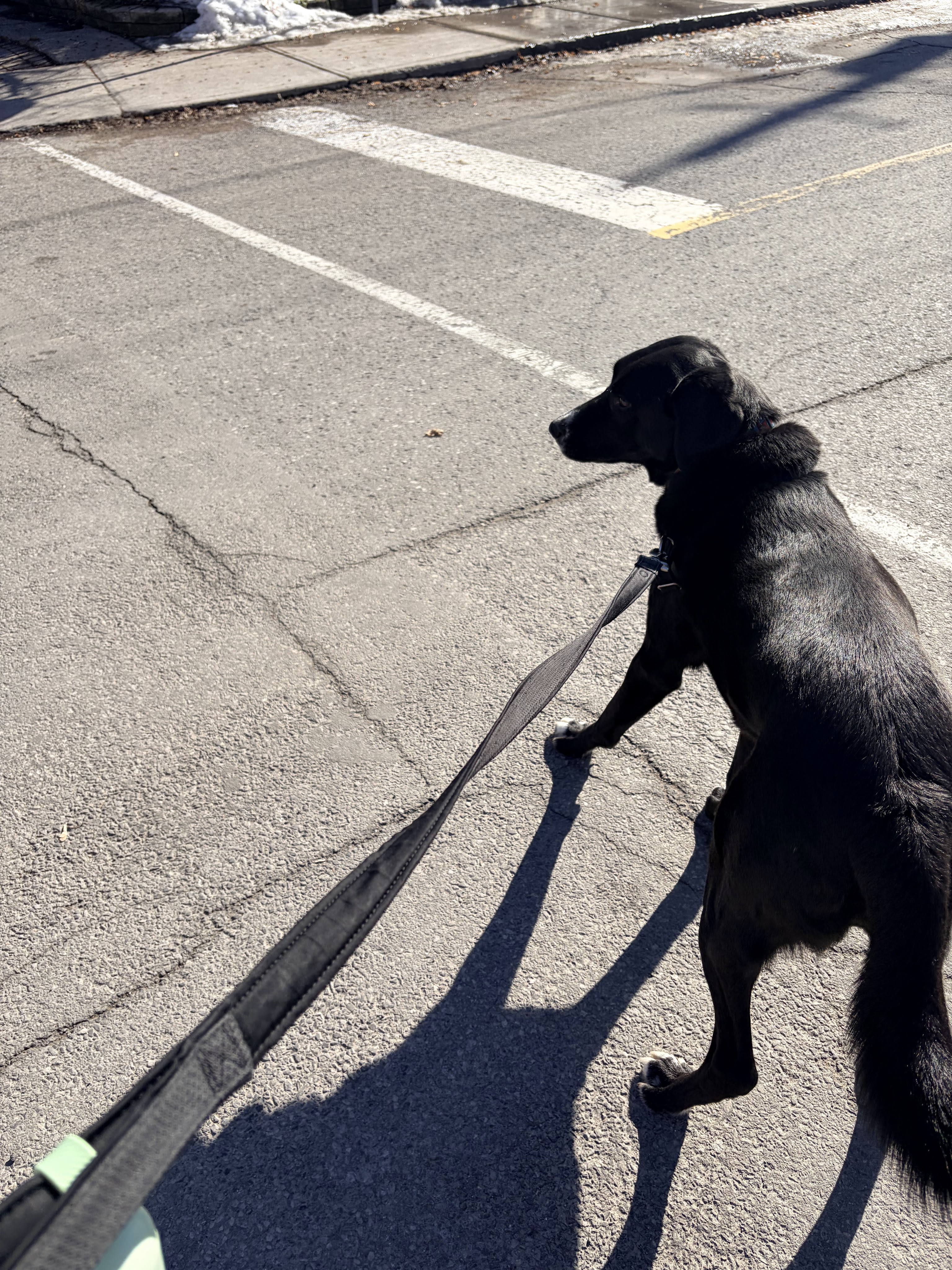
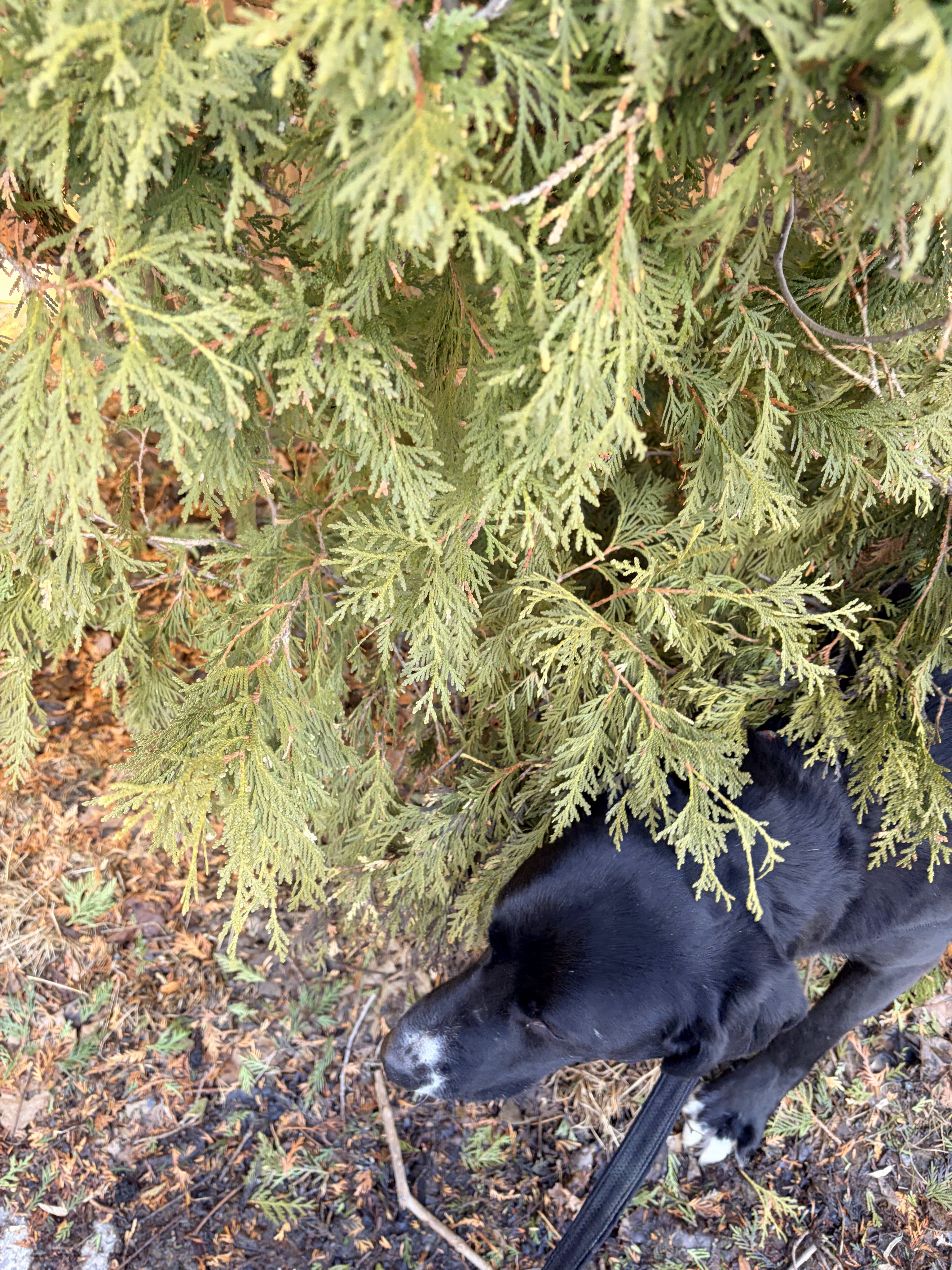
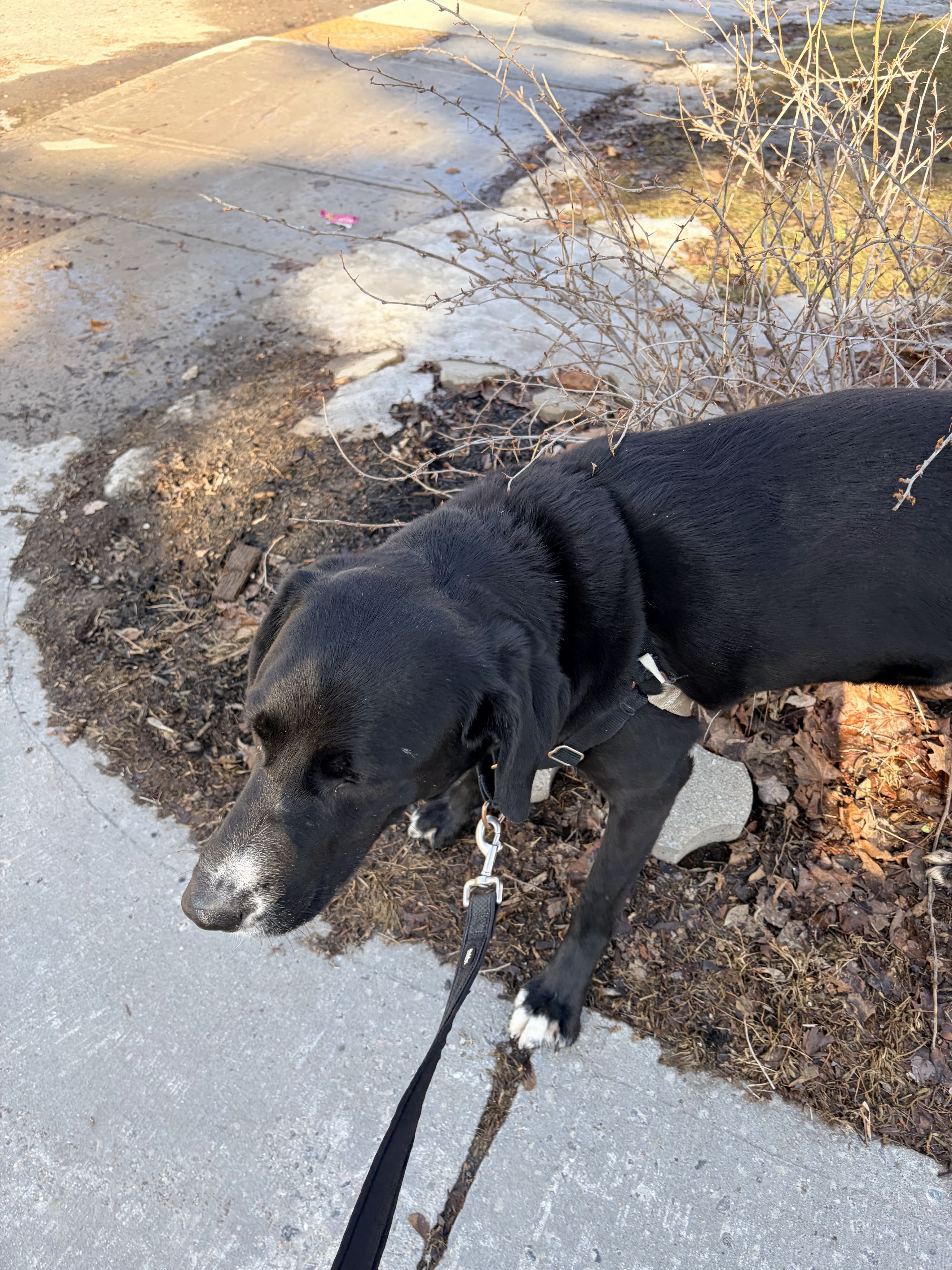
While I have never walked from one place to another for 14 entire days, I have walked every day but one for 2029 days in a row. I started walking daily during the pandemic.  A friend suggested a challenge to walk every day from Victoria Day to Labour Day, in part to combat the malaise of those pandemic days. From Labour Day we pushed to Thanksgiving then Christmas and soon our goal became a year of daily walking. After a year, seeing no reason to stop, we continued. And so it went. I walked after work and sometimes in the neighbourhoods around work if I had to stay late. I walked while travelling and while on vacation. I walked through good weather, but also through rain and, in the middle of Canadian winters, through snow and even ice. Walking, in many ways, became part of who I am.

***

After his walk to London, Abraham Colles worked on dissections with the well-known doctor, Astley Cooper. From there, he returned to Dublin and was elected as a member of the Royal College of Surgeons. He was a practicing doctor and beloved professor who published three books and over a dozen surgical papers. 

As a physician, Dr. Colles was particularly devoted to the importance of dissection. He wanted to show his students “the connection between anatomical structures of each part and the surgical diseases and operations to which it is subject.” To this end, he was known to dissect for up to two hours a day and he kept careful records of what he found. 

There’s a lot more to his career, of course, but what’s interesting to me is that all of this careful observation led to Dr Colles’ name being given to a particular fascia, a ligament, and a fracture. In 1814, decades before x-rays came into use, Dr. Colles published a paper about the characteristic “dinner fork” formation of the fracture and showed ways to treat it. Colles fractures usually occur after a person falls onto an outstretched hand*. We often call a Colles fracture a broken wrist, but it is truly a break at the end of the radius bone near the wrist. They are among the most common fractures seen in emergency rooms.

A “fall onto an outstretched hand” is so common that it’s known in Emergency Rooms by the acronym FOOSH. I find this acronym particularly apt as it imitates the sound that happens when you fall. In a way this is an onomatopoeic acronym that causes a fracture which is, itself, an eponym. This is oddly satisfying.

***

I missed one day of walking during those 2029 days because I was truly sick. While my streak had ended, I felt better the next day, so I went out and started walking again. I’d gotten used to it. My daily walks had given me new awareness of the things around me. I now noticed changing flowers and leaves, the way the ice froze in different patterns in the winter, and how the world changed day by day. Somehow observing made me feel more connected to the world and to myself.

But on Sunday morning, my observations of ice and my connection to the world didn’t prevent me from slipping and falling on a patch of ice hidden under the snow. FOOSH! I went down hard, and even though I’m fully an adult, I cried when I landed. After a few minutes, a woman who had been standing across the street wandered over, cigarette in hand, and asked, “you okay?” I very clearly was not.

She seemed vaguely sympathetic but disinclined to help, so I pulled myself up using my left hand on the stop sign next to me. I limped back to my house, tears still in my eyes, holding my right hand against my chest. There, I realized that for the first time in some years, I was home alone: My spouse and older child were visiting universities; my youngest was out with friends. I tried to convince myself that I wasn’t badly injured, but I didn’t need to have years of dissection work under my belt to know that my hand did not look normal. I called an ambulance.

The paramedics were as gentle as possible. Given the prevalence of this sort of break, they must have seen it a hundred times before, so I think they knew. When I finally talked to a doctor, he told me that not only did I break my wrist, I “super broke” my wrist: the X-ray at the hospital revealed that I had sustained the fracture that Abraham Colles identified well over 100 years ago.

The good news is that, while I will need surgery and then have a cast for six weeks, I should heal well. The bad news is that it hurts. And, while I have taken advantage of this injury to show my creative writing students how to write an essay in the style of John Green’s Anthropocene Reviewed I have had to dictate the whole thing and have learned that I do not like dictating essays. 

I am impressed with Abraham Colles work and grateful to the medical professionals who are treating me. Nevertheless, I give the Colles fracture one star. 

Man vs Max

Max found a Labubu – and ate it

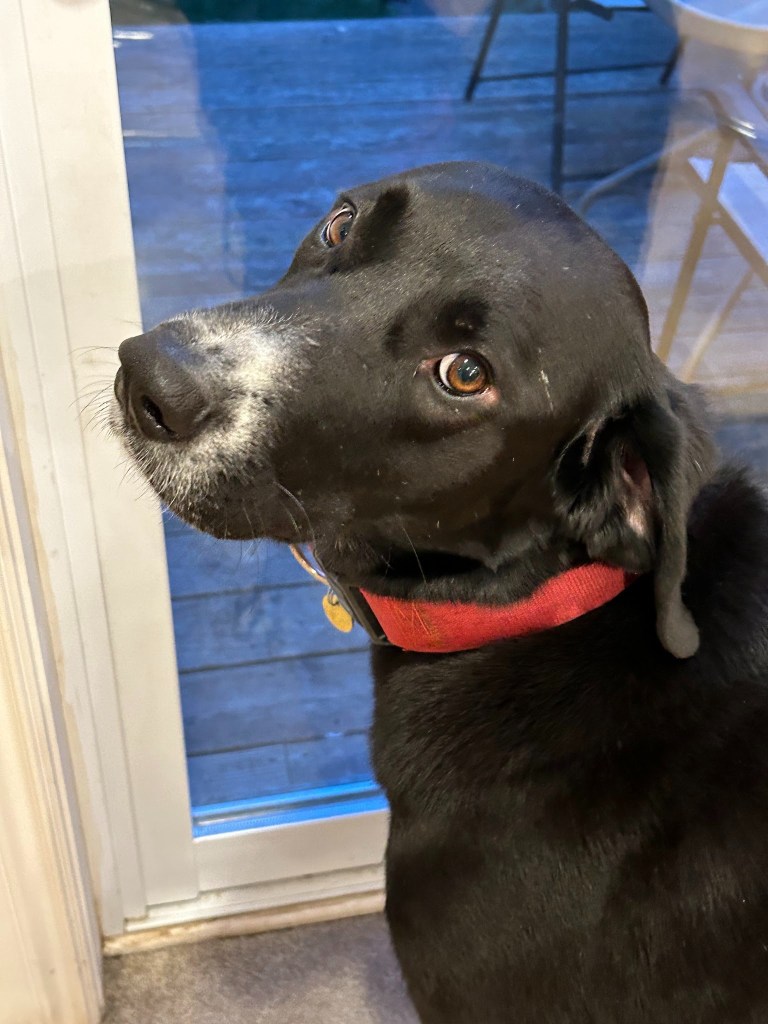
Our dog Max is a rescue. What he was rescued from, we don’t exactly know, but we do know that he came to Canada from Lebanon, we assume in a large dog crate. This explains many things. First, Max is an anxious dog. Second, he does not love crates. According to our dog trainer, his anxiety presents as aggression – so, she assures us, he’s not really an #$@hole; he just acts out because he’s nervous and doesn’t know what’s expected of him. As a teacher who often works with students who need a little extra attention, I feel like this is something I should have picked up, but the dogs I grew up with were decidedly not anxious, so I had no idea.

One thing that helps nervous dogs, apparently, is having a space in the house that is their safe space. Before we knew what he was doing, Max had chosen under our kitchen table as his space, which is not ideal because, well, that’s where our feet go. He’s generally ok with feet being there, but “generally” is not really enough when it comes to where your feet go while you eat. So… we are trying to help Max find another safe place in the house.

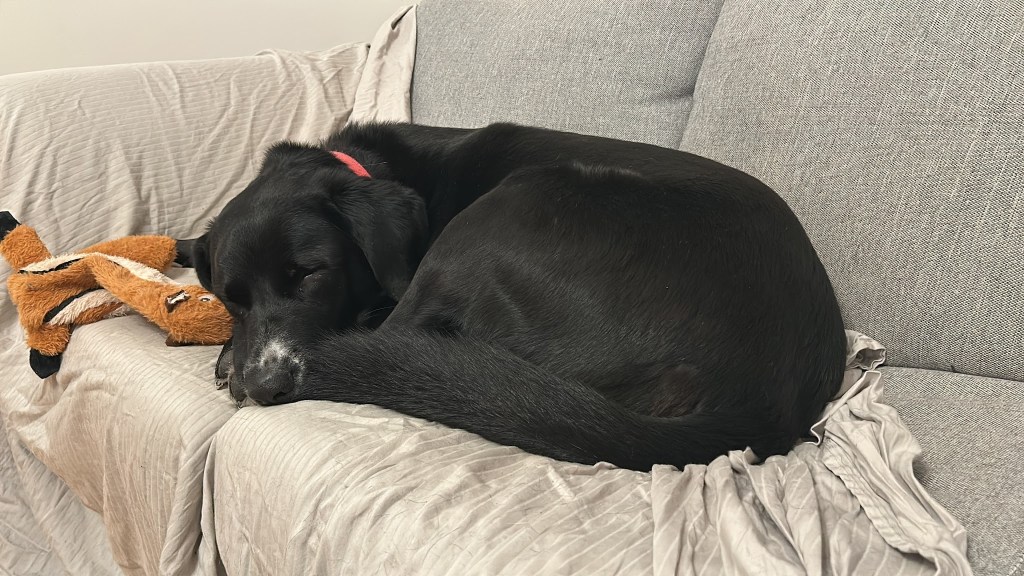
Max’s absolute favourite place to sleep is on our couch – with a stuffie

We started with a large hard-sided crate, which we put in the TV room by the sofa where we often hang out. Max was not impressed. He absolutely, 100% refused to go in the crate. Heck, he would hardly go near it. He growled at it and, when we put his favourite toys inside, whimpered a little, but he did not go get them. He spent weeks steadfastly refusing to go near the crate, giving it a wide berth while giving us the side-eye. Finally, we realized that he had probably flown from Lebanon in a crate, so we retired it to the basement (a place too scary for him to even contemplate; he will barely look down the stairs).

Months later, we put a dog bed in the kitchen near his table-lair. We have been trying to teach him the “place” command, and he will kind of do it, especially if treats are involved, but it’s out in the open, and he’s made it clear that he might go there to humour us, but this is not where he intends to sleep. So two weeks ago, we got *another* crate – this one with metal sides that he can see through. (Thank goodness for friends and family who are supporting us and our anxious dog by providing us with various types of crates and beds in our quest for calm.) 

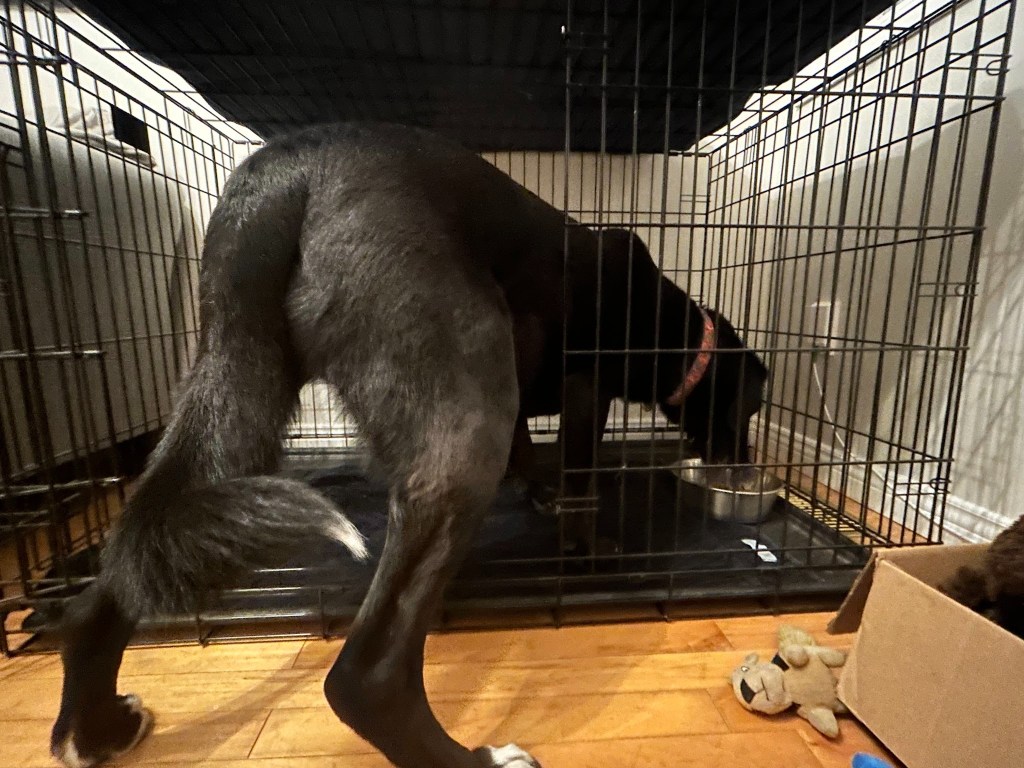
We set up crate number two in a different corner of the TV room, and this time he didn’t growl or whimper. Then we got smart: we put Max’s food dish in the far corner of the new crate. To eat, he would have to go in. He’s half Lab, so he loves food, but he’s still Max, so he was tentative: he tested things out with one paw… then two… then he s-t-r-e-t-c-h-e-d in to eat his food. Such a brave boy!

Max with two feet in

We added a towel to make the bottom of the crate more comfortable, and two days later, Max managed to put three paws in the crate. Then, yesterday, he discovered a better solution. When Andre put a treat in the far corner, Max pawed at the towel and pulled the whole thing towards the door. Once he’d pulled the bowl close enough, he grabbed the treat and triumphantly trotted back to his safe space under the table to eat in peace. 

Anxious, but not dumb, this dog. Sigh. In the question of Man vs Max, I think Max is winning.

Update: tonight he put all four paws in the crate! 

What happened on Tuesday

What happened was a thunderstorm with a massive burst of lightning and a thunderclap so loud that I jumped out of bed even before I understood that the dog was barking.

What happened was that the dog went crazy, running and barking and shaking, after the thunderclap that shook our house and shook me out of bed, so now I was wide awake and went downstairs to the kitchen, where I talked to my visiting in-laws about the much-needed rain that was pouring pouring pouring down.

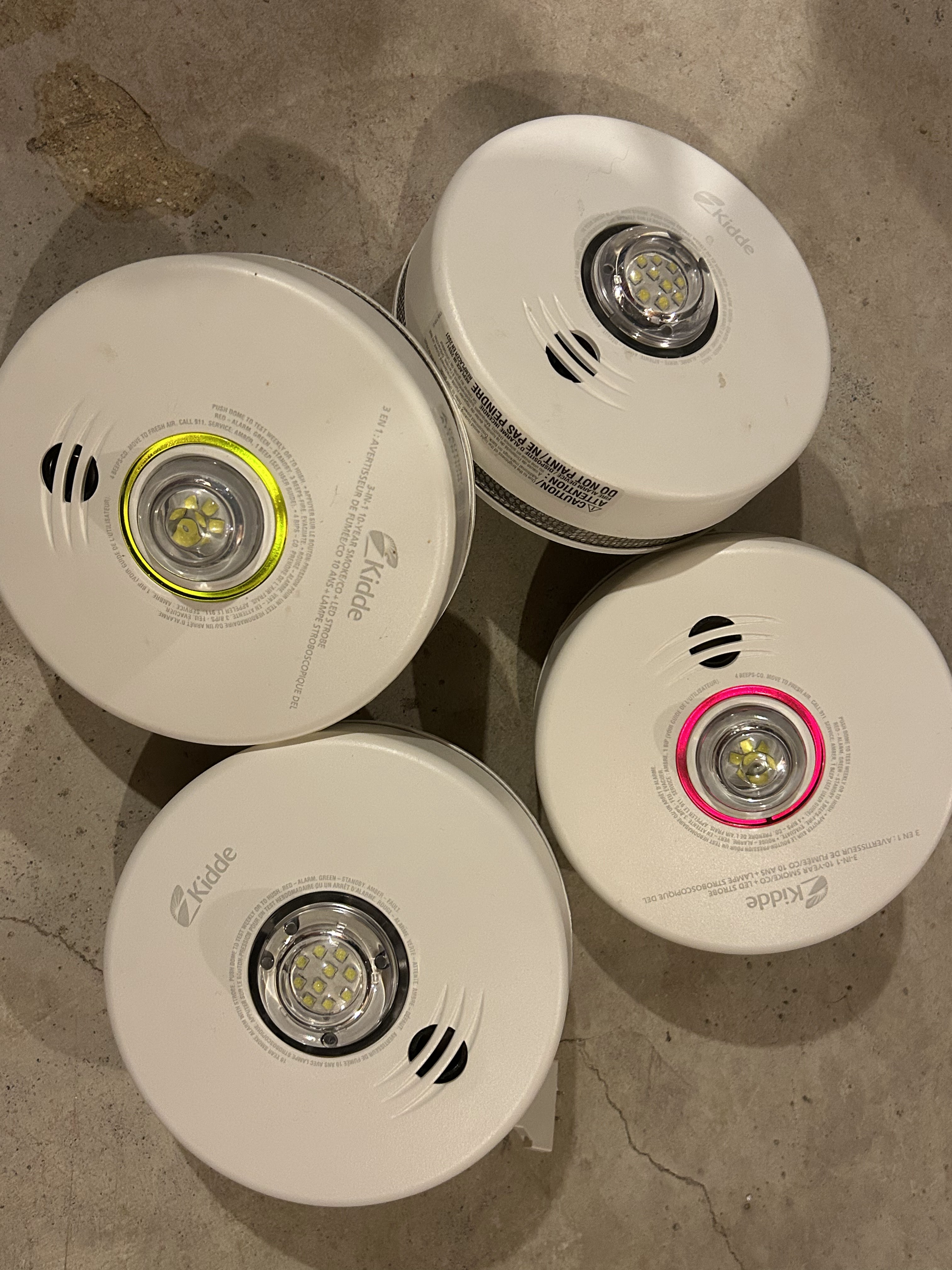
What happened was that the rain started coming down so hard after that giant clap of thunder that it took us a second to register the blaring of the fire alarm. “FIRE! FIRE! FIRE!” a vaguely female electronic voice stated with an oddly calm urgency. She managed to time her words in between the deafening blares of the alarm. Lights flashed from every unit, the already nervous dog went wild, and even my father-in-law, who’s lost a lot of his hearing, had to cover his ears, while my mother-in-law jumped up, and I ran to the back door to let the dog out, then both of my children came loping downstairs, blearily asking what was going on as if our house was not suddenly and obviously full of noise and strobe lights and chaos. “It’s the fire alarm!” I yelled, and my voice was not calm or electronic and my words were not timed to fall between the blaring blaring blaring of the alarm, so I had to repeat myself several times even though what I was saying was painfully obvious.

What happened was that I ran down to the basement to try to turn off the insistent incessant alarm, and the frantic dog escaped from the backyard and tore down the driveway, seeking refuge anywhere that was not our shrieking, strobing house, so my son ran out the front door and intercepted him, then somehow the terrified dog and my somewhat-less-terrified mother-in-law ended up in the backseat of her car, trembling and meanwhile I dragged a chair into the basement and stood on it, ineptly pushing and jabbing at one unit, trying to stop the noise.

*What happened was that one week earlier, Max had encountered a skunk and even though we had washed him and washed him, his wet fur now smelled distinctly of skunk, even as my mother-in-law sat with him in the back seat of her decidedly not skunky car, calming him.

What happened was that I could not make the alarms stop screaming, maybe because they’ve only gone off twice in five years and both times Andre was the one who stopped them, but now he wasn’t home, so I called him at work and when he didn’t pick up, I kept calling and calling while I pushed and held and twisted and pulled and tried everything I could think of to stop the sirens. When that didn’t work, I got off the chair and threw all the fuses, desperate to make the noise stop, but then I was in the dark with the strobing lights and the blaring noise.

What happened was that Andre called back, alarmed and annoyed, and he told me to unplug each unit until I found the one that was the center of the storm of sound, and then, if they still wouldn’t stop sounding to just “throw them in the freezer” and I thought that sounded odd, but we’d once put a bat in the freezer (it’s a long story) and the noise was so loud that I didn’t think too much about it: I stood on the kitchen chair and unplugged one alarm then another while the kids did the same upstairs until suddenly, mercifully, the noise stopped, but when one of the units let out an errant “beep,” I threw them all in the chest freezer in the basement.

What happened was I had planned to meet up with colleagues for lunch, so once I had four alarms in the freezer and the dog coaxed out of the car and everything more or less back to normal, I left. As I drove to the restaurant, I wondered about those frozen fire detectors, but they were there now and quiet, so I continued. And all was well. I came home, took them out of the freezer, and took my younger child to the dentist to talk about braces. It took awhile.

What happened was that as the fire detectors defrosted, they decided they were not done: they started to scream. My mother-in-law put the (still slightly skunky) dog in the backyard, and he tried to escape again. My father-in-law decided enough was enough so he put the alarms back in the chest freezer, and when I came home I decided that I was done with alarms for the day, so even though I’m off for the summer and even though Andre was working, I ignored the clearly unsolved problem.

What happened was that Andre came home and said, incredulously, “You put them in the FREEZER?” and swore that he had said to put them in the cooler which is the ice chest and which does not actually freeze things – especially not fire detectors – and while I can admit that he might have said that, I also reminded him that we have put weirder things in the freezer, so he shook his head and went upstairs to change his clothes then went downstairs to take four frozen fire detectors out of the freezer. 

What happened was that freezing the alarms (twice) had caused condensation to build up and the batteries to get low, but this time I knew better so, barefooted and disheveled, I took the dog outside before the chaos (re)commenced. 

What happened was the dog treed a raccoon and one of our cats got into a fight with a neighborhood cat, and as I tried to calm things down, two little boys, brown as berries and attracted by chaos, wandered by and stopped for a chat. One told me that he was four and he could lift this rock and he could spell his own name. He was astonished to learn that I was a teacher and wondered why I was sitting on my front steps with a dog. I said, “because it’s summer” and he didn’t ask about the thin sound of fire alarms seeping up from the basement and only wandered away with his cousin when Andre came up and asked if I knew where the compressed air was. I did not.

What happened was that Andre, looking somewhat wild, begged me to go ask our neighbours if they had compressed air while he went downstairs to blow dry the fire detectors and even though this request was patently insane because who has compressed air, I got up from the porch and went door to door, barefoot and trailing a dog, asking. The two oldest neighbours laughed out loud and delightedly asked how our fire alarm was holding up. I didn’t tell them that four units were frozen and dying and currently being blown dry in an attempt to bring them back to life but in a silent sort of way because that was even more insane than asking 75-year-olds for compressed air on a Tuesday night. I tried four houses; no one had compressed air.

What happened was I came home empty-handed and finished blow-drying the four dead-ish detectors, leaving one after another on the basement floor, dazed, with their poor half-dead eyes winking weakly on and off until Andre fetched them and put them back in their places – except for one that we dubbed the “problem child” and put back into the cooler (not the freezer) until further notice.

As far as I know, one week later, it is still there.

Basic kindness

“Mom,” he says, “there’s some lady outside who needs water.”

Mr. 17 is back from soccer practice, standing in the front hall, holding an unfamiliar water bottle.

I blink. What?

“She was going to use our hose. She was walking down our driveway. She seems really thirsty, so I told her I’d get her some water.”

Our house is not large, so he’s already in the kitchen by the time he finishes this uncharacteristic rush of sentences. I hear ice cubes clink against metal, then running water. He lopes back towards the front door, screwing the lid onto the water bottle.

Before he goes out, he pauses and runs a hand through his sweaty hair. He looks at the water bottle in his hand and looks at me. “Do you have maybe $5 we can give her, too? So she could buy some water or something? She seemed really thirsty. Everybody should have water, you know? It’s like, basic.”

I nod, find my wallet, and hand him $5.

“Thanks, Mom.” He hugs me, takes the water bottle and the money, and disappears out the front door. I catch a glimpse of him handing someone the water. She has certainly seen hard times. Seconds later, he’s back inside, saying, “Oh, I’m going to [my friend’s] house. They’re waiting outside. I’ll be home later.” He looks around for a bathing suit, finds a towel, and he’s gone.

And I’m left, quietly stunned.

My children don’t follow the news. I wish they did, I guess, but the news these days is so often unsettling that I don’t push. Sometimes at dinner, we bring up various topics for discussion, but mostly our teens are happily ensconced in a world that is immediate to them. Mr. 17 probably doesn’t know that right now the world is arguing about who is or isn’t providing aid to people in Gaza, pointing fingers and laying blame while allowing children to starve. I doubt he’s seen the images that make my stomach hurt. He certainly doesn’t know that I was just talking to a friend about feeling helpless, overwhelmed and almost constantly unsettled. And yet, when someone was in our front yard, thirsty, he got her water and gave her a little more than she asked for. He did it without even pausing. I am stunned by his easy kindness, by his clear statement: everyone should have water.

Worldwide solutions are, of course, far more complicated than this interaction; but really, the idea that everyone should have water (and food) seems like a reasonable place to start.

What does it mean to be American?

It’s been twenty years since I taught American Lit to 11th graders in a high school in Washington, DC. After I’d taught the course a few times, I used to start the class with the question students would answer on the final exam: What does it mean to be American? In September, students answered glibly: duh, you have to be born here. But even as they said that, they could feel that it wasn’t right, so they would hack away at the edges of the answer: you have to have an American parent, or maybe an American passport. But a cursory look showed that didn’t work, either. First, not all Americans have passports and second, does the passport make a person American? The rest of the school year just made things more complicated.

Were the Pilgrims (born in Europe) and other early settlers American? We read some of William Bradford’s Of Plymouth Plantation. Ok, the students said, the Pilgrims count as American (even though “America” didn’t exist at the time and obviously the original settlers weren’t born here); if you came to America for a better life, that counts. I complicated things: So, if people who fled their homeland in search of freedom count as American, what about people who do the same in modern times? We read short stories by Edwidge Danticat (American, born in Haiti) and Jhumpa Lahiri (American, born in England to Indian parents). Are their characters American? 

What about the people who already lived on the continent when the colonists arrived? What of the Native Americans? (Honestly, I’m a little relieved to realize that even 20+ years ago we read at least one speech by a Native American, though we should have done much more.) And what if you didn’t choose to come? What of people who were enslaved? Surely Jim in Huckleberry Finn was American. 

Maybe being American is about a set of values? We looked at Puritan leader (born in England) John Winthrop’s “City upon a Hill” (from his essay “A Model of Christian Charity”) and considered what he calls on fellow Puritans to try to create: a community of virtue, effort, and compassion. We read the beginning of the Declaration of Independence (written by Thomas Jefferson, born in the colony of Virginia) and excerpts of (French author) de Tocqueville’s “Democracy in America.” Does he see in the mid-1800s what Winthrop dreams of two centuries earlier? Is that what Huck Finn seeks when he decides to “light out for the Territory”? Is it what Jay Gatsby is striving for as he reaches for the green light? What Janie longs for in Their Eyes Were Watching God?

Gatsby is definitely American – no question about it – but there is the pesky concern of the “foul dust [that] floated in the wake of his dreams.” Perhaps, students thought, Americans had strayed from important original values, as Jonathan Edwards (born in America) thundered in his famous 1741 sermon “Sinners in the Hands of an Angry God.” Again, this gets complicated. In The Scarlet Letter, Hester Prynne’s (born in Europe) sin is the impetus for the whole novel, but in the end, (like Gatsby? unlike Gatsby?) she is the best of them all, except for maybe her daughter Pearl (born in America) – but Pearl takes her riches and moves to Europe. Hester stays in the New World. So who is American?

But, those are just characters, the students protested. True enough. But many real live Americans, good Americans, I insisted – Americans who shaped our nation – were sinners and criminals. Some students were doubtful – 20+ years ago was, I think, a more innocent time. Still, I said, Roger Williams (born in England) was banished from Massachusetts for advocating religious tolerance and the separation of church and state. We read Thoreau’s “On Civil Disobedience” and Martin Luther King, Jr’s “Letter from a Birmingham Jail.” We read Walt Whitman, Zora Neale Hurston, Emily Dickinson, Langston Hughes, and more. One year we read My Antonia and made popcorn balls. Always we came back to our central question.

(How did I get them to read so much? I have no idea.)

By the end of the course, no matter what we read, we had a massive tangle. Americans, it seemed, could be born anywhere and live anywhere. They could be Americans by birth, by choice or by force. They could be saints and sinners, criminals and leaders. And then it was time for the exam. We ended where we started: “What does it mean to be an American?” The answers were always complicated.

****

Last week, on the 13-hour drive from South Carolina to Buffalo, my two sisters and I had plenty of time to talk. We usually see each other only once a year, and we never run out of conversation. This year, after a gas stop in West Virginia and a possible sighting of ICE agents, our talk turned to politics and family. 

I guess you could call our family “blended,” but mostly I think of it as chaos held together by love. Even if I just tell you about the children (my six various siblings) who go with my dad and stepmom, things get complicated. My step grandmother was born Dutch and became an American; my stepmom is Alabaman through and through. I was born in the US but am now a dual citizen. My children, born and raised in Canada, are dual citizens. My partner is pure Canadian, but his mother, my mother-in-law, is a dual citizen; my father-in-law is 100% American. One of my sisters was born in Panama on an Air Force Base, but she doesn’t remember it at all and does not speak Spanish. Her daughter, my niece, born in the US, does speak Spanish and is dating a young man whose family is Mexican (his dad was born there; I can’t remember about his mom); he is American. My sister-in-law is a naturalized American who was born and raised in Cuba. Her mother is living with them (very legally) but is not yet a citizen. My brother, her husband, is pretty much a good ol’ boy (in the best of ways), but his kids have olive skin and dark hair and speak both Spanish and English. Except for my sister-in-law’s mother, I would say all these people are American. Even she may be a future American.

Adding in my mom’s side – she has four siblings – doesn’t make things any more clear. My uncle married a Filipina woman who is now American. One of their two sons, my cousins, just got out of the Marines, so definitely American, right? But when he was on tour, children in Saudi Arabia made the “slant eye” face at him, annoying him to no end. My mother’s sister married a Brit, and they live in the Cayman Islands; their child, my cousin, is American-British-Caymanian. He went to college in the US and worked in NYC before meeting an American woman and moving back to Cayman. Their children were born in Cayman. All except my uncle have American passports. 

As a family, we are Lutheran, Catholic, Presbyterian, Jewish, atheist. We are white, Asian and Latino. We speak English, Spanish, Tagalog, and French. We are gay, straight and bi. We are addicts and we abstain.  We have committed crimes and been arrested for them or gotten away with it. We have done good things and been recognized for them or overlooked. We have high school diplomas, bachelor’s degrees, master’s degrees, MDs or PhDs. We are business owners, doctors, teachers, CPAs, hourly employees, unemployed, researchers and more. We were born in six countries, and we currently live in three countries; we have lived in many, many more. We voted for Harris or for Trump or not at all. We are all American.

In the car, my sister worried about a friend who is married to a US permanent resident who was born in El Salvador. His parents brought him here when he was a toddler. As a young teen, he got involved with a gang and committed “a bad crime” (yes, it is bad). He was arrested and went to jail. He served his time, got out, got a job and got married. Now in his mid-40s, he has never committed another crime. As we drove north, he was on his way south to his annual check-in with immigration, and they were terrified. The family has money and a lawyer, and a no-deportation order. But they had no idea if, after he followed the law and went to the courthouse, he would come back out or be disappeared. “We talk about ICE deporting ‘criminals,’” my sister said, “and everyone seems to think that is ok; but he’s a good person who did an awful thing. He’s here legally. Should we deport him because of something he did when he was 15? Why can’t we talk about the human cost? When did we stop thinking of immigrants as fully human?”

As we drove through the mountains of West Virginia, I mused, “What does it mean, then, to be an American?” I still don’t know, exactly, but I am sure the definition should be rooted more in love than in hatred. If there’s one virtue that my loving, chaotic family and all those texts I used to teach have in common, it is compassion. 

Well, maybe not “Sinners in the Hands of an Angry God,” but really, that one is kind of over the top.

Immigrant

Last week, my child had to interview an immigrant for a grade 9 Geography assignment. Everyone in his class had to do the same. Pause for a moment and take that in: we live in a place where a teacher can safely assume that every child in a class of 25ish can, with relative ease, find a person in their life who has immigrated to the country. Oh, and we live in a place where that is a good thing.

I no longer take this for granted.

My child chose to interview me because I am an immigrant. Some days I am highly aware of myself as an immigrant; others, it seems like a word that pertains to other people. As an American immigrant to Canada, right now I feel horribly connected to my birth country: people who, like me, have immigrated, only to the US instead of to Canada, are being targeted and deported – sent to rot in foreign jails from which they may never return – for no reason other than being immigrants. Yes, yes, I realize that there are trumped-up reasons for their deportation, but even the Cato Institute (not exactly a bastion of liberal thinking) has determined that many of the men recently deported to an El Salvadorean prison had no criminal record and had never violated immigration law. The immoral actions of the current US government must surely give many immigrants pause.

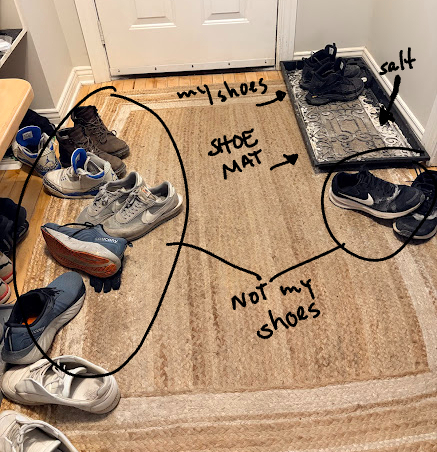
So, when my child started asking me questions, I was a little tense. He was conducting the interview in Frenglish because I refused to answer exclusively in English for a class that he’s taking in French. Soon, he learned that I had lived in five places (and two countries!) before I was ten; that I have taught in four countries; that people in the US don’t take their shoes off when they enter a home. (“Wait? Really? That’s weird. Why don’t I know about that?” he asked. I said that his American relatives probably just laugh at him behind his back. Hee hee hee.)

He learned about the visa process and what it was like to move to a country where I could not yet hold a job and didn’t really have any friends.

“What did you do?” he asked.
“Learned to knit,” I replied, which is sort of true.
“I never really thought of you not knitting,” he said.
Oh, my sweet child. One is not born knowing how to knit.

After the interview, he drafted his “article”. It was still in Frenglish, though the French was coming along. Tonight, he’s polishing it, so we’ve spent quite a long time making sure the French grammar is right and double-checking accents. “I trust you more than Google Translate and BonPatron,” he tells me.

I point out that I am American. He is literally writing about me being American. I am not a native French speaker and still have a bit of a Southern accent when I speak. He says my French is still “really good,” and I decide to accept the compliment.

He decides he wants pictures to accompany his article. He’s particular – he wants me at specific ages and doing certain things.
“Do you have any in the snow?” he asks.
“Not if I can avoid it,” I tell him, but I live in Ottawa now, so of course I do. I send him what I can.

After a few minutes he says, “Do you have any of you looking normal?” which makes me laugh – I love making silly faces for the camera. Still, for him, and to make immigrants look good, I find some “normal” pictures. 

For you, however, I will share some of the funny ones.

There: faces of an immigrant. Remember this the next time another person gets deported. They might be a lot like me.

Dinner Party Conversation #SOLC25 29/31

We may have been talking a little too much about politics in our house over the last few weeks. Just now, when I told Mr. 14 that I was writing about tonight’s dinner table discussion with friends – the US, Trump, tariffs, deportations, Signal – he rolled his eyes. “Everyone knows what you’re going to say.”

“What should I say instead?” I asked.

“Tell them that someone thought tariffs were a great idea,” he suggested. “Tell them that we had a big fight and we threw the person who thought tariffs are good into the backyard with the dogs.

“At least that will be different,” he added. “I mean, what Canadian thinks tariffs are good?”

So, um, yeah: that’s my 14-year-old’s take on Trump’s tariffs.

Back up two hours to the dinner discussion my son found so predictable. There, the 16-year-old daughter of a friend tried to fathom the Signal war planning fiasco. “Wait – what?” She squinted her eyes a little and looked at her mother and me like we were trying to pull a fast one. “They talked about bombing people in a group chat?” She paused and let that sink in. “Like, seriously? Grown men? Real bombs? In a *group chat*?” When we mentioned that they had accidentally invited a journalist and that some of them were outside the US, she was incredulous. “Do they even know how group chats work?”

Around the table, people talked about not buying fruit that came from the US, avoiding products they used to rely on, cancelling streaming services. The teen whose parent is cancelling streaming services was unimpressed, but consoled herself that “at least TikTok is Chinese.”

With that, we are treated to a TikTok video of NDP leader Jagmeet Singh demonstrating how he ties his turban while he talks about his Conservative opponent. (For the non-Canadians, the NDP is the furthest left of the three major Canadian political parties; we are having an election on April 28.) She calls this “hair porn” and we all watch, fascinated.

Not long after this, we piled into the living room to watch our movie. As we settled in, three families, four children, two dogs, I kept thinking of one of JD Vance’s lines from the leaked Signal chat, one which has been on repeat in my head, though not in the way he meant it. “I think we are making a mistake,” he wrote.

For once, I think the VP got it right. Maybe we should throw him in the backyard with the dogs.

Dinner conversation, outlined #SOLC25 27/31

We went out for burgers with our kids tonight to celebrate a birthday. The Works isn’t fast, but their burgers are delicious. While we waited for our food, we talked; when the burgers came, we kept talking. Once we were home, I was stunned to look back on our meandering conversation and to realize how interesting I find my teenage children. When did they get this curious about the world?

I can’t possibly write it all up, so I’m taking (more) inspiration from Sherri and trying an alternative format. Here’s an outline of we discussed:

  1. Andre’s run today
    1. his longest since pre-children
    2. how far the rest of us have run
      1. I have run the farthest (yes, I’m bragging)
  2. What the Bank of Canada does
    1. The state of the internet when Andre worked for the Bank
    2. It was rudimentary
  3. Why the drama teacher was late to class
    1. This is unclear
    2. Maybe she was creating a seating plan?
    3. She still does not know the names of everyone in the class
      1. It is six weeks into the semester
    4. She now has pictures of the students with their names
      1. It’s not obvious that this is helping
  4. When the next set of article summaries is due
    1. Monday
    2. This will require good time management
  5. Camus
    1. He is an existentialist
    2. This was not required reading
  6. Jesse Thistle
    1. He spent a lot of time in his memoir recounting his experiences with addiction
    2. He met his wife after he got clean
      1. Because falling in love with an addict would be hard
      2. She was from the same town he was
      3. They now have children
  7. Being cancelled
    1. Is it being cancelled if, like Joseph Boyden, you misrepresent yourself?
      1. Did Joseph Boyden actively misrepresent himself or did he not understand the gravity of what he was doing?
  8. Race – biological or cultural?
    1. The idea of race as a cultural construct is very difficult to fathom
      1. It’s hard to see culture when you’re in it
    2. Andre and I provided (frankly) thoughtful examples
      1. The children were unconvinced
      2. But they listened
  9. Why Google’s AI summaries are untrustworthy
    1. Which teachers have discussed this in school – mostly English and Social Science teachers
    2. hilarious examples from our children 
  10. Tariffs
    1. Why targeting the auto industry might be effective or ineffective
    2. Why countries are or are not banding together to oppose the US
  11. Illegal actions by the current US President
    1. Including interfering in private industry, like specific law firms
    2. Also telling a university that its students cannot wear masks during protests
      1. Which seems a bit much
  12. Group chats
    1. Signal vs WhatsApp
    2. Why would you add a journalist to a government group chat?
    3. Why would the US bomb Yemen?
      1. Who are the Houthis?
  13. The efficacy of protests
    1. Some of these seem deeply ineffective to the children
      1. One protest was declared “annoying”
    2. The children are not convinced that protesting Israel/ Gaza is effective – on either side
      1. Institutions outside the affected area have financial interests in what is going on
        • Including weapons
  14. Civil disobedience
    1. Examples from Gandhi & India
    2. The US Civil Rights Movement
      1. Rosa Parks was effective
      2. Perhaps we need to watch some movies about this because it sounds really interesting to the kids

Dinner ended.
WHEW!

Scam Artist #SOLC25 26/31

As I pulled into the driveway, Andre was coming out of the house with the dog. They paused to greet me (aka Max dragged Andre to the car door), and Andre said, “I thought I’d go ahead and take him for his walk since you were running a little late.”

I gave Andre a funny look. “Mr. 16 didn’t walk him? He said he would.”

Andre, in turn, gave Max a funny look. “Max? Did you already have a walk?”

Max looked off into the distance, the picture of doggy innocence. If dogs could whistle, he would have whistled an innocent little tune. “Who me?”

And Andre decided that since Max was already on the leash, he might was well take him for a second walk.

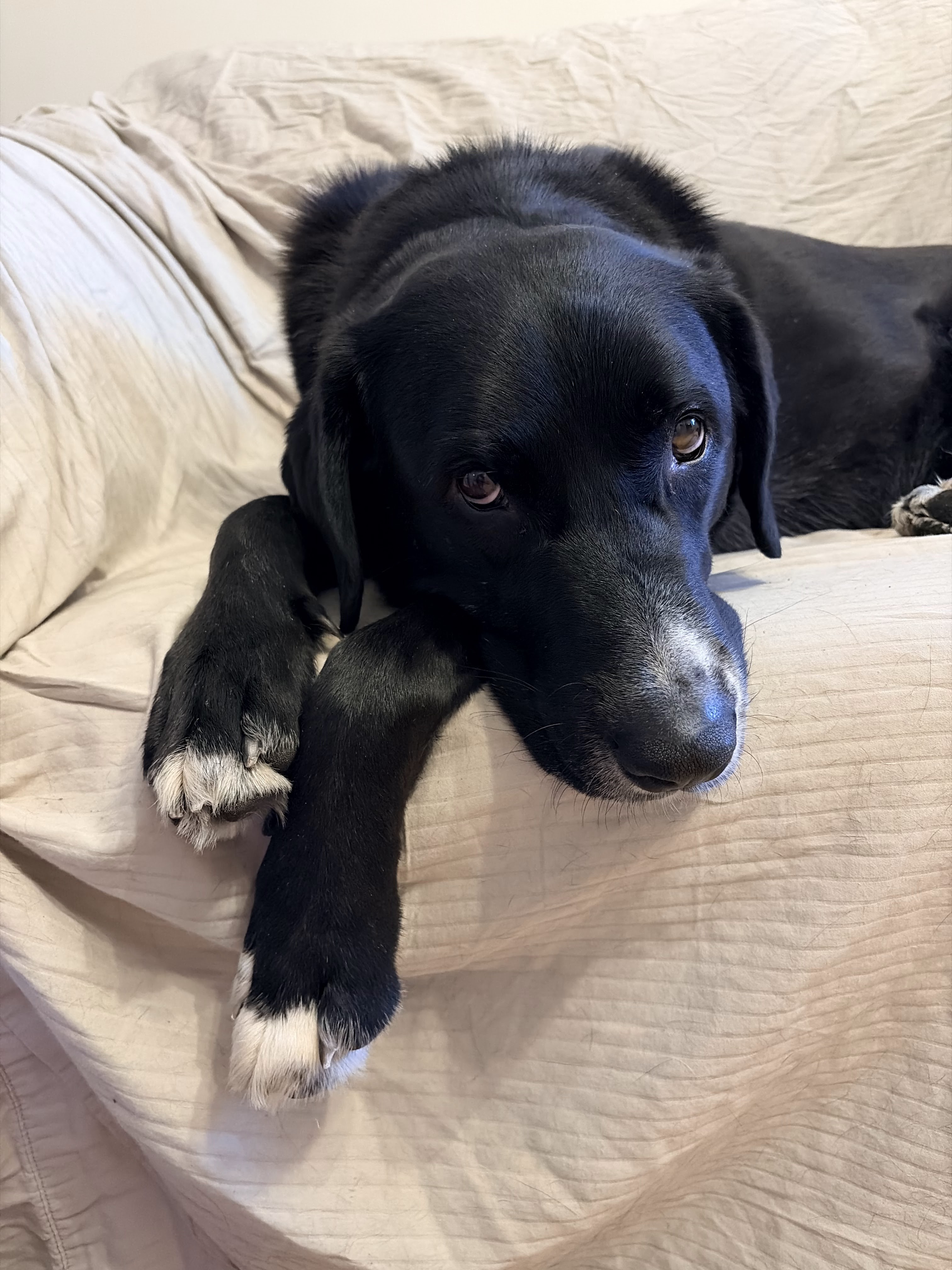
Who could resist this face?

Being the Parent #SOLC25 25/31

I parked in the tiny parking lot and sat in my car for a few minutes, hoping that the rain would let up. While I waited, I texted a friend to let her know I had arrived; we made plans to meet in a bit. That taken care of, I darted out of the car and towards the well-lit building. A young man – one of Mr. 16’s friends – said hello to me as I made my way up the stairs. There, a couple I’ve known for years were standing near an open door, so I paused to chat for a few minutes – kids, work, life. Luckily, no one was in no rush. 

Eventually, a door down the hallway opened, and an old colleague gestured to me. I made my excuses to my friends and headed over to him. We embraced briefly and then caught up. He shared photos of his son – already two and a half! – and we laughed a bit about my youngest, now 14, and some of his antics in English class. Time flew; soon it was time to go.

This is how parent-teacher interviews go for me now that both of my children are in high school. 

The next interview was across the courtyard, and I ran into several people I knew as I made my way to the classroom. There, a semi-familiar young teacher greeted me and reminded me that we had worked together a few years ago. “I’ve gained weight,” he said ruefully, “Imagine me, thinner.” Again, we used some of our ten minutes to catch up and some to talk about Mr. 14. When time was up, the next parent was a friend, so we all talked for a minute before I left them to their discussion.

Being the parent in these meetings is odd. I’ve taught in this school district for seventeen years now, and I’ve worked in four different high schools. Since I take pleasure in both collaboration and mentoring, and since new teachers often move around a bit before they get a contract, I’ve gotten to know a lot of teachers at a lot of schools. More than that, a few of my former students are now teachers (!!).  These days, much to my children’s dismay, parent-teacher conferences are a semisocial event for me.

The third teacher on my appointment sheet was not able to make interviews – too bad, really, because she was the only person I didn’t already know. After I figured out that she was absent, I made my way back to the front hall of the school to wait for Mr. 16. He was serving as a guide for the evening, and it was still cold and rainy, so I had offered him a ride home. This meant I was free to stand in the lobby and chat with an old friend/colleague and talk about books, the upcoming PD Day, and changes in the school board. Soon, one of Mr. 16’s teachers joined us, and we began an animated discussion of AI and how it’s affecting learning. By the time Mr. 16 was released from his duties, we were gesturing with enough enthusiasm to be completely mortifying.

Eventually, parent-teacher conferences wound down. Before we left, I found the friend/ neighbour/ colleague who I had texted when I arrived, and we all walked out to the car together – of course we were also giving her a ride home. After we dropped off my friend, my child said, “It’s kind of cool that you know so many of my teachers.”

I’m glad he’s ok with it because apparently this is what it means for me to be a parent who teaches.