Once an English teacher…

The first hint was on page 194. Blue ink.
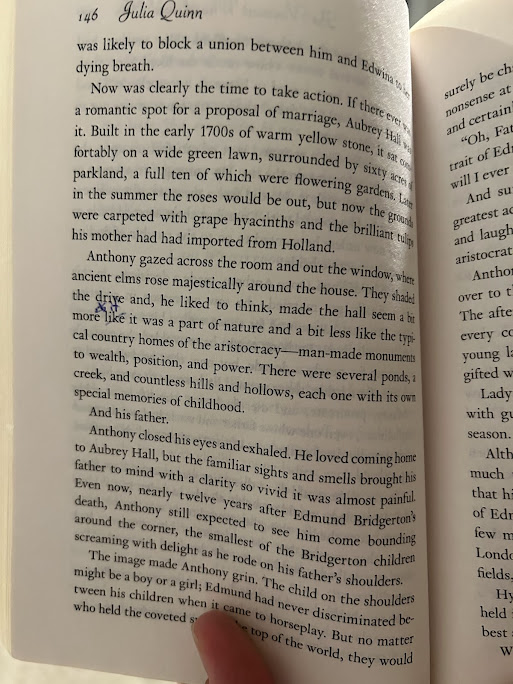
I was a little startled. I mean, this is a trashy romance. The main characters murmur and gaze longingly. I was enjoying the story, but I wasn’t exactly on the lookout for grammar errors; in fact, I’d consciously decided to overlook some of them. And yet…
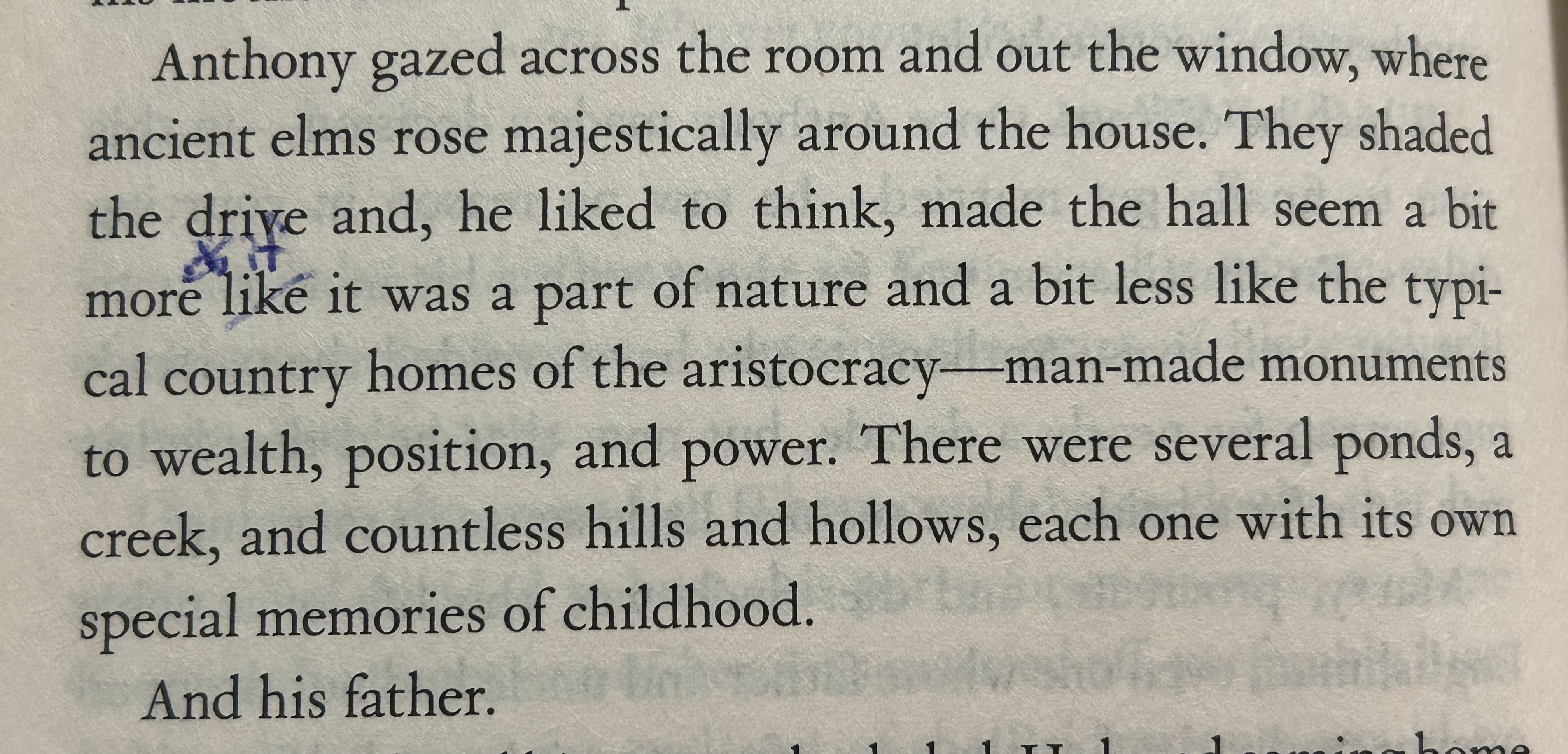
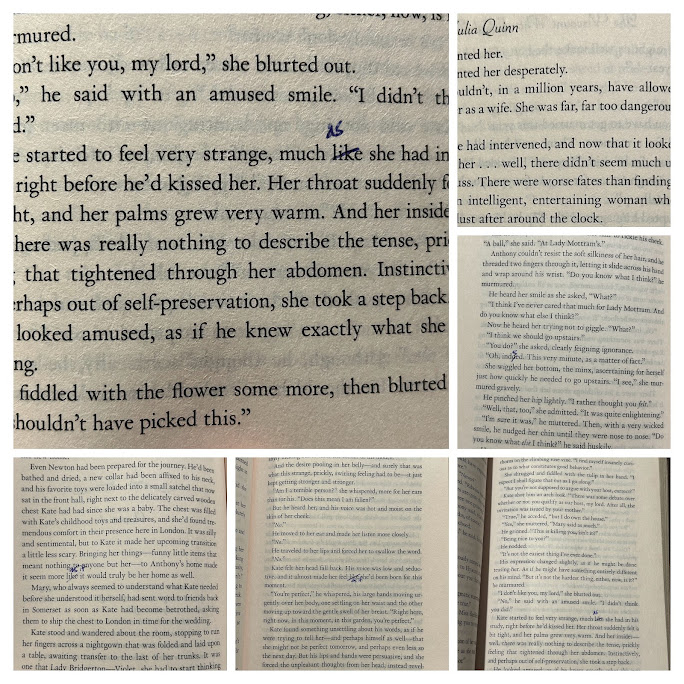
“As if”? I nearly laughed. This is my fellow reader’s quibble? I mentally shrugged, then moved on. Until it happened again. And again. And again. Someone had taken her blue pen to the novel and fixed “like” – and only “like” – a dozen times throughout the novel.
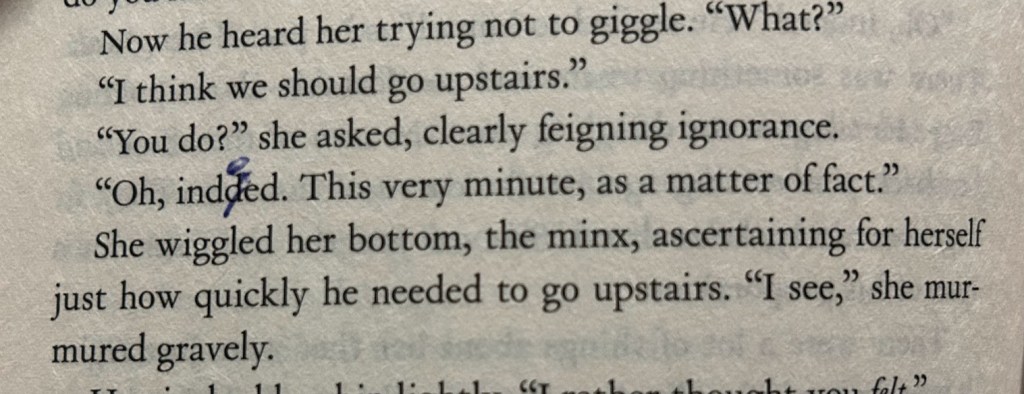
Wait. I lie. Once, she fixed a typo. Indeed.
I imagine her reading along, overlooking the missed subjunctive, ignoring the diction (minx!), letting the anachronisms lie… and then she hits her limit… “like.” She shudders. She thinks of the years she spent in the classroom, teaching students when to use “like” and when to use “as if.” She thinks of endless hours of grading essays, the constant battle against the demise of the English language. Her fingers tingle, and before she knows it, she has a pen – because of course she always has a pen nearby – in her hand, and she has made the correction.

Once she’s started, she cannot stop. The pen is uncapped, the errors egregious – at least in her eyes. Surreptitiously at first, then with greater and greater glee, she fixes the error each time it appears. As the novel climaxes in a crescendo of smouldering looks and husky moans, with one final flourish, she amends the typo in indeed and, triumphant, re-caps her pen. The world is now a little more orderly.

The next day, chastely, she returns the book to the library. Maybe she glances about as she slips the book into the returns slot; maybe she holds her head high, firm in the knowledge that she is right.

One way or another, I got double the pleasure out of book two of Julia Quinn’s Bridgerton series: trashy romance, and proof that English teachers never really leave the classroom.
Par, pars, parsh, parch #SOL24 6/31

“Hey Mom! Can you come help with my English writing?”

I’m supposed to be doing my own writing – this writing, to be precise – and I’m still knee-deep in grade 9 projects, but he knows I won’t say no. Mr. 13 is an excellent writer – effective vocabulary, interesting sentence structures, good grasp of punctuation – and he is dyslexic. Years of Orton-Gillingham-based tutoring means that he reads well and knows how to make good use of extensions like Grammarly or Language Tool, but when push comes to shove, he still benefits from a once over by someone who’s not dyslexic. Also, he knows I like to read what he writes.

He’s reading his sentences aloud under his breath as I plunk down next to him. “Um… I need a word for like ‘kind of was related to the point but not 100%.'” My eyes widen as I try to figure out what on Earth he’s talking about. “Oh!” he snaps his fingers, “got it: partially!”

He types parsley.

He keeps going, then circles back to fix it. Parshly. Spellcheck suggests harshly as a replacement, so he changes it to parchly – and the new suggestion is archly. “Um, Mom?”

Partially means ‘in part’ so it starts with the root part,” I say.

Part isn’t really a root,” he interrupts. Then, “sorry.” He would know. He knows Latin and Greek origins of words; he understands spelling rules in ways I have never had to.

I laugh, “Just start with part.” He does. I break the word down orally so he can hear all the syllables, then I spell. “Now i a l…” I pause because he is looking at me like I have two heads. Finally, I reach over and type the word.

He stares for a long second, then shakes his head in wonder. “There is no way that word looks like /parshully/. I would never have guessed that.”

And he wouldn’t have. Which is why I was so angry last night when I found one of his old math tests where the teacher has circled his attempt at the word “isosceles” and written “Really???” with multiple question marks. He brushed it off – “I mean, she did tell us we had to be able to spell all the terms” – but she doesn’t see how hard he works to spell these words.

But now he’s moved on and is enthusiastically excoriating someone’s weak debate argument. He doesn’t need me again until the end, when I do a check for capital letters and other words that spellcheck didn’t get. This time, he’s mostly good. I ruffle his hair and head back to finish my own work.

I wish all teachers could understand his truth – the kind that looks good on the surface but is working awfully hard to stay afloat. “Isosceles,” I mutter, and his exasperated voice trails behind me, reminding me to let it go. “Mom!”