It’s the books

Of our eight bags – four carry-ons and four “personal items” – mine was the only one flagged for further inspection. The security guy smiled ruefully at me as he swung my bag onto the metal table. After asking permission, he unzipped the main compartment and said, “it’s the books.” I must have looked perplexed because he followed up, “The screener showed a large block of biological material. It’s the books.” He rifled haphazardly through the rest of my bag, but he already knew he wouldn’t find anything else: it was the books.

I could almost feel my teens – who, for the record, did NOT have any books in their bags – roll their eyes. My partner shook his head disbelievingly, “You got flagged for books?” Me? I quickly calculated how many books I had packed: only two… in that bag.

All told, I took three books, one journal and one agenda on vacation. Three books is a reasonable amount for a week, if you ask me: one I was finishing, one I planned to read while I was there, and one I’ve been nibbling on, in case the other one didn’t work out. The journal is self-explanatory, right? And the agenda, to be fair, was an oversight: I’m used to having it with me, and forgot to take it out. 

For the record, I finished both the first and the second books and was back to nibbling at the third by the time we were on our way home. Of course, I had also received two more books and a blank journal as gifts. If you’re keeping count, that means I was headed home with five books, two journals an agenda… and a teeny sudoku puzzle book that I forgot to count on the way out because really, it barely qualifies. Wary, I tried to split my “large block of biological material” between my two bags.

My efforts were for naught: I got flagged by security. This time, I started the conversation.

“It’s the books.”

The TSA agent eyed me up and down. I can only imagine what he saw. He turned to my backpack and peered into its depths. “Yup, it’s the books.” 

“I read a lot,” I tried to sound apologetic, but I suspect I failed.

“What I want to know,” he mused, “is will you really read all of these on this trip?”

I started to explain about the one to finish and the one to read and the one just in case and the gifts, but I suddenly knew how that would sound to him. I almost explained that I am an English teacher and that I love to read. I wanted to tell him about the one I’d just finished and…instead, I said lamely, “Well, you never know.”

I reclaimed my bag, checked the zipper, and headed over to my family.

“Same thing?” asked my partner.

“Yup,” I smiled, “It’s the books.”

And I read happily all the way home.

Happily Ever After

I’m on my prep, heading back to the classroom and slowly catching up to the two girls wandering down the hallway ahead of me, deep in conversation. For what must be the millionth time this December alone, I am trying to decide if it’s worth telling students that they really should be in class: my brain is on autopilot. Then I hear one of them say, “it’s happILY ever after.”

“HappILY?” her friend repeats, shaking her head quizzically.

“Yes.” She re-emphasizes the ily and the girls slow even more.

“But why?”

“I don’t know. But it is so.”

“Why not ‘happy forever’?”

“Yes, in Spanish it is ‘happy forever’ but here is it ‘happILY ever after.’”

They have nearly stopped. The questioner continues to shake her head, repeating “happILY” under her breath a few times. And now I have caught up to them.

“I can explain the ‘-ily,’” I say. Two faces turn towards me with such obvious pleasure that I nearly laugh. I explain that happily is an adverb and that it tells how they lived. I liken it to lentamente in Spanish. They nod gravely.

Then, I add, “but I don’t know why it’s ‘ever after.’”

Their interest bubbles over. “Si! In Spanish we say feliz para siempre – happy forever. So easy. Forever.”

Now we are in front of my classroom door. Inside, my student teacher is waiting. And really, the girls should be in class. So I shoo them off, saying, “I’ll look it up! Come back if you want to!” and off they go, hopefully to class, hopefully happILY.

What are we really teaching?

By the time I get to our office, lunch is already in full swing. I catch bits of at least three different conversations as I walk past the large table and plunk my things at my desk in the corner. Backpack, Chromebook, tea mug. Then I plop myself into my chair and take a deep breath. For a few seconds, I just sit and breathe, sit and listen.

This doesn’t last, of course. Time is an educator’s most precious commodity, and even lunchtime is limited. I grab my lunch bag and make my way toward the table and my colleagues. As I sit, I hear one teacher exclaim to another, “Right? He’s soooo rude. The other day he called me a [very bad word for women]. I couldn’t believe it. I mean, I ignored it, obviously, and I reported it, but of course nothing will happen.”

The second teacher nods along, sympathetically, then adds, “Does he do that thing where you say something to him and he flat-out ignores you, then he asks the male teacher and gets the same answer? And then he does whatever the male teacher said and sort of smirks at you while he does it?”

“Of course he does.”

They are laughing now, comrades in arms, relieved that this experience is not theirs alone. The stories continue.

My heart has dropped. They are talking about the young person I wrote about in my last blog post, the same young person who I’d hoped I was beginning to understand a little better. I start to tell them that I have *just* written about him, that I think there is a way forward, but I hesitate. 

I think about the wariness the two girls displayed last week when they encountered him. I think about the way I felt last year, the way he treated me. I think about what I am hearing now in the lunchroom.

I don’t know what to do. I don’t know what we should do. What are we responsible for teaching? English? History? Math? Yes, of course. But educators talk, too, about the “whole student” and the “hidden curriculum” and the things schools teach based on what we accept and don’t accept. I wonder if my decision to lean into his “humour” – which is so often rude – is actually harming him? Perhaps those of us who have worked to “meet him where he’s at” need to hold him to a different standard? And if we did, would anything change? How much influence do we have anyway?

In the office, the conversation swirls and the topics change. The bell rings, everyone heads to classrooms, and the rhythm of the school day subsumes my moment of doubt. Periodically throughout the week, I wonder and even worry, but there’s never a moment to find another teacher to sit and talk through the larger implications of these questions. Mostly, my thoughts remain my thoughts.

*****

This morning, he walks by my classroom carrying a large box. “Christmas lights!” he calls out delightedly. And even though he has interrupted my class, even though he is too loud, and he shouldn’t be in the hallway, I call back, “I love it!” and I give him a big smile.

Here is where we grow

School doesn’t start for at least half an hour, but I’m already letting two students into my classroom because one of them thinks she left her vest here yesterday, and ninth graders often move in pairs. As I jiggle the key in the lock, a large figure lumbers up behind us.

 “Oh!” I smile, “I heard a rumour that you passed your Civics class!”

He lurches to a halt in the near-empty hallway and glares at me. My key finally turns, opening the door just as he leans forward and breathes, “I cheated on all my tests” – only he says “testes” and, their eyes wide, the girls practically tumble into the classroom. He shuffles away.

In the room, the lost vest is retrieved and then, in a significantly more graceful echo of what just happened, one child leans towards me and murmurs, “Why would he say that?”

My mind clicks backwards through the moment, and I realize what they think just happened. “He was embarrassed,” I reassure them, “because I gave him a compliment. Some people have a hard time being praised. He did not cheat on his tests.” I emphasize the word tests.

They nod, unconvinced, and head into the hallway just as he returns. They flee. He stops again and looks me up and down. “Do you still have that box?”

I know exactly what he’s talking about. “Oh, yes!” I feign distraction as I move to the front corner of the room. The box he wants is hidden under a desk. “I was just wondering if maybe I should get rid of it,”  I pause, “but if you really did pass Civics, I suppose you could get a prize.”

He squints his eyes. “Two.”

“Hmm…” I pretend to consider this. “Well, first I need to know if you cheated on any tests.”

He glances around, wary. No one is nearby. “No,” he admits, and I swear I see a bit of a blush on his cheeks, but I could be making that up.

For the next fifteen minutes, he rummages through my “Box of Terrible Prizes.” He holds up various items, considering. He tells me which things are still there from last year (hint: it’s most of them), and I remind him that they really are terrible prizes. Undeterred, he checks out tchotchkes and useless plastic toys. He asks more than once if I have anything that makes noise. I do not. He points out prizes that he brought in for trades. Eventually, I remind him that class will start soon, so he makes his choice. Two prizes. No noisemakers. Delighted, toys in hand, he shuffles out of the room, leaving me aglow.

******

Last year, when he was in grade 9, I taught him. Well, “taught” might be a bit of an exaggeration. Last year, we were in the same classroom and sometimes he kind of did English-y things. Often, he was rude to me and others. Sometimes he was very rude. By the end of the school year, even after he’d left my class, every time he saw me in the hallways, he sneered things like, “Oh. It’s you. I hate seeing you,” or “Seeing you makes my day awful.” I am embarrassed to admit that, eventually, I let this make me angry. 

Sure, I had read his school records and communicated with his middle school teachers, so I knew he needed a lot of time and stability to settle into a place. I knew his IEP and had read all his old report cards, but he drove me up a wall. I wasn’t alone; few teachers connected with him. I couldn’t imagine how his middle school teachers had been able to find what they confidently called his “sense of humour.” All I saw was an angry young man.

One thing about a school, though, is that it’s full of kids – and kids grow. And, whether we like it or not, we’re all sort of stuck there together for a few years while they do this. He is lucky to have a Resource room full of people who have kept an open mind about his growth. I will argue that I am luckier that he kept an open mind about me – or maybe he never quite realized that I was actually angry. And I’m lucky that those same colleagues have helped me see him more clearly, too. 

*****

This morning, I realize that I get his humour now: I laugh as he moans and groans about the quality of my terrible prizes; I snicker when he tells me that I need more, and that I’m clearly not giving out enough prizes – maybe this year’s grade nines aren’t as good as he was. I fake exasperation when he lingers as my 12th graders come in, and he scowls when I make him leave, but he’s here. He’s still here. And here is where we grow.

Once an English teacher…

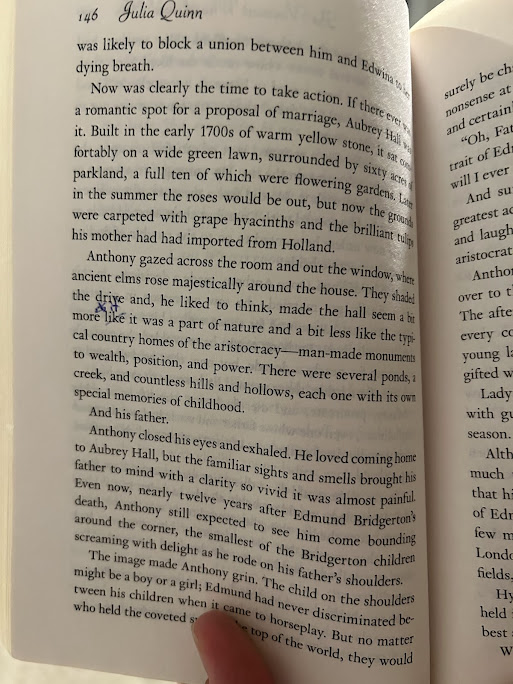
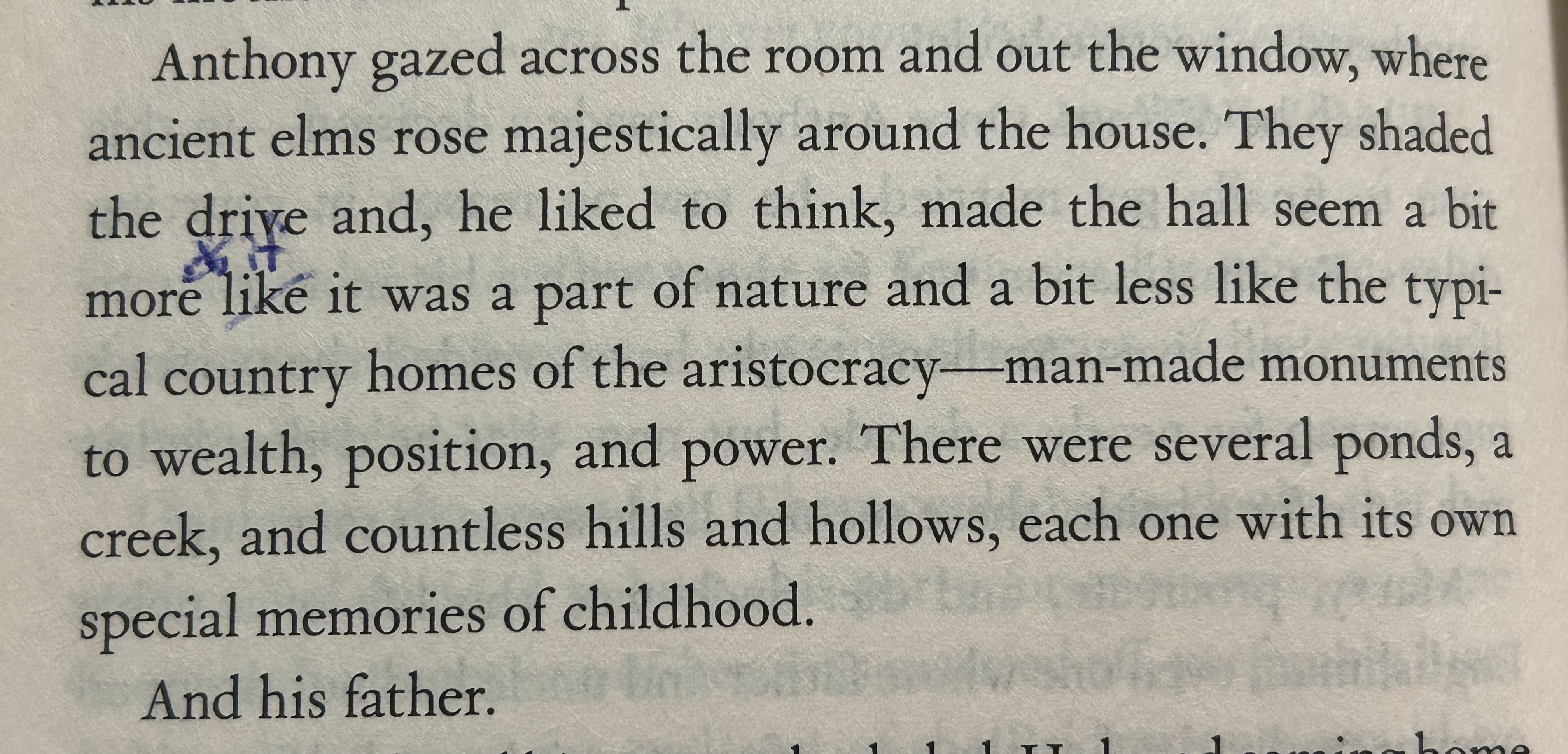
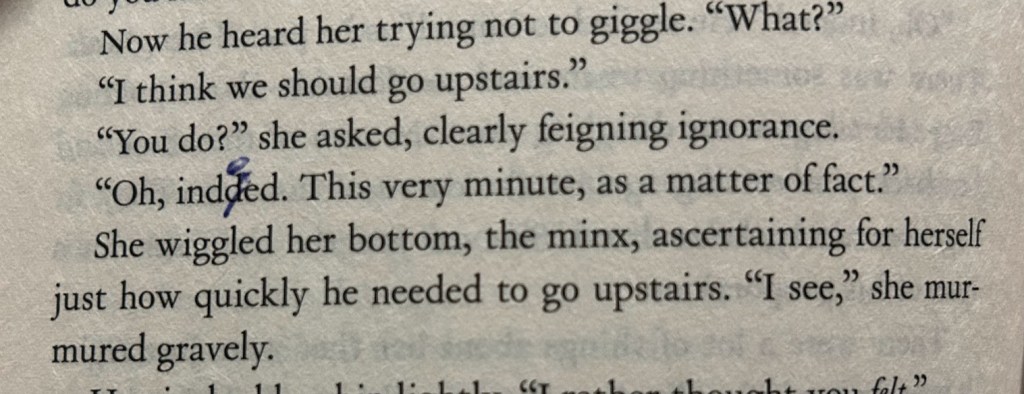
The first hint was on page 194. Blue ink.

I was a little startled. I mean, this is a trashy romance. The main characters murmur and gaze longingly. I was enjoying the story, but I wasn’t exactly on the lookout for grammar errors; in fact, I’d consciously decided to overlook some of them. And yet…

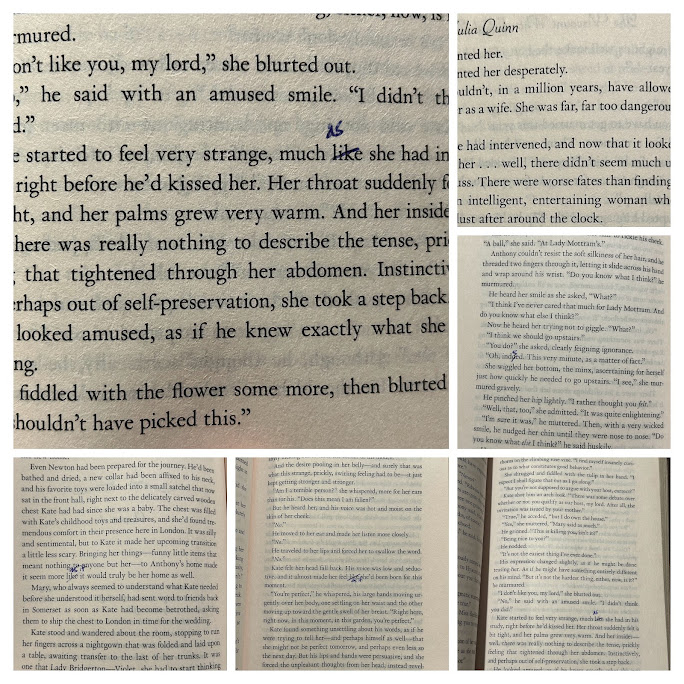
“As if”? I nearly laughed. This is my fellow reader’s quibble? I mentally shrugged, then moved on. Until it happened again. And again. And again. Someone had taken her blue pen to the novel and fixed “like” – and only “like” – a dozen times throughout the novel.

Wait. I lie. Once, she fixed a typo. Indeed.

I imagine her reading along, overlooking the missed subjunctive, ignoring the diction (minx!), letting the anachronisms lie… and then she hits her limit… “like.” She shudders. She thinks of the years she spent in the classroom, teaching students when to use “like” and when to use “as if.” She thinks of endless hours of grading essays, the constant battle against the demise of the English language. Her fingers tingle, and before she knows it, she has a pen – because of course she always has a pen nearby – in her hand, and she has made the correction.

Once she’s started, she cannot stop. The pen is uncapped, the errors egregious – at least in her eyes. Surreptitiously at first, then with greater and greater glee, she fixes the error each time it appears. As the novel climaxes in a crescendo of smouldering looks and husky moans, with one final flourish, she amends the typo in indeed and, triumphant, re-caps her pen. The world is now a little more orderly.

The next day, chastely, she returns the book to the library. Maybe she glances about as she slips the book into the returns slot; maybe she holds her head high, firm in the knowledge that she is right.

One way or another, I got double the pleasure out of book two of Julia Quinn’s Bridgerton series: trashy romance, and proof that English teachers never really leave the classroom.

September Looms

I gave myself the summer off, mostly. From blogging, from prepping for classes, from worrying about who can or cannot read and what needs to change or stay the same. I tried to actually relax – or at least not to be actively stressed. I attend zero conferences. I abandoned books I didn’t like. I didn’t plan a big family trip. I hung out with friends and family and quit Twitter. Overall, I think I did ok. 

I still have a week left before school starts, so this morning I rolled out of bed and plopped almost directly into our oversized beanbag to read a little of Jhumpa Lahiri’s Whereabouts. Instead of immersing myself in the story, however, I found myself wondering if I could finish it and return it to the library today, another item checked off the before-school to-do list that’s already filling up. My mind gleefully got into the go-getter groove, and soon I was listing as much as I was reading. Gah! Not what I had wanted.

I tried to shake off the looming lists and plans. I tried to read one more short chapter, but Hera – our cat – was having none of it. She scaled the back of the bean bag and dragged her tongue across my cheek. Skritch. Then she did it again. She clambered onto my chest, batted down the book, and looked me in the eyes. I knew she was right: time for tea and then into school to set up the classroom.

So I got up, neither fully relaxed nor fully tense, and lumbered down the stairs towards September.

It’s kind of a funny story

Commenting on student work, 2024 edition
Me, to a student who obviously used AI: please use your own words.
Student: what says this isn’t in my own words??
Me: I expect students to write in the doc I provide. I am automatically worried when I see a large chunk of work pasted in.
Student: I wrote it on paper before I pasted it onto the computer. If I find the paper will that help??

Um… that’s not how paper works.

That’s how I shared the story with friends. It’s all true, and dear Heaven, but this generation of kids…

But it’s also not the end.

Today, the last day of school, the student came to class. They finished up some work and, at the end of class, hung back at my request. We both wanted to see if all their missing work had been submitted, and I wanted to talk about that pasted-from-paper document. The student had resubmitted it, this time with a photograph of a handwritten document – the paper they supposedly wrote before they (magically) pasted it into the doc.

It was already hot – today’s high was 32C/ 90F and felt like 43C/ 109F – and the end of school was on everyone’s mind. I know I had to muster up all the calm I could find; I assume the student had to do the same. I opened the assignment. I showed the student how I could see the copy/ paste. I showed them the AI detector and the 100% AI result. I acknowledged that I could see the handwritten document, but shared my concern that the assignment didn’t fit the instructions. Then, as patiently as I could, I said, “I can see that you’re upset. Tell me what happened. I’m listening.”

Then I listened.

And it turned out that I was wrong. They walked me through their work and showed me their thinking. They hadn’t used AI to generate the text, but they had typed it up in Grammarly (because when you’re learning English a good grammar program goes a long way) so some of the words were not quite theirs. And they had followed the instructions, sort of, they just hadn’t organized properly to separate parts. And they were shocked that I could see the copy/ paste and a little hurt that I thought they might have “cheated.”

So we talked about cheating and about getting behind in our work and the shortcuts we sometimes take. We talked about the pressure of finishing all that late work and about talking to teachers rather than hiding. Then I thanked him for talking to me and shooed him off to catch up with his friends. The whole thing probably took three minutes, maybe two.

It’s not as good a story as the one where a student says “I wrote it on paper before I pasted it onto the computer” and the teacher thinks, “Um… that’s not how paper works”  but the real part of teaching, I think, is the part after the funny part – the part where we listen – and I wanted to write that, too.

Sort of tutoring

“Miss, are we done with that thing?”

He’s caught me in the hallway between classes. I hesitate, not quite sure what to say. He bulldozes ahead, “You should come get me from class today, like maybe thirty minutes in.”

Ah-ha! He wants to continue our reading comprehension sessions. Or rather, he wants to get out of his science class for twenty minutes.

“I kind of figured you should stay in class and work on your summative project,” I say. 

“Nah,” he scoffs, “I don’t understand any of it. I’m just making stuff up.”

I relent. “Fine. I’ll see what I can do.” 

So, about thirty minutes into his Science class, I pull him out.

The project is pretty cool, if you ask me, which he didn’t. They are supposed to be creating their own habitable planet and an alien race that lives there plus some other stuff, but I don’t get a good look at the project because he’s already asking a question.

“Is there a difference between mass and density?”

I tell him to look it up.

“But if you know, why don’t you just tell me?”

I just give him a look. He asks again, gets sidetracked for a minute, and then circles back to ask one more time. Silently, I take his computer and type in “Is there a difference between mass and density”. I turn the screen back to him so he can see the bazillions of responses.

“There is! I thought so! Why didn’t you just tell me?”

I ask him what the difference is. He tells me it doesn’t matter. I refrain from making a joke about matter.

Now he wants to know why the mass of the planets is listed as x1024 and how do you type up high like that? And also what’s a good temperature? Like, you know, a neutral temperature. And why does he have to use Celsius when he’s sort of used to Fahrenheit and actually he’s not really very good with either so is 16 cold? 

I ask him if he’s talking Fahrenheit or Celsius. “Either,” he says, “I just want to know if it’s cold.”

Every time he asks a question, I help him look it up. Every time a webpage comes up, he groans and says he doesn’t want to read “all that.”

“Miss, I just want to put down easy stuff and be done,” he tells me. “Can’t you just tell me the answers?”

I tell him that if he just wanted the answers, he wouldn’t have asked me for help. He disagrees. So I don’t tell him about distance from the sun, and I make him look up if a planet can have long days and short nights and whether or not it can always be Fall. He argues with me every step of the way, right up until he tells me class is almost over and he needs to go get his stuff. 

“Fine,” I say, trying to keep the frustration out of my voice. “Do you want more help tomorrow?”

Not like you helped him today, says a little voice inside my head. I mean, we fought for many minutes about whether or not he needed to know what axial tilt is. (He does, but he refused to read the information.) Classes end in one week. We are all exhausted and ready to be done.

“Yeah,” he says, “if you have time you can come back. I like it when you help me.”

So tomorrow I will once again sit with him and refuse to either answer his questions or allow him to barge forward without thinking. I will bite my tongue, and he will be frustrated with me, but apparently we’re both good with that. 

One more week.

Writing beside him

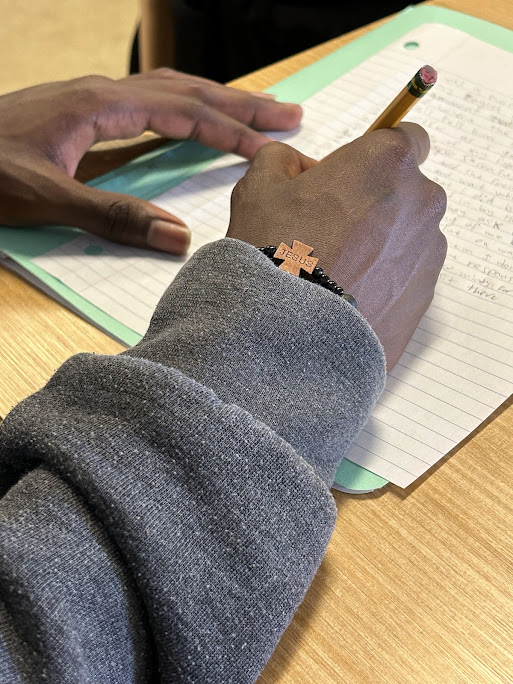
I’m helping a former student write a personal essay for his Grade 11 English class. We’ve talked it through, and planned a little; his next step is to write it. Reading and writing aren’t his forte – he’d much rather be on a playing field than in any classroom – but this story is important to him, and he wants to get it down on paper. So here we are, sitting in the upstairs lobby – currently one of the coolest places in our very hot school – and he’s writing.

This kid has my heart, as many of them do. Last year, he didn’t do particularly well in our first semester English class, so he agreed to change his timetable in order to be part of a reading class with me during the second. That alone took some courage: not everyone who needed the support was willing to accept it. Once there, he mostly tried, even when the work was repetitive or “not that interesting,” even when he took extra long body breaks or got frustrated by the “simple” books he was reading.

Knowing that history, I’m intrigued by his choice to sit with me in such a public place this afternoon. With only two weeks left in the school year, students are out of classes nearly as much as they are in, and many of them wander aimlessly through the halls. Several have stopped to greet us; pretty much all of them give us at least a passing look as we sit here at a student table and work. There’s no hiding that we’re writing together, no hiding that I’m helping.

Nevertheless, he’s nearly filled a page with his small, neat handwriting – a feat which would have been unfathomable last year – and his focus hasn’t wavered, though he has had to stop a few times to flex his tired hand. Meanwhile, I sit here typing my own story, this story, marveling at this moment of quiet togetherness amidst myriad other students. We are here, the two of us, writing; we are here, the two of us, writers. 

This sense of camaraderie has me thinking about what we mean when we say that teachers need to “get to know their students.” How well do I know him? I didn’t spend a lot of time last year asking him about his family, though I did call home when I needed to. I have no idea if he has pets, and am not clear about how many siblings he has. In fact, I don’t know many things about him, but I know enough that I can tell him, honestly, that I believe in him. I never told him he was a strong reader or writer; I did tell him that I thought he could be. I never told him this path would be easy – heck, I was clear that parts would be hard – but I did tell him that I thought it was worth it. Other teachers and coaches told him the same thing, complimenting him when he improved, noticing when he was reading, harrying him back to class when he was in the hallways. When he faltered, he had a team of people to remind him of his long-term goals.

Today, he has a story to tell, and he has found me. He says he needs help, but I think he just needs someone who believes in him to write beside him. What a privilege! I can do that any time.

Stolen Kisses

I’m walking towards the library in the middle of my prep period when movement in the stairwell catches my eye. A black t-shirt stretches across a broad back and muscular arms. A black hijab tilts upwards. Two faces come together briefly, then separate.

I keep moving. I don’t want them to know that their moment was observed. I want a world where kids can cherish a stolen kiss, hidden from other eyes, weeks before high school comes to an end.

When I return from the library, the stairwell is empty.