Hot tub #SOL22 11/31

“Write about the hot tub,” they say. I’ve done a quick write in front of them, randomly listing childhood memories. Trampoline and Hide-n-Go Seek haven’t piqued their interest in quite the same way as hot tub.

I laugh. “Sadly, there’s not much to say. We had a hot tub in our backyard when I was in high school… nothing really happened there.” I trail off and end up writing about the trampoline after all, shaping the story, modeling various openings, playing with structure.

I don’t tell them that images of the hot tub bubble in the back of my mind. Look: my sisters and I are playing in the warm water, snow on the deck. There: I am 13 and awkward, wearing my bubble gum pink bathing suit, my hair pulled back – the photograph reveals a liminal beauty that I can only now appreciate. Over here: My birthday party, fifteen-year-old girls full of high spirits and loud laughter, though in every photo of the evening our heads are hidden in our arms, as shy away from the very lens we crave. “We’re in our bathing suits!” someone had squealed and the camera was put away.

Was that the night the boys crashed the party? Possibly, but even that phrase implies a wildness we didn’t embody. Maybe I should rewrite it and say, “was that the night that Michael and some friends came over while we were outside and we sort of pretended to scream but mostly chatted?” Or maybe both ways of telling the story are true.

With my sisters in the snow

How disappointed they would be with the truth: “The hot tub story” isn’t really a story, and it isn’t salacious. The hot tub is evenings with family, breath-holding contests with my sisters, a science fair project done with my dad (about the chemicals – the only science fair I ever won. Figures that it was about that hot tub.) I know what my students expected to hear when “hot tub” appeared in my list. Instead it’s moments of connection with my family and friends, moments from a time so distant it seems almost unimaginable now.

On the other hand, the trampoline – now, *that’s* a story.

Fatigue #SOL22 10/31

When she first came to visit, I wasn’t surprised; March Break was coming, and she often arrives around this time. Most days, she showed up in the late afternoon, hung around until bedtime and then left, sated. I reminded myself that there was no point in pretending she wasn’t coming, no point in ignoring her – better to accept her visits and maybe go to bed a little earlier than usual to help send her on her way.

But since the beginning of this week, five days before break, she’s been here every day. Some days, I swear she shows up first thing in the morning and lingers until lights out. I can’t shake her. I’ve tried warm baths and early bedtimes. Still, she’s there the minute I open my eyes, laughing. “You thought I’d leave?” Her shoulders shake as she chuckles, “You know better.”

At work, she’s been messing with my calendar: every day this week I’ve found myself accidentally double-booked for at least one meeting. I’m usually very good with time management, so I’m sure it’s her fault. And she’s making me very grumpy. I’m trying to ignore her, but she’s *always* there, and I have to admit my temper is short. She’s even infiltrated my writing – I’ve been posting later and later even though I’m often a morning writer.

The good news is that March Break starts at the end of the day tomorrow. She may try to accompany me on vacation, but I have a feeling that some serious family time, a lack of commitments and, yes, some morning sleep-ins will let her know that it’s time to leave. After all, I much prefer her more pleasant sister, Energy.

Observation #SOL22 9/31

“They were all on-task the whole time; they were literally all sharing their stories.”
I try not to blush – can one intentionally not blush? – and say, “Well, we’ve been practicing.”

Today, a colleague from my previous school came to observe and collaborate. (Pause for a moment and cheer for her principal – and mine – for deciding this was important.) I like to think of my classroom as open, and I regularly say that anyone is welcome at any time, but the truth is that most teachers spend most of their career playing to an audience comprised entirely of students, and I am no exception. I wasn’t nervous, exactly, but having a colleague in my room definitely heightens my senses.

Right away, I noticed that my instructions for one activity weren’t as clear as I had hoped. I noticed that I move around the room an awful lot, and that I am very comfortable with students moving, too. I noticed that I am (ridiculously) enthusiastic about student writing, and I recognized that this probably makes it easier for students to share. Mostly, however, I noticed that my students were willing participants in even unfamiliar activities, like stations that asked them to tell their narrative aloud, read examples of narrative essays or write first drafts. The last time they did “stations” was probably elementary school, but they humour me.

As a teacher I am so obviously my own worst critic that even my students (I see you, Leah & Nadiya) have commented that I should be easier on myself, but I knew that today’s class went well. After lunch, my colleague and I debriefed, which is when she pointed out that even at the “talk” table, everyone was on task. I explained that we had practiced this: we have shared stories in pairs and small groups; in class today, I referred to research we’ve already discussed, research which suggests that talk supports writing; we have also practiced providing effective feedback for other people’s stories. Because of my self-criticism, I am teaching some of these skills more effectively than I did last semester.

If I keep writing, I will find the flaws in the lesson – I misjudged the length of the final activity and there were those imperfect directions at the beginning – but I know that no lesson will ever be perfect. Today was pretty darn good, something I can recognize mostly because I saw someone seeing me teach. And I’ve realized that I’m pretty proud of me – which is not something I let myself say very often – so I thought maybe I should share that.

Talking with my colleague today was not only a pleasure but also a moment of reflection and growth for both of us. Think of how much teachers could grow if more schools prioritized time for observations and collaboration. Wouldn’t that be something?

Losting #SOL22 8/31

Near the beginning of each semester, my students write 100 word memoirs (thanks, Kittle & Gallagher). These never fail to knock my socks off, and this year that’s even more true. At my new school, many students have clear memories of coming to Canada, and many of them are continuing to learn English. Combined these lead to some great moments. For example, below, Tung wrote about his first time in a Canadian high school. Pay particular attention to the word “lost” – we’ll come back to that.

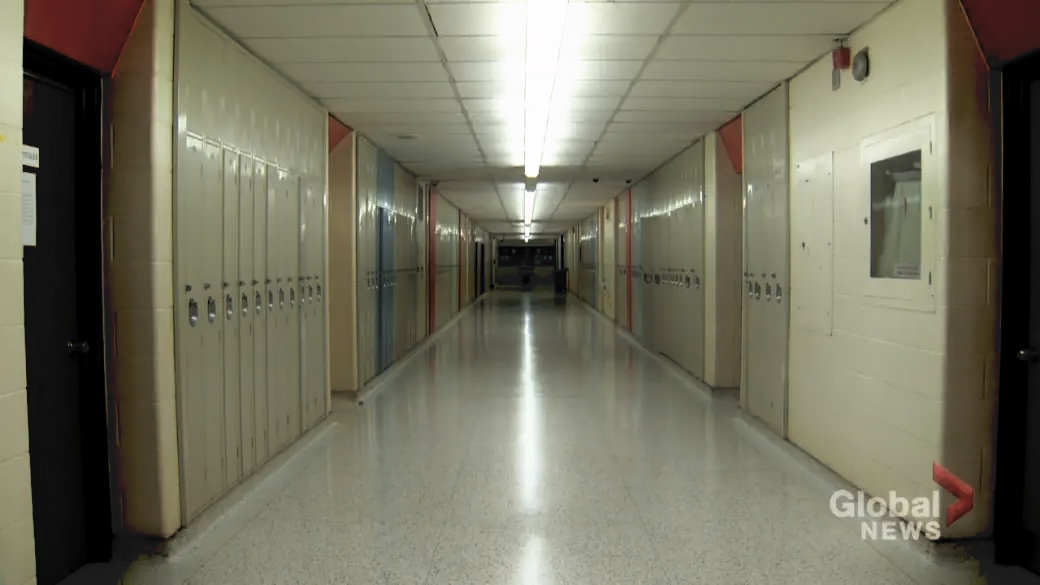
Walking through Canadian high school for the first time was like walking, lost, in an old tunnel surrounded by unknown creatures. The low-ceilinged crowded hallway was an ant’s nest of students trying to sprint through the narrow corridor. The thick moss-green bulletproof door had only a small glass cut-out, covered with an English-only poster. This prevented my curious eyes from spying on the Canadian students in the classroom. Everything was beyond my imagination. Each step I took, one rhythm faster my heart beat. What was I getting myself into? Would there be a light at the end of this tunnel? 

Tung, Grade 12
What I was seeing/ What was in my mind

He added pictures – including some pictures of his school at home. It’s much, much brighter and airier than our school and I can safely guess that it has never seen snow.

Watching Tung try to capture the feeling of that first day was fascinating. Some descriptions came easily – he knew he wanted a tunnel and he knew the door needed to be moss-green and bulletproof. Those things never wavered. Other things changed – coming in, getting cut out, changing form. To me, the most interesting thing of all was the word “lost”. He really wanted it to be “losting”.

We chatted in the back corner of the room – the place he’s chosen for now – about this word. Somehow lost just wasn’t quite what he was looking for. He had a sense that losting wasn’t a “real” word, but he wanted the word to be active. He wasn’t simply lost, he was wandering, loose, casting about, feeling the sense of not fitting in, not knowing if he belonged. He was losting.

I couldn’t help but think of my own child, then quite small, crying as his grandmother left after another wonderful visit. He threw himself into her arms and said, “It’s your fault, the goneness.” The goneness. Really, it’s the only word for the feeling.

I told Tung he could keep “losting” – that it made sense to me and described what he was feeling – but English isn’t thoroughly his yet; making mistakes and making new words are still too intertwined to tease one away from the other. Still, I expect that the word exists now. I suspect that someday, probably soon, I will see a student wandering in the hallway with a particular look in their eye, and I will know that they are losting. When I do, I’ll try to help – because the goneness can be overwhelming.

Join us – or just come to read – as we blog every day in March at twowritingteachers.com

Letting Go #SOL22 7/31

In the front of the room, Mr. P was talking. Technically, this was “my” class – I was the assigned teacher – but I’d stopped teaching and started functioning as a co-teacher/ support a few days earlier. Now, I was moving about the room, answering quiet questions, checking on student work, when one of the Black students touched my sleeve. I leaned down to hear her question. Without taking her eyes off of Mr. P, she whispered, “Thank you.” I knew exactly what she meant.

***

One week ago – on day one of this challenge – I wrote about the moment when Mr. P and I decided to team teach a class. And not just any class: we decided to team teach a new interdisciplinary course called “Anti-Black Racism in the Canadian Context.”

Some background: I am an experienced teacher with a permanent contract in our school board, and I am white; he is an experienced teacher who is not yet a permanent teacher in our school board, and he is Black. I grew up in the US; he grew up in Jamaica. Last June, when courses were being assigned, there was only one – ONE – Black teacher in this school, and he was not able to teach this class, so the principal asked me. I’m not Black, but I have been working towards anti-racism; filled with both trepidation and excitement, I said yes. To be honest, I was kind of proud that he thought I could do it.

Over the summer and the first semester, I read a lot, talked a lot, and thought a lot about how I could teach an Anti-Black Racism course to a group of students from many racial backgrounds. I researched and learned. I was determined to do my absolute best. The course began on a frigid February day, and I started by acknowledging my precarious position. No matter what I said or did, I was still a representative of white authority standing at the front of the classroom. Even though I planned to have an inquiry-based course, the structure of our system means that I was still “in charge”. It was uncomfortable, but we could live with discomfort.

And then came Mr. P. He had been hired to cover a position at our school this semester. We started chatting about literacy instruction almost the moment we met. Each of our discussions was better than the last, our pedagogy in synch, our hopes and expectations for students overlapping. He is wildly knowledgeable and wonderfully expressive. Within days, he was popping into the classroom; days after that, he started co-teaching with me. By Friday of last week, he was leading the course, and I had stepped into the background.

I’m pretty opinionated about what constitutes good teaching, but watching what happened when a person with lived experience of racism taught the course was humbling. I have been taught by Black educators, listened to Black colleagues, sought out Black perspectives. I am aware of the need for diverse voices – especially Black voices – in our schools. I knew all of this. But – oh, how I wish you could have been in the room last week when he talked about Bob Marley or recognized a Jamaican poet I had quoted. I wish you could have seen the moment that he addressed the racist coverage of the war in Ukraine. I wish you could have heard him talk about what it was like for him to come to Canada as a Black man. I can teach all sorts of things, but I can’t teach that.

Friday afternoon, the principal came by to tell me that Mr. P was needed in the room where he was originally assigned – a support position: valuable, but flexible enough that he had been able to spend a week in our class. Still, that couldn’t last forever, and I knew what had to happen: I asked the principal to transfer the course into Mr. P’s name. I didn’t know that the change would happen right away, but it did. This morning, with little warning, I said goodbye to that group of students and to the Anti-Black Racism course.

I’m a little heartbroken – if one can be a little heartbroken. I would love to keep teaching the course for many reasons. I think I’m mourning my preparation. I know I’m mourning my own chance to learn from Mr. P. I’m absolutely mourning the students and the connections we were making. I love the classroom, and I will spend the rest of this semester with only one traditional class.

On the other hand, a highly qualified Black teacher is leading a diverse group of students to a new understanding of race and racism while he shares a powerful lived experience. And that is worth celebrating.


Brat #SOL22 6/31

I’ve been putting things off all day, trying to do what I’ve deemed necessary before I allow myself to do what I find fun. This strategy has mostly been making me anxious as time slips through my fingers: it’s almost 5:30 and the chore-like bits aren’t done. Luckily, I just found a slice of life so good that it simply must be shared, so I’m giving up on cleaning and starting on fun. Here, take a peek into my life at the end of third grade.

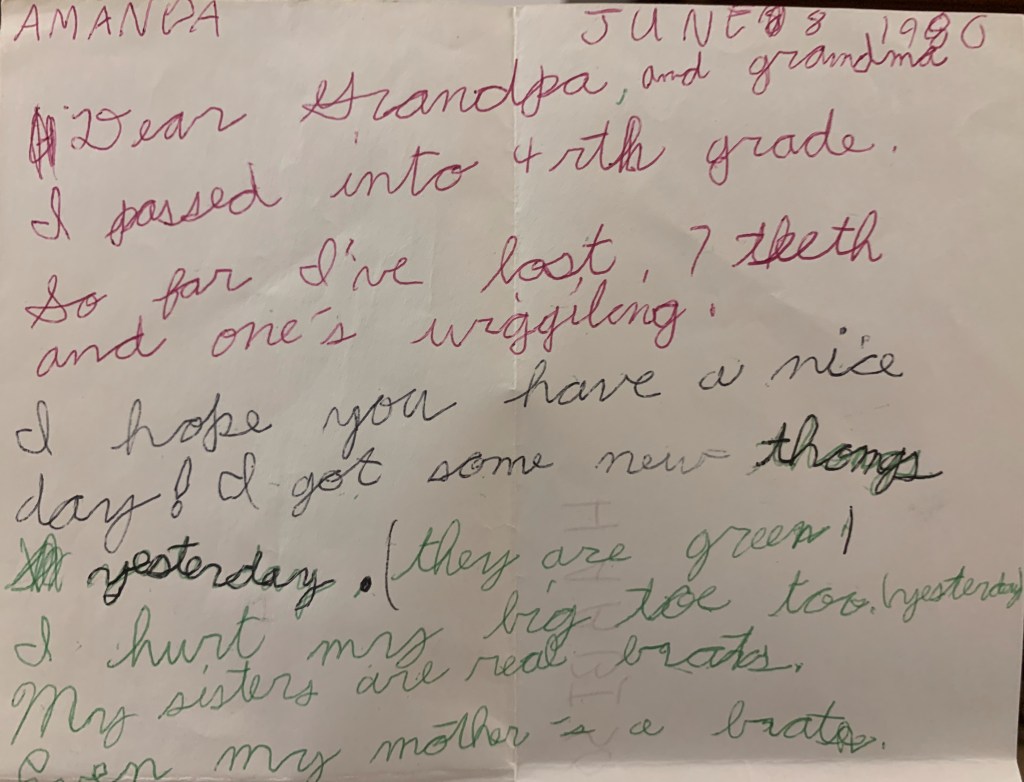
Just in case you can’t read my almost-fourth-grade handwriting, here goes:

AMANDA JUNE 8, 1980

Dear Grandpa, and grandma
I passed into 4rth grade.
So far I’ve lost 7 teeth and one’s wiggiling.
I hope you have a nice day! I got some new thongs yesterday. (they are green)
I hurt my big toe too. (yesterday)
My sisters are real brats.
Even my mother is a brat.

I didn’t even bother to sign it – though I did draw a giant smiley face. I guess I figured they would know who I was – the one who wasn’t a brat.

#SOL22 5/31

It was only the beginning of second period, but all of us were already over this day. Before classes had even started, a few teachers had received an email threatening a school shooting. The actual threat level seemed low, but just in case, the police had been called, the doors locked, a “shelter in place” instituted. Then, the internet went out. And it was Friday. We wondered if the universe was laughing at us: “Good luck at school today,” it snickered.

The grade 12 students were unimpressed. Someone had flicked off the lights as they entered the room – “Hope that’s ok, Miss” – and most people were slumped, exhausted, onto the tables. So much for any lessons I had planned. On the other hand, thanks to the power of routine, almost everyone had a book out.

“I have an idea. You read, I’ll plan something that makes some sort of sense.”

“I can set my watch for 15 minutes,” one student volunteered.

“Miss, can it be 20? Please? I mean, the internet is down and…”

I looked around the room. Heads were nodding. “20 it is,” I declared.

They read; I planned. Then I read, too. 20 minutes passed. C’s watch beeped. An impassioned “NO!” slipped out of a student as she turned a page. “I’m so close to the end of the chapter!”

“Me, too!” “Yes!” “Please, just a few more minutes…”

Of course I said yes. And we all read just a little bit more. And our Friday was just a little bit better. Not perfect, but better.

Look for the helpers #SOL22 4/31

This week has been the kind of week that sometimes leaves me unable to write: one of those weeks where the truth is so outrageous that teachers would be unable to read the whole thing and non-teachers would be so gobsmacked that their mind would rebel and they would declare that this must be an exaggeration; one of those weeks where if I wrote even half the truth, I’d be out of a job; one of those weeks where it’s a lot easier to focus on the crazy than the good.

Andre and I talked about this wild ride of a week as he accompanied me on my daily walk. The weather was much milder than it had been earlier in the week (see yesterday’s complaint), and we chatted companionably as we walked along the almost-thawing sidewalks of our downtown neighbourhood. We stopped at a store and were on our way home when we saw it: a delivery van stuck in the heavy slushy snow, its wheels spinning. Three young men surrounded the van; another was behind the wheel. They were well and truly stuck. As we watched, the driver hopped out and went around back to join one of his companions. They stared forlornly at the wheel.

As Andre and I got closer, one of the men near the front came around to join the two in the back. They conversed briefly, then everyone went back to their original positions: one driving, two in front pushing, and one in back calling directions. Andre was already putting our shopping bag on a dryish patch of driveway as he looked over at me and said, “Wanna help them?”

Of course I wanted to help. This moment – the car stuck, the people pushing – this is part of winter. This is what we do. The wheels spin; the passengers get out; everyone pushes. If that’s not enough, passerby or neighbours pitch in. As people arrive they call out something banal like, ‘Wanna hand?” but they don’t wait for the answer: they are already pitching in, already pushing. So it was with us.

One of the three outside guys said, “Pushing didn’t help much before, but maybe with more of us…” He trailed off because, of course, we were already there. Someone counted, the driver reversed, we all pushed. The van resisted – “rock it!” – rocked forward and slid a little back and sideways. We paused to regroup. The was a brief conversation, but the result was inevitable: we did it again.

There isn’t really space for five people to push the front of a van, but that didn’t stop another passerby from leaving his well-dressed partner to wait on the sidewalk as he joined us. “One, two, three!” We pushed again. More progress.

The girlfriend watched, bemused. The guys gathered and looked at the new situation. “Ok, come forward a little, straighten the wheels, then reverse. We’ll let it rock forward, then push.” We all returned to our positions. The countdown, the forward motion, a giant heave-ho and… free! The van was on the street!

The driver waved out the window to thank everyone. I waited for the other three men to hop into the van, but they didn’t. Two picked up their own packages – I hadn’t noticed them before – from various dry-ish spaces nearby. One loped off on his own, empty-handed. The man who’d joined after us, went back to his partner. He laughed, “She’s not from here. She’s never seen this.” We laughed, too: “You haven’t really made it through winter if you haven’t rescued a car.” They continued on their way. One man turned down a walkway nearby. Another crossed the street in front of us.

It turned out, none of us knew each other. Six strangers (well, I guess I know Andre, so four strangers and a couple) had all stopped on their way from somewhere to somewhere to push a seventh stranger out of the snow on a Friday evening because, despite the pandemic and war, despite nuclear reactors and shooting threats, no matter how crazy the week or the world is, helping someone out is just something we do.

Surprised by Winter #SOL22 3/31

I have lived in Ottawa for 15 years now, longer than I’ve lived anywhere else in my life, but somehow I’m still coming to terms with winter. I’m regularly annoyed when it snows before the end of November. I make jokes like “March comes in like a lion and goes out like a… lion.” As someone raised largely in the South, I mutter “April is the cruellest month” year after year when Ottawa April shows its capricious nature: freeze thaw freeze thaw; few things bloom and I often wonder if Spring will ever arrive.

I should know better. I should.

Despite all of this, I managed to be shocked this morning when I walked out to my car covered in a light layer of snow, and, underneath, the windshield slick with ice. For once, I was leaving vaguely on time, determined to get to school early enough to write this slice before students arrived. But winter had different ideas.

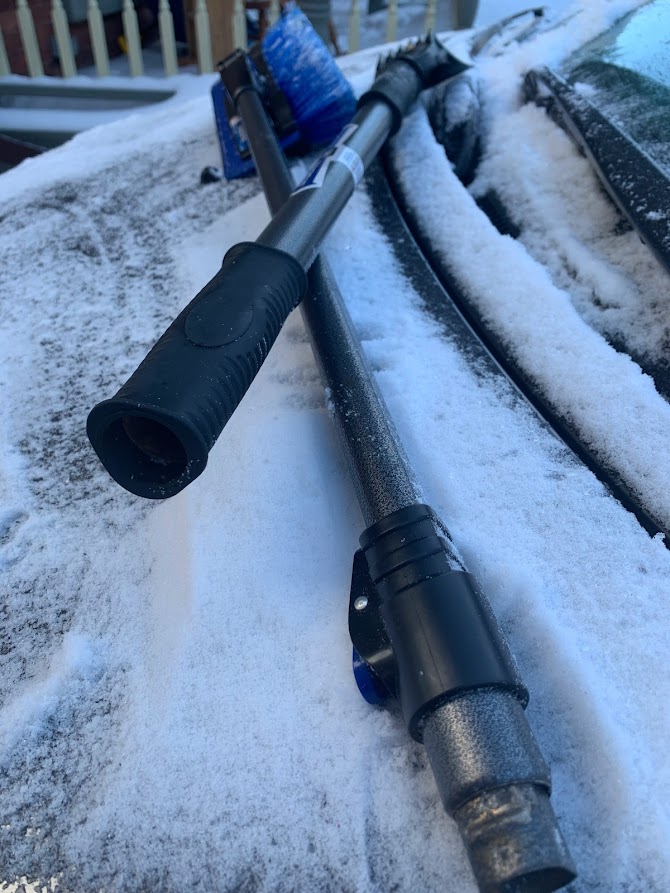
Why replace this scraper? After all, winter’s nearly over, right?

I swept my gloved hand along the seam of the top of the car door before I opened it so that none of the snow would fall on my seat. I half-sat on the front seat and turned the car on, followed by the front windshield heater, the back windshield heater and the seat heater. I groped on the floor for the now-broken scraper that I had decided didn’t need to be replaced this season because “it’s already March.”

Then, I spent the requisite three or four minutes brushing and scraping the car – not quite enough to make me late, really, but just enough to remind me that I should not be surprised by winter. The broken scraper meant that I couldn’t quite reach everything, so I drove to work with the mom minivan mohawk: the narrow strip of snow that not-quite-tall enough moms end up leaving in the middle of the roof of their minivans.

Pretty sure I still won’t buy a new scraper this season. After all, it’s nearly Spring.

Knit Night #SOL22 2/31

I was hopping mad by the end of the school day. I texted with colleagues, then met with them. I talked to a friend while I drove home (thank goodness for dear friends who live far away so they can’t tell anyone what I *really* think). I expressed myself volubly to my partner. And then it was time for Knit Night.

I set myself up in the basement, which occasionally doubles as my office. I opened the laptop, plugged in the good light and the headphones, found my current knitting project (The Nightshift Shawl – swoon) and settled in.

I don’t know how I got lucky enough to join a group of wildly smart educators who knit while solving the problems of the world, but I did. We meet online for a couple of hours on Tuesdays in the best kind of group: Come when you can; share what you want; no worries if you can’t make it.

We talk about everything. Tonight we talked about funerals and how we love even difficult people. We laughed about Sunday School and premarital sex. We wondered about potential racist implications in phrases that don’t have racist origins. (Can I say “call a spade a spade“? Unclear.) We compared notes about whether or not educators with PhDs use the title “Dr” in our school boards or if they did when we were growing up. And somehow, hilariously, we ended up talking about teaching sex ed to 7th graders, explaining spontaneous erections and periods and suddenly we were bemoaning the influence of porn and some *very* dirty lyrics were posted in the chat and NO, it is emphatically not ok for 4th graders to know those and OH MY.

I will freely admit that I had to pull back the last row I knitted before we logged off; I’m pretty sure it was because I was giggling so hard. Some Knit Nights are tough: we don’t get the job we applied for or cancer treatment has worn someone out. Others are angry: racism and misogyny abound and sometimes we feel helpless. Occasionally (ok, often) we are ridiculously nerdy: after all, we’re basically a group of knitting librarians and English teachers; we’ve read *everything*. Always, always, these night are restorative.

I admit it: nothing is fixed. Tomorrow I will still have to go into work and deal with all the things that happened today. Still, I greet most Wednesdays in a slightly better mood because of a few hours of knitting and laughing. Really, who wouldn’t?